Visual summary
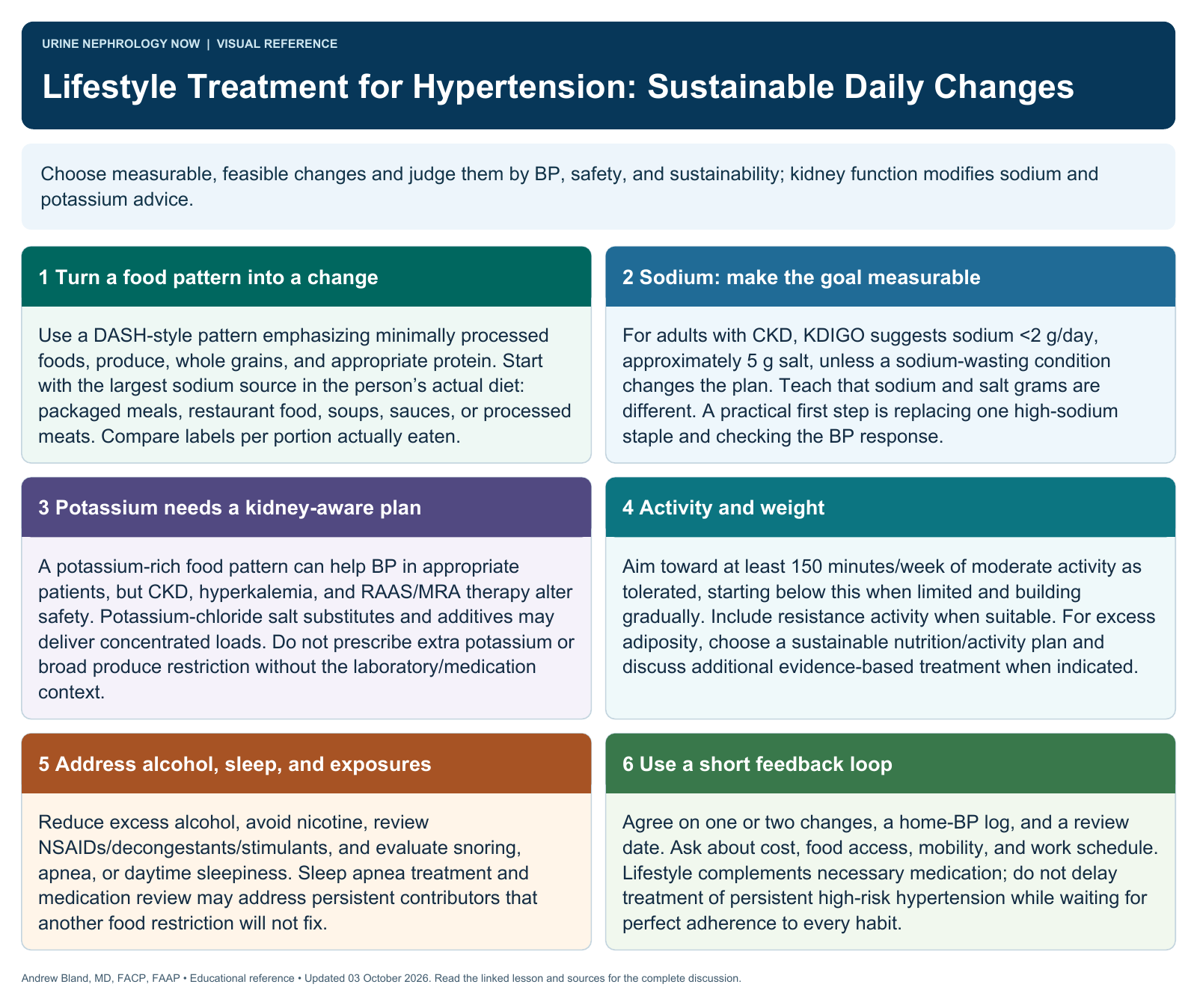
Choose measurable, feasible changes and judge them by BP, safety, and sustainability; kidney function modifies sodium and potassium advice.
Text version
Turn a food pattern into a change
Use a DASH-style pattern emphasizing minimally processed foods, produce, whole grains, and appropriate protein. Start with the largest sodium source in the person’s actual diet: packaged meals, restaurant food, soups, sauces, or processed meats. Compare labels per portion actually eaten.
Sodium: make the goal measurable
For adults with CKD, KDIGO suggests sodium <2 g/day, approximately 5 g salt, unless a sodium-wasting condition changes the plan. Teach that sodium and salt grams are different. A practical first step is replacing one high-sodium staple and checking the BP response.
Potassium needs a kidney-aware plan
A potassium-rich food pattern can help BP in appropriate patients, but CKD, hyperkalemia, and RAAS/MRA therapy alter safety. Potassium-chloride salt substitutes and additives may deliver concentrated loads. Do not prescribe extra potassium or broad produce restriction without the laboratory/medication context.
Activity and weight
Aim toward at least 150 minutes/week of moderate activity as tolerated, starting below this when limited and building gradually. Include resistance activity when suitable. For excess adiposity, choose a sustainable nutrition/activity plan and discuss additional evidence-based treatment when indicated.
Address alcohol, sleep, and exposures
Reduce excess alcohol, avoid nicotine, review NSAIDs/decongestants/stimulants, and evaluate snoring, apnea, or daytime sleepiness. Sleep apnea treatment and medication review may address persistent contributors that another food restriction will not fix.
Use a short feedback loop
Agree on one or two changes, a home-BP log, and a review date. Ask about cost, food access, mobility, and work schedule. Lifestyle complements necessary medication; do not delay treatment of persistent high-risk hypertension while waiting for perfect adherence to every habit.