Visual summary
Urgent symptom relief and durable chronic care share one requirement: controlled correction with a clearly understood mechanism.
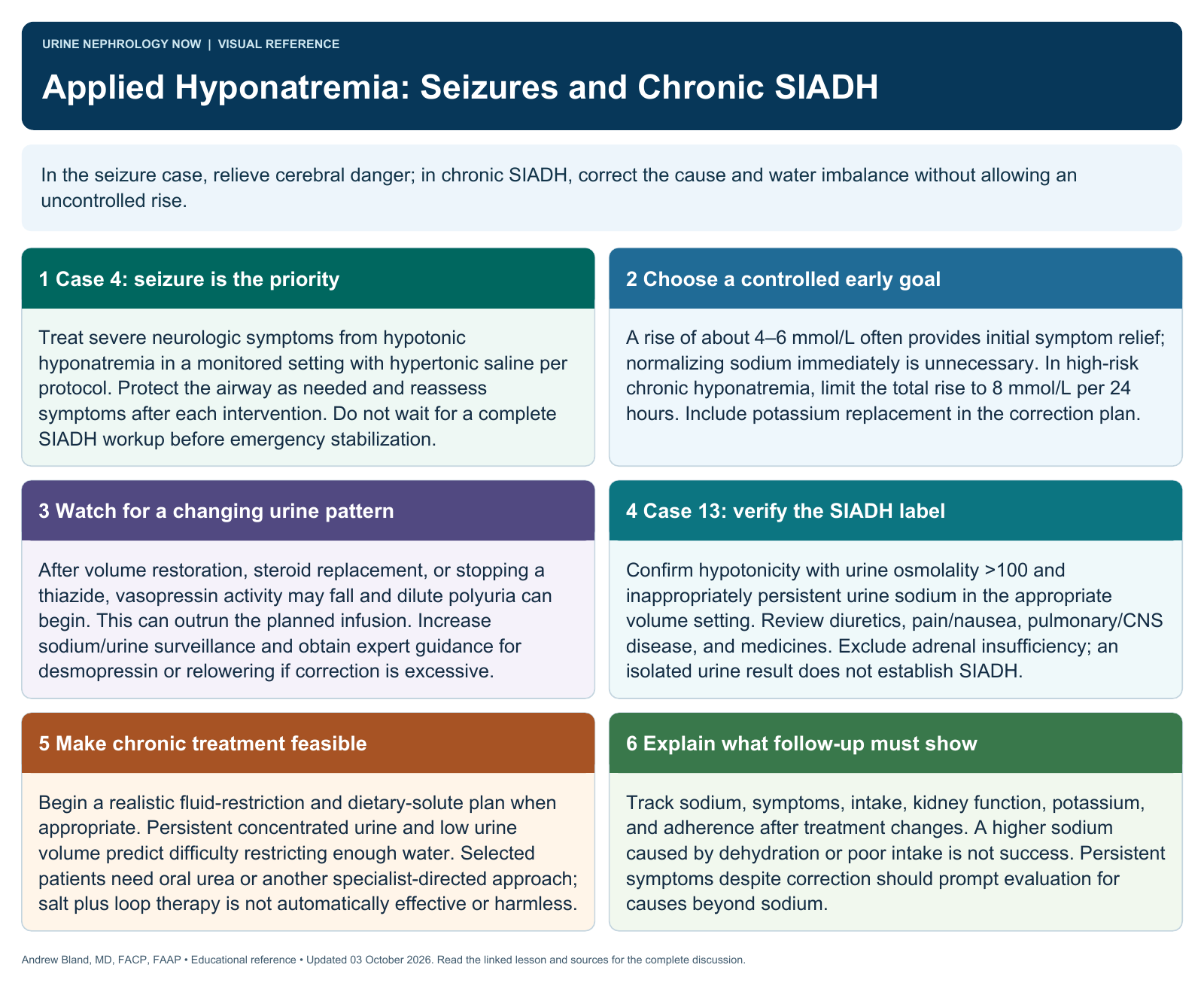
Text version
Same sodium label, different tasks
Acute neurologic danger and persistent chronic hyponatremia require different immediate priorities. Both demand a diagnosis of the underlying water-balance disorder and a plan that anticipates changing urine output during treatment.
Case 4: stabilize neurologic symptoms
The seizure case emphasizes prompt monitored treatment for severe symptomatic hypotonic hyponatremia. Confirm the clinical setting, protect the airway as needed, and avoid waiting for the entire diagnostic workup before addressing immediate danger.
Case 13: establish chronic mechanism
The chronic case explores persistent impaired water excretion. Recheck medications, solute intake, adrenal disease, volume status, and the urine pattern before labeling SIADH. Explain why excess water cannot simply be excreted.
Choose sustainable management
Fluid restriction, adequate dietary solute, oral urea, and other selected therapies have different advantages and burdens. Match the approach to the cause, feasibility, symptoms, and evidence rather than treating every chronic case with the same combination.
Monitor benefits and harms
Follow sodium, potassium, kidney function, intake, symptoms, and adherence. Diuretic or solute changes can produce unexpected water loss. A strategy that looks effective in a calculator still needs a laboratory-based safety plan.
Separate teaching from prescribing
Avoid promoting salt-plus-loop therapy or protein calculations as universally effective. Demeclocycline and vasopressin antagonists have important limitations. Severe symptoms, high correction risk, or refractory disease warrant experienced clinical supervision.
Continue learning
This graphic summarizes a topic. The full educational pages provide the broader discussion and references.