Visual summary
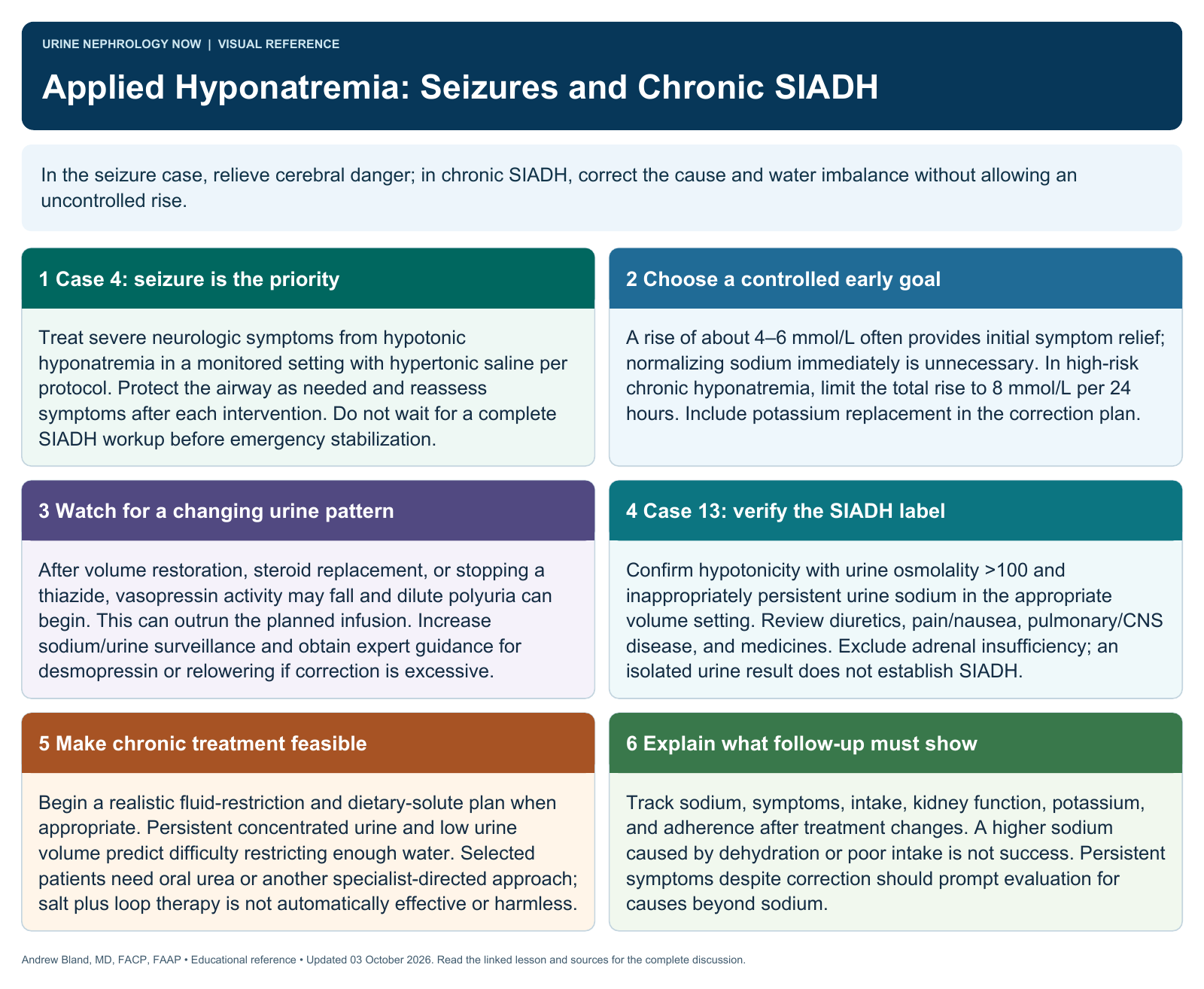
In the seizure case, relieve cerebral danger; in chronic SIADH, correct the cause and water imbalance without allowing an uncontrolled rise.
Text version
Case 4: seizure is the priority
Treat severe neurologic symptoms from hypotonic hyponatremia in a monitored setting with hypertonic saline per protocol. Protect the airway as needed and reassess symptoms after each intervention. Do not wait for a complete SIADH workup before emergency stabilization.
Choose a controlled early goal
A rise of about 4–6 mmol/L often provides initial symptom relief; normalizing sodium immediately is unnecessary. In high-risk chronic hyponatremia, limit the total rise to 8 mmol/L per 24 hours. Include potassium replacement in the correction plan.
Watch for a changing urine pattern
After volume restoration, steroid replacement, or stopping a thiazide, vasopressin activity may fall and dilute polyuria can begin. This can outrun the planned infusion. Increase sodium/urine surveillance and obtain expert guidance for desmopressin or relowering if correction is excessive.
Case 13: verify the SIADH label
Confirm hypotonicity with urine osmolality >100 and inappropriately persistent urine sodium in the appropriate volume setting. Review diuretics, pain/nausea, pulmonary/CNS disease, and medicines. Exclude adrenal insufficiency; an isolated urine result does not establish SIADH.
Make chronic treatment feasible
Begin a realistic fluid-restriction and dietary-solute plan when appropriate. Persistent concentrated urine and low urine volume predict difficulty restricting enough water. Selected patients need oral urea or another specialist-directed approach; salt plus loop therapy is not automatically effective or harmless.
Explain what follow-up must show
Track sodium, symptoms, intake, kidney function, potassium, and adherence after treatment changes. A higher sodium caused by dehydration or poor intake is not success. Persistent symptoms despite correction should prompt evaluation for causes beyond sodium.