Visual summary
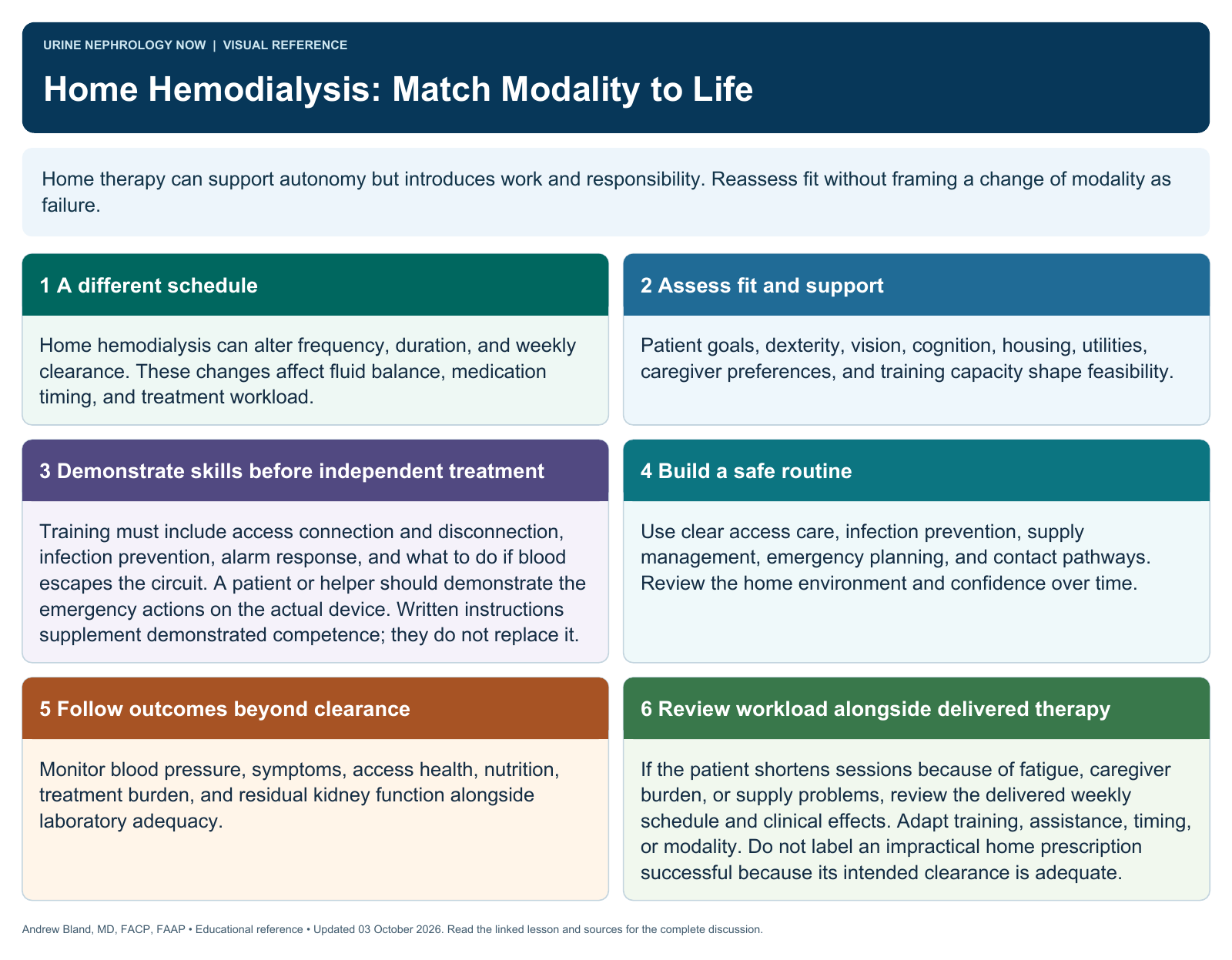
Home therapy can support autonomy but introduces work and responsibility. Reassess fit without framing a change of modality as failure.
Text version
A different schedule
Home hemodialysis can alter frequency, duration, and weekly clearance. These changes affect fluid balance, medication timing, and treatment workload.
Assess fit and support
Patient goals, dexterity, vision, cognition, housing, utilities, caregiver preferences, and training capacity shape feasibility.
Demonstrate skills before independent treatment
Training must include access connection and disconnection, infection prevention, alarm response, and what to do if blood escapes the circuit. A patient or helper should demonstrate the emergency actions on the actual device. Written instructions supplement demonstrated competence; they do not replace it.
Build a safe routine
Use clear access care, infection prevention, supply management, emergency planning, and contact pathways. Review the home environment and confidence over time.
Follow outcomes beyond clearance
Monitor blood pressure, symptoms, access health, nutrition, treatment burden, and residual kidney function alongside laboratory adequacy.
Review workload alongside delivered therapy
If the patient shortens sessions because of fatigue, caregiver burden, or supply problems, review the delivered weekly schedule and clinical effects. Adapt training, assistance, timing, or modality. Do not label an impractical home prescription successful because its intended clearance is adequate.