Visual summary
Persistent congestion despite a rational regimen warrants reconsideration of diagnosis, delivery, hemodynamics, and other treatment options.
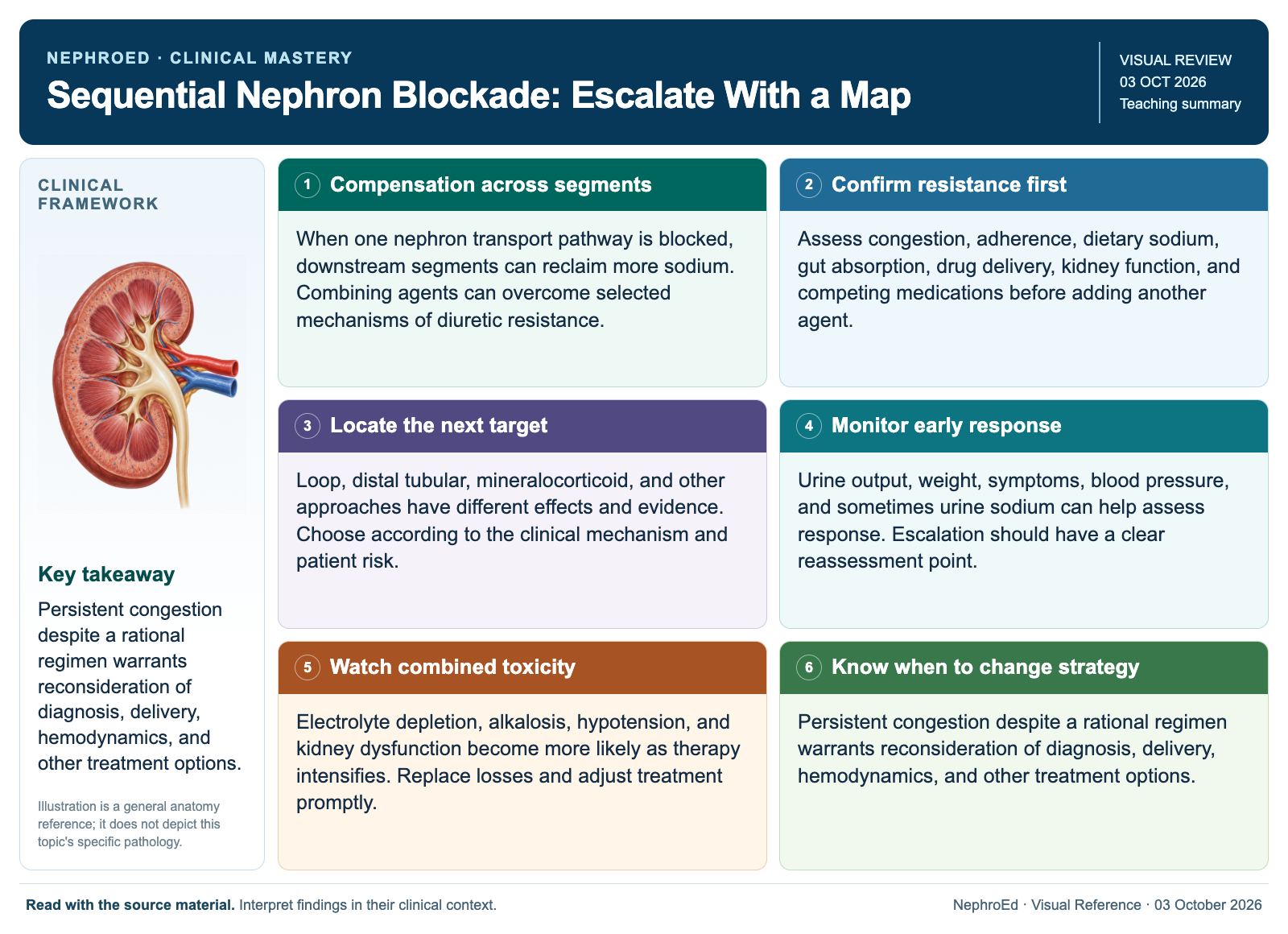
Text version
Compensation across segments
When one nephron transport pathway is blocked, downstream segments can reclaim more sodium. Combining agents can overcome selected mechanisms of diuretic resistance.
Confirm resistance first
Assess congestion, adherence, dietary sodium, gut absorption, drug delivery, kidney function, and competing medications before adding another agent.
Locate the next target
Loop, distal tubular, mineralocorticoid, and other approaches have different effects and evidence. Choose according to the clinical mechanism and patient risk.
Monitor early response
Urine output, weight, symptoms, blood pressure, and sometimes urine sodium can help assess response. Escalation should have a clear reassessment point.
Watch combined toxicity
Electrolyte depletion, alkalosis, hypotension, and kidney dysfunction become more likely as therapy intensifies. Replace losses and adjust treatment promptly.
Know when to change strategy
Persistent congestion despite a rational regimen warrants reconsideration of diagnosis, delivery, hemodynamics, and other treatment options.
Continue learning
This graphic summarizes a topic. The full educational pages provide the broader discussion and references.