Visual summary
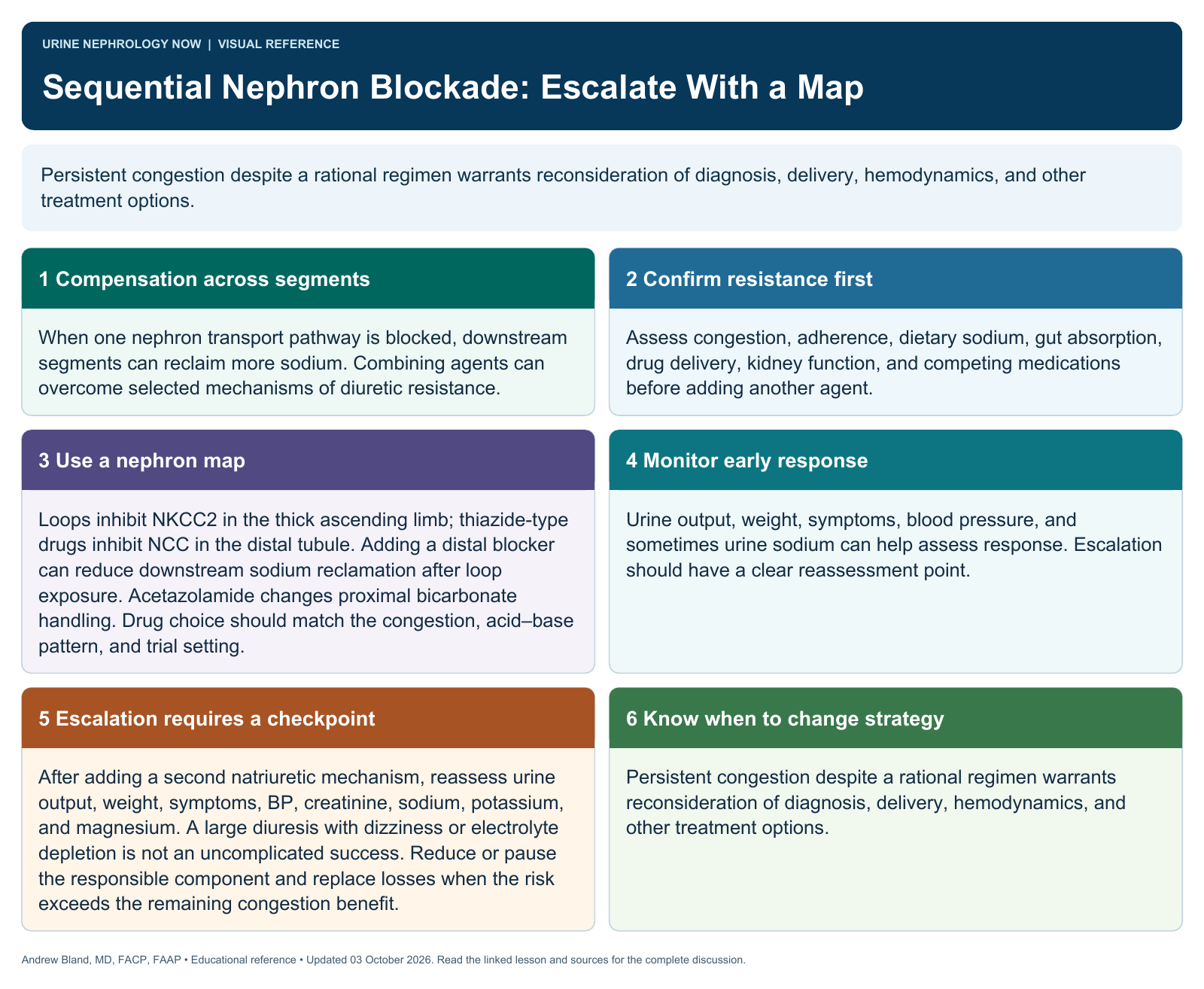
Persistent congestion despite a rational regimen warrants reconsideration of diagnosis, delivery, hemodynamics, and other treatment options.
Text version
Compensation across segments
When one nephron transport pathway is blocked, downstream segments can reclaim more sodium. Combining agents can overcome selected mechanisms of diuretic resistance.
Confirm resistance first
Assess congestion, adherence, dietary sodium, gut absorption, drug delivery, kidney function, and competing medications before adding another agent.
Use a nephron map
Loops inhibit NKCC2 in the thick ascending limb; thiazide-type drugs inhibit NCC in the distal tubule. Adding a distal blocker can reduce downstream sodium reclamation after loop exposure. Acetazolamide changes proximal bicarbonate handling. Drug choice should match the congestion, acid–base pattern, and trial setting.
Monitor early response
Urine output, weight, symptoms, blood pressure, and sometimes urine sodium can help assess response. Escalation should have a clear reassessment point.
Escalation requires a checkpoint
After adding a second natriuretic mechanism, reassess urine output, weight, symptoms, BP, creatinine, sodium, potassium, and magnesium. A large diuresis with dizziness or electrolyte depletion is not an uncomplicated success. Reduce or pause the responsible component and replace losses when the risk exceeds the remaining congestion benefit.
Know when to change strategy
Persistent congestion despite a rational regimen warrants reconsideration of diagnosis, delivery, hemodynamics, and other treatment options.