Visual summary
Alkalosis persists when the kidney cannot excrete bicarbonate; chloride, potassium, volume, and hormone signals explain why.
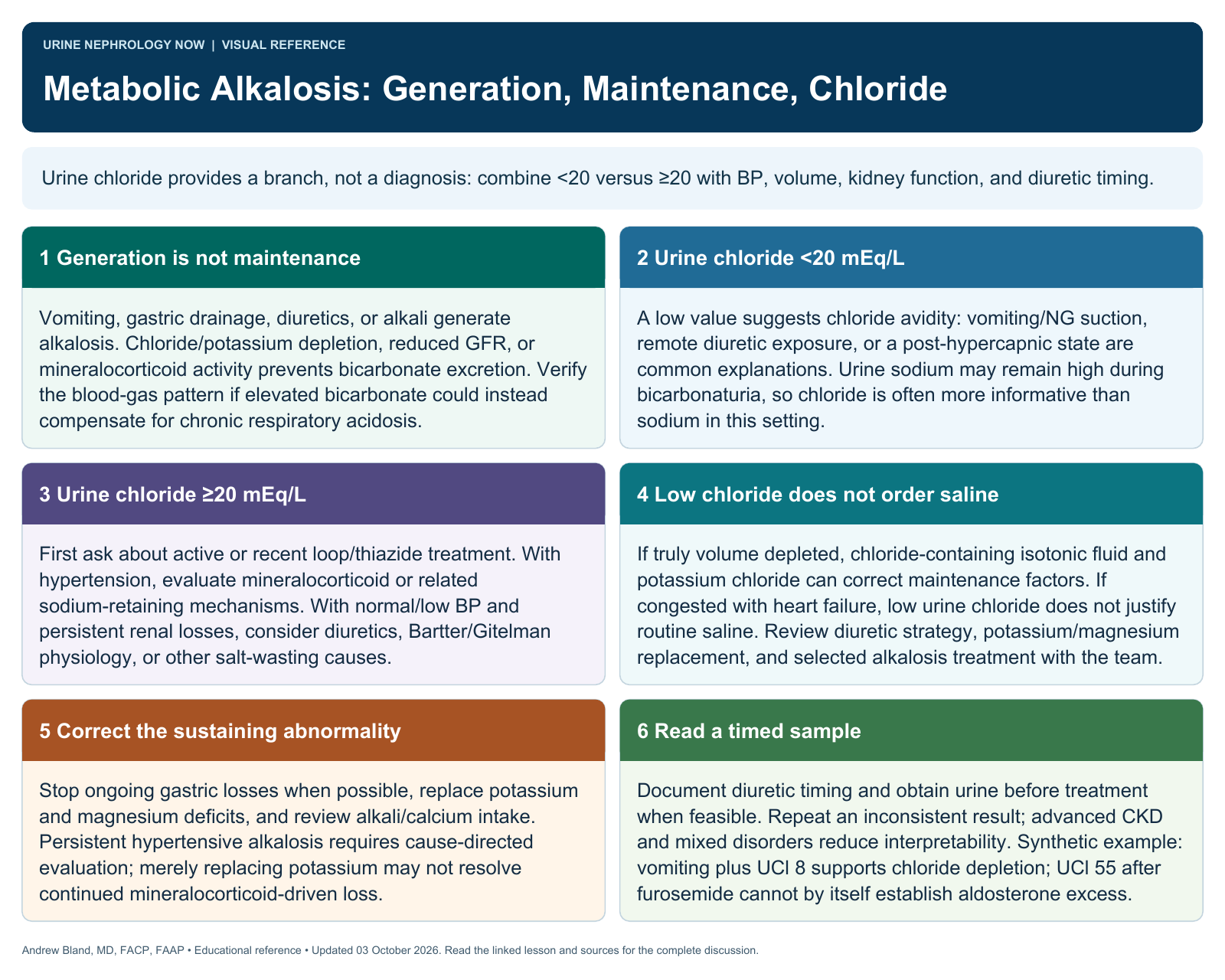
Text version
Two steps sustain alkalosis
Hydrogen loss or alkali gain generates alkalosis; impaired renal bicarbonate excretion maintains it. Chloride depletion, potassium depletion, reduced filtration, and mineralocorticoid activity can keep the disturbance going after the initial trigger.
Recognize common contexts
Vomiting, gastric drainage, diuretics, mineralocorticoid excess, and recovery from hypercapnia are important settings. Weakness, arrhythmia, and altered breathing may reflect both alkalemia and associated electrolyte abnormalities.
Use urine chloride thoughtfully
Urine chloride helps distinguish mechanisms when interpreted with blood pressure, volume status, potassium, and medication timing. Active diuretics and mixed disorders can alter the result, so a single cutoff should not end the investigation.
Replace what is missing
When appropriate, restore chloride and potassium and correct volume depletion. A congested heart failure patient may require a different strategy than someone with gastrointestinal losses. Treat ongoing vomiting and reconsider contributing medications.
Applied case: vomiting and potassium loss
Case 18 connects a sensitive history with hypokalemia, alkalosis, and urinary findings. Build trust when asking about purging or diuretic use, and distinguish renal potassium loss from the original gastrointestinal trigger.
Reassess persistent disease
Continued alkalosis with hypertension or renal potassium wasting prompts evaluation for mineralocorticoid-related disease. Severe or refractory cases may need specialist treatment. Correct magnesium when deficient and monitor the response to replacement closely.
Continue learning
This graphic summarizes a topic. The full educational pages provide the broader discussion and references.