Visual summary
Persistent edema deserves urine protein assessment; a plausible cardiac diagnosis should not hide a treatable glomerular disease.
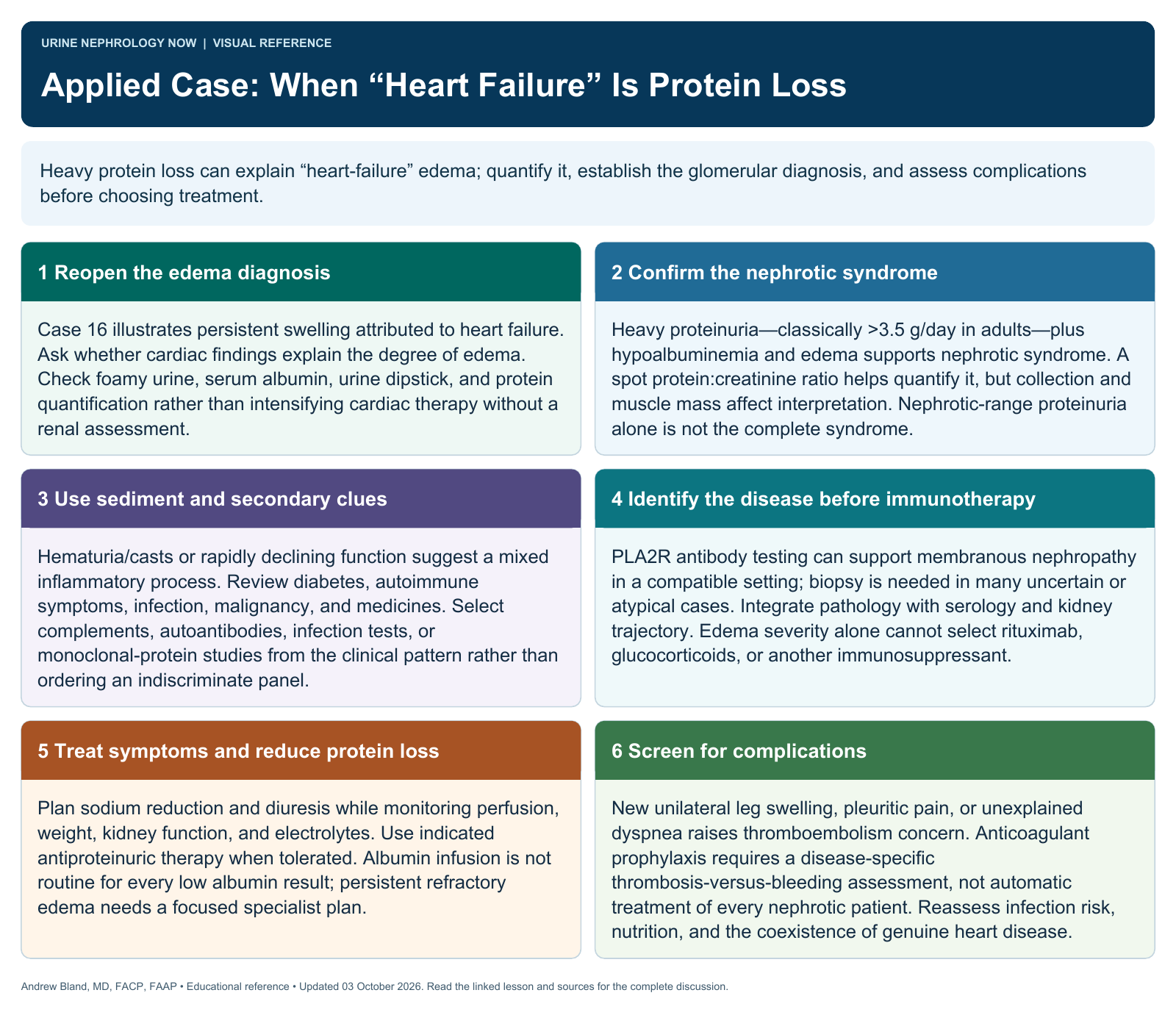
Text version
Protein loss can drive edema
Glomerular filtration barrier injury can produce heavy proteinuria, hypoalbuminemia, and sodium retention. The resulting edema may coexist with cardiac disease or be misattributed to heart failure when urine testing is overlooked.
Recognize the mismatch
Case 16 presents persistent swelling and an incomplete response to a cardiac-focused approach. Look for marked proteinuria, low serum albumin, unexpectedly severe edema, and evidence that the cardiac findings do not fully explain the presentation.
Confirm the renal syndrome
Quantify urinary protein, examine sediment, and evaluate kidney function, lipid abnormalities, and secondary causes. Serologies and kidney biopsy may clarify the glomerular disease when diagnosis will change therapy or prognosis.
Treat volume and cause
Use a tailored edema strategy while addressing the underlying kidney disorder. Blood pressure and antiproteinuric therapy may help, while immunosuppression depends on the specific diagnosis and should not be inferred from edema alone.
Look beyond swelling
Nephrotic syndrome may increase thrombotic and infectious risk and alter medication handling. Assess these complications in context, and consider whether severe symptoms or rapidly worsening kidney function require urgent specialist evaluation.
Reassess the initial label
A previous diagnosis can anchor subsequent reasoning. Review unexplained findings, order targeted urine studies, and integrate pathology with the clinical course. Coexisting heart and kidney disease may both need treatment rather than a single replacement label.
Continue learning
This graphic summarizes a topic. The full educational pages provide the broader discussion and references.