Visual summary
Heavy protein loss can explain “heart-failure” edema; quantify it, establish the glomerular diagnosis, and assess complications before choosing treatment.
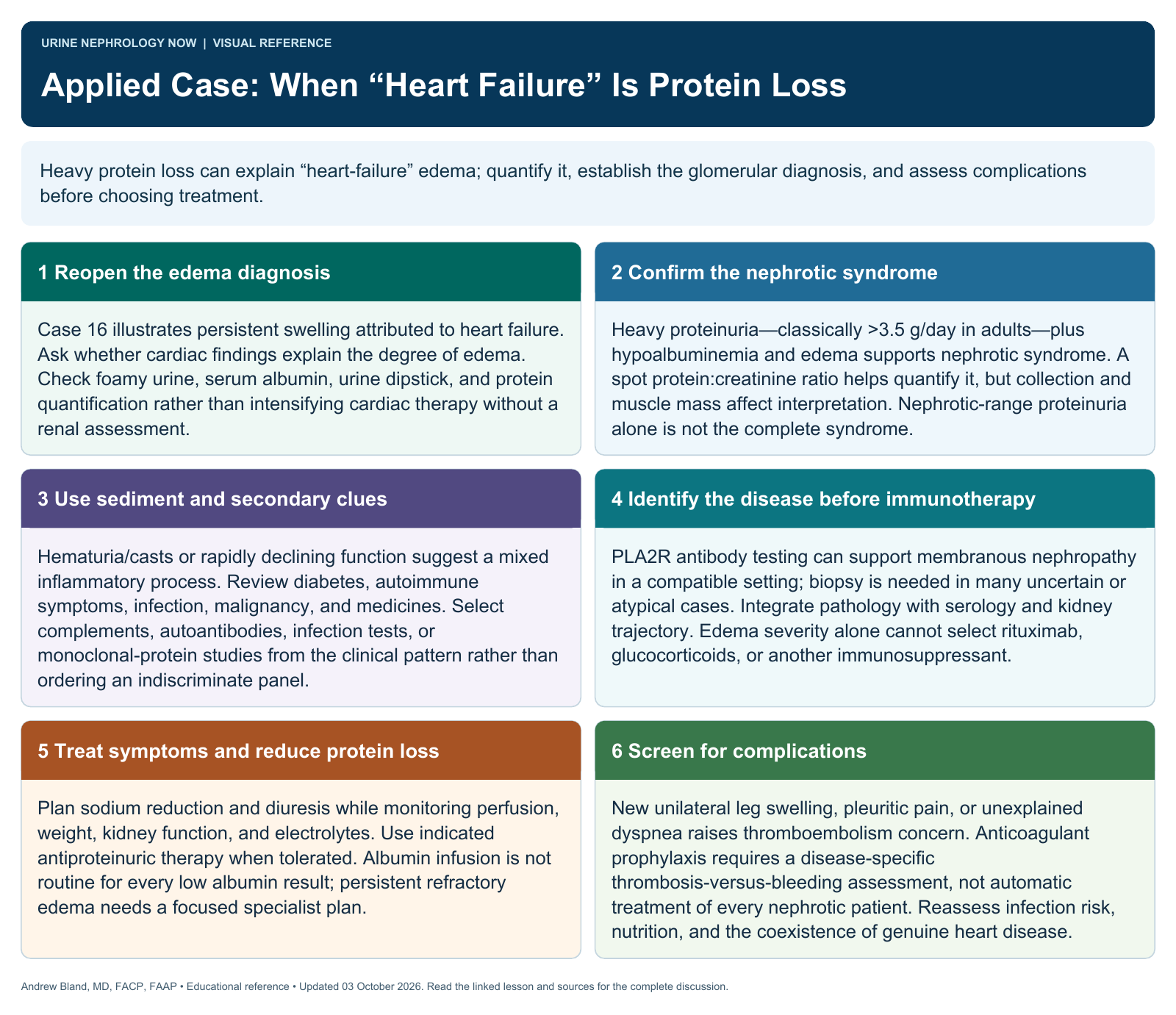
Text version
Reopen the edema diagnosis
Case 16 illustrates persistent swelling attributed to heart failure. Ask whether cardiac findings explain the degree of edema. Check foamy urine, serum albumin, urine dipstick, and protein quantification rather than intensifying cardiac therapy without a renal assessment.
Confirm the nephrotic syndrome
Heavy proteinuria—classically >3.5 g/day in adults—plus hypoalbuminemia and edema supports nephrotic syndrome. A spot protein:creatinine ratio helps quantify it, but collection and muscle mass affect interpretation. Nephrotic-range proteinuria alone is not the complete syndrome.
Use sediment and secondary clues
Hematuria/casts or rapidly declining function suggest a mixed inflammatory process. Review diabetes, autoimmune symptoms, infection, malignancy, and medicines. Select complements, autoantibodies, infection tests, or monoclonal-protein studies from the clinical pattern rather than ordering an indiscriminate panel.
Identify the disease before immunotherapy
PLA2R antibody testing can support membranous nephropathy in a compatible setting; biopsy is needed in many uncertain or atypical cases. Integrate pathology with serology and kidney trajectory. Edema severity alone cannot select rituximab, glucocorticoids, or another immunosuppressant.
Treat symptoms and reduce protein loss
Plan sodium reduction and diuresis while monitoring perfusion, weight, kidney function, and electrolytes. Use indicated antiproteinuric therapy when tolerated. Albumin infusion is not routine for every low albumin result; persistent refractory edema needs a focused specialist plan.
Screen for complications
New unilateral leg swelling, pleuritic pain, or unexplained dyspnea raises thromboembolism concern. Anticoagulant prophylaxis requires a disease-specific thrombosis-versus-bleeding assessment, not automatic treatment of every nephrotic patient. Reassess infection risk, nutrition, and the coexistence of genuine heart disease.