Visual summary
Use symptoms, postural measurements, and the clinical context to balance sustained BP control with safe daily function.
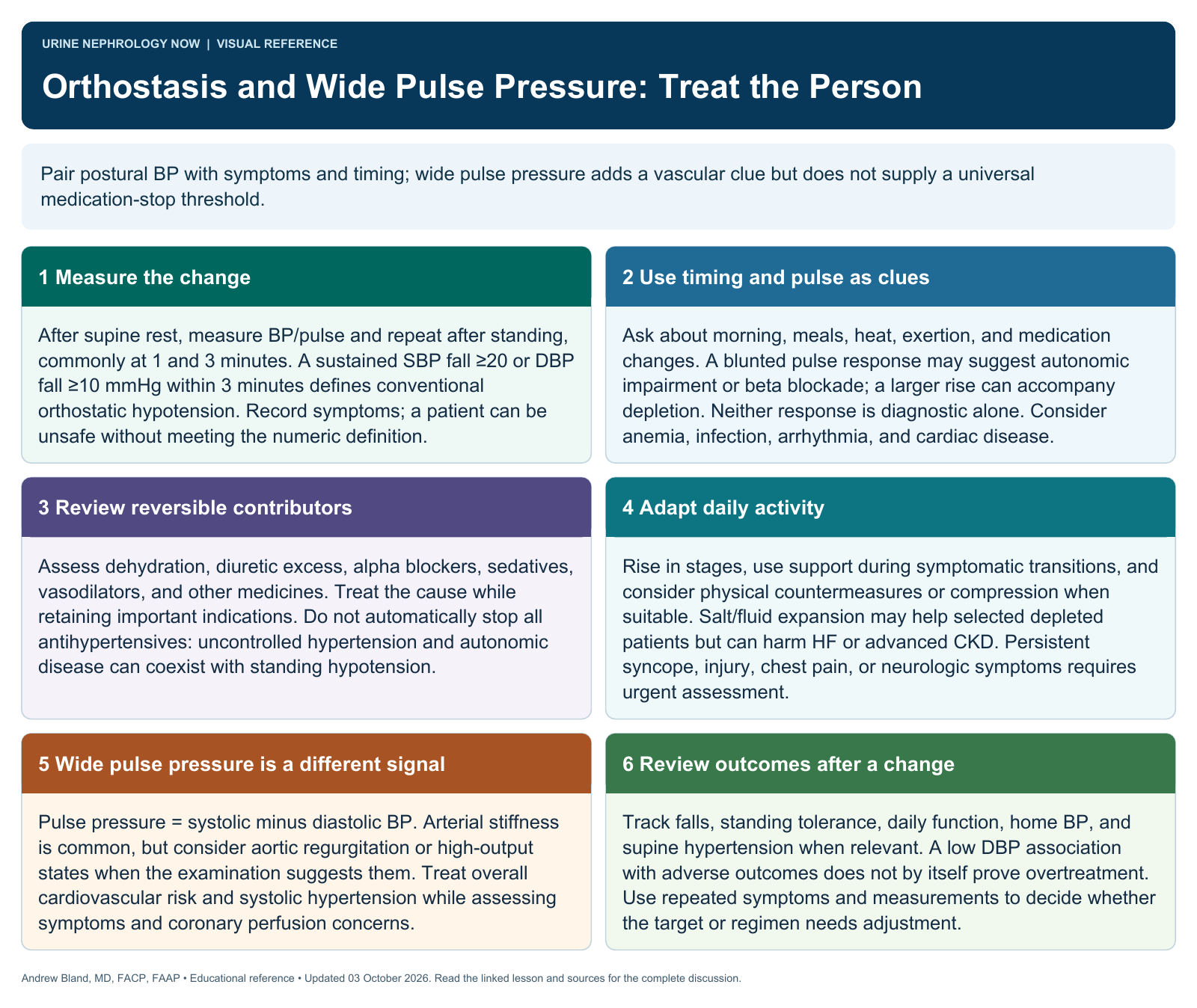
Text version
Two related but different patterns
Orthostatic hypotension reflects an inadequate circulatory response to standing; wide pulse pressure often reflects arterial stiffness but has other causes. Neither pattern alone explains every episode of dizziness or automatically determines a treatment target.
Recognize symptoms and timing
Ask about standing dizziness, falls, presyncope, exertional symptoms, meals, heat, and medication timing. A patient may be symptomatic without meeting a textbook threshold, and a measured pressure drop may be asymptomatic.
Measure and investigate
Use a standardized postural BP and pulse assessment and review volume status, autonomic disease, cardiac conditions, anemia, and medications. Wide pulse pressure warrants evaluation in context rather than treating systolic and diastolic values as independent diseases.
Reduce avoidable burden
Address dehydration when present, review contributing drugs, and discuss gradual position changes and appropriate physical measures. Any medication adjustment should consider the original indication and the risk of worsening hypertension or heart failure.
Balance systolic benefit and tolerance
Lowering elevated systolic pressure can remain beneficial despite a lower diastolic value. Individualize targets using symptoms, coronary disease, frailty, measurement quality, and the evidence rather than assuming a universal harmful diastolic cutoff.
Reassess after changes
Follow falls, daily function, standing symptoms, and both seated and postural pressures when relevant. Observational J-curve associations may reflect underlying illness and do not by themselves prove that treatment caused the adverse outcome.
Continue learning
This graphic summarizes a topic. The full educational pages provide the broader discussion and references.