Visual summary
Pair postural BP with symptoms and timing; wide pulse pressure adds a vascular clue but does not supply a universal medication-stop threshold.
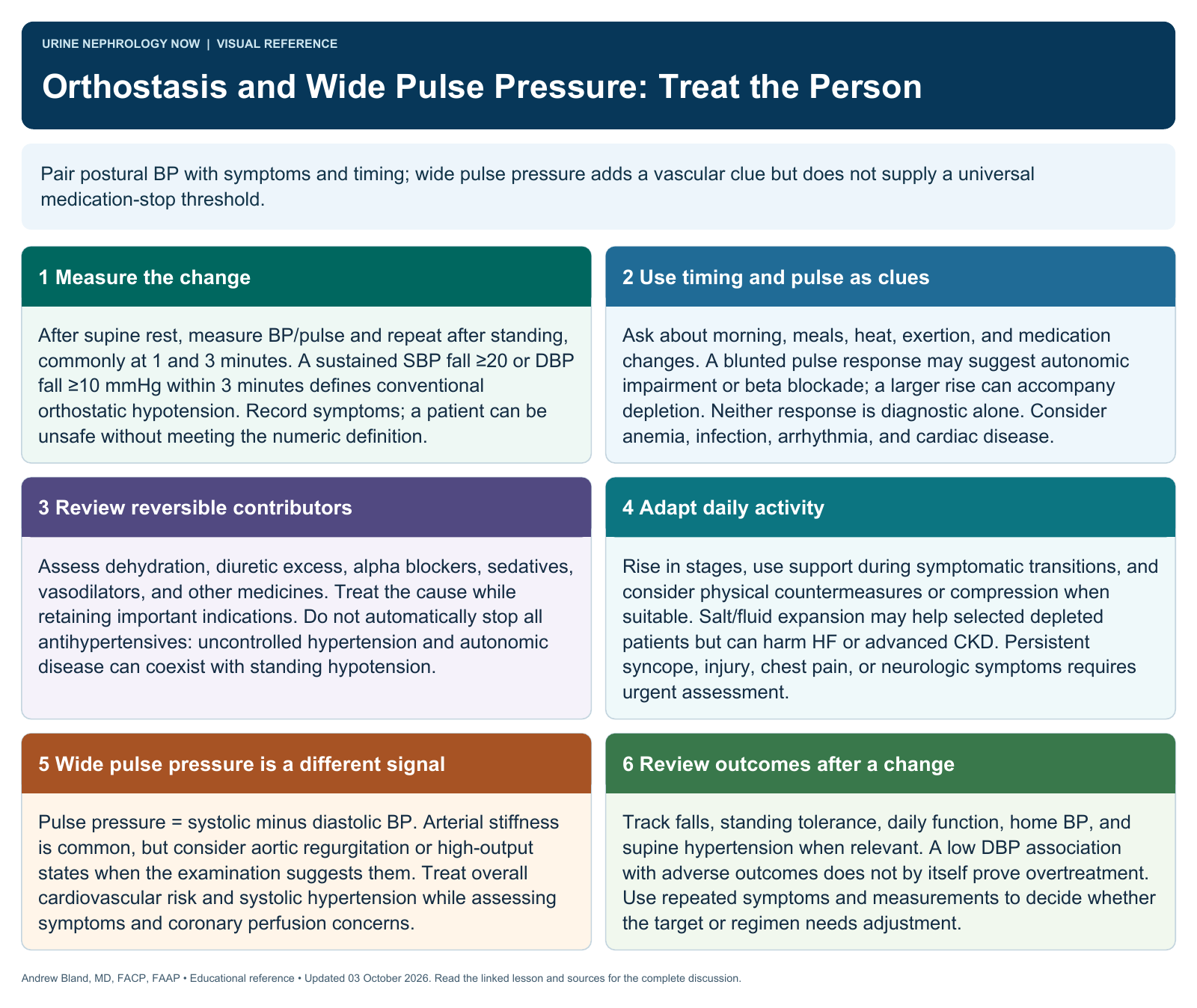
Text version
Measure the change
After supine rest, measure BP/pulse and repeat after standing, commonly at 1 and 3 minutes. A sustained SBP fall ≥20 or DBP fall ≥10 mmHg within 3 minutes defines conventional orthostatic hypotension. Record symptoms; a patient can be unsafe without meeting the numeric definition.
Use timing and pulse as clues
Ask about morning, meals, heat, exertion, and medication changes. A blunted pulse response may suggest autonomic impairment or beta blockade; a larger rise can accompany depletion. Neither response is diagnostic alone. Consider anemia, infection, arrhythmia, and cardiac disease.
Review reversible contributors
Assess dehydration, diuretic excess, alpha blockers, sedatives, vasodilators, and other medicines. Treat the cause while retaining important indications. Do not automatically stop all antihypertensives: uncontrolled hypertension and autonomic disease can coexist with standing hypotension.
Adapt daily activity
Rise in stages, use support during symptomatic transitions, and consider physical countermeasures or compression when suitable. Salt/fluid expansion may help selected depleted patients but can harm HF or advanced CKD. Persistent syncope, injury, chest pain, or neurologic symptoms requires urgent assessment.
Wide pulse pressure is a different signal
Pulse pressure = systolic minus diastolic BP. Arterial stiffness is common, but consider aortic regurgitation or high-output states when the examination suggests them. Treat overall cardiovascular risk and systolic hypertension while assessing symptoms and coronary perfusion concerns.
Review outcomes after a change
Track falls, standing tolerance, daily function, home BP, and supine hypertension when relevant. A low DBP association with adverse outcomes does not by itself prove overtreatment. Use repeated symptoms and measurements to decide whether the target or regimen needs adjustment.