Visual summary
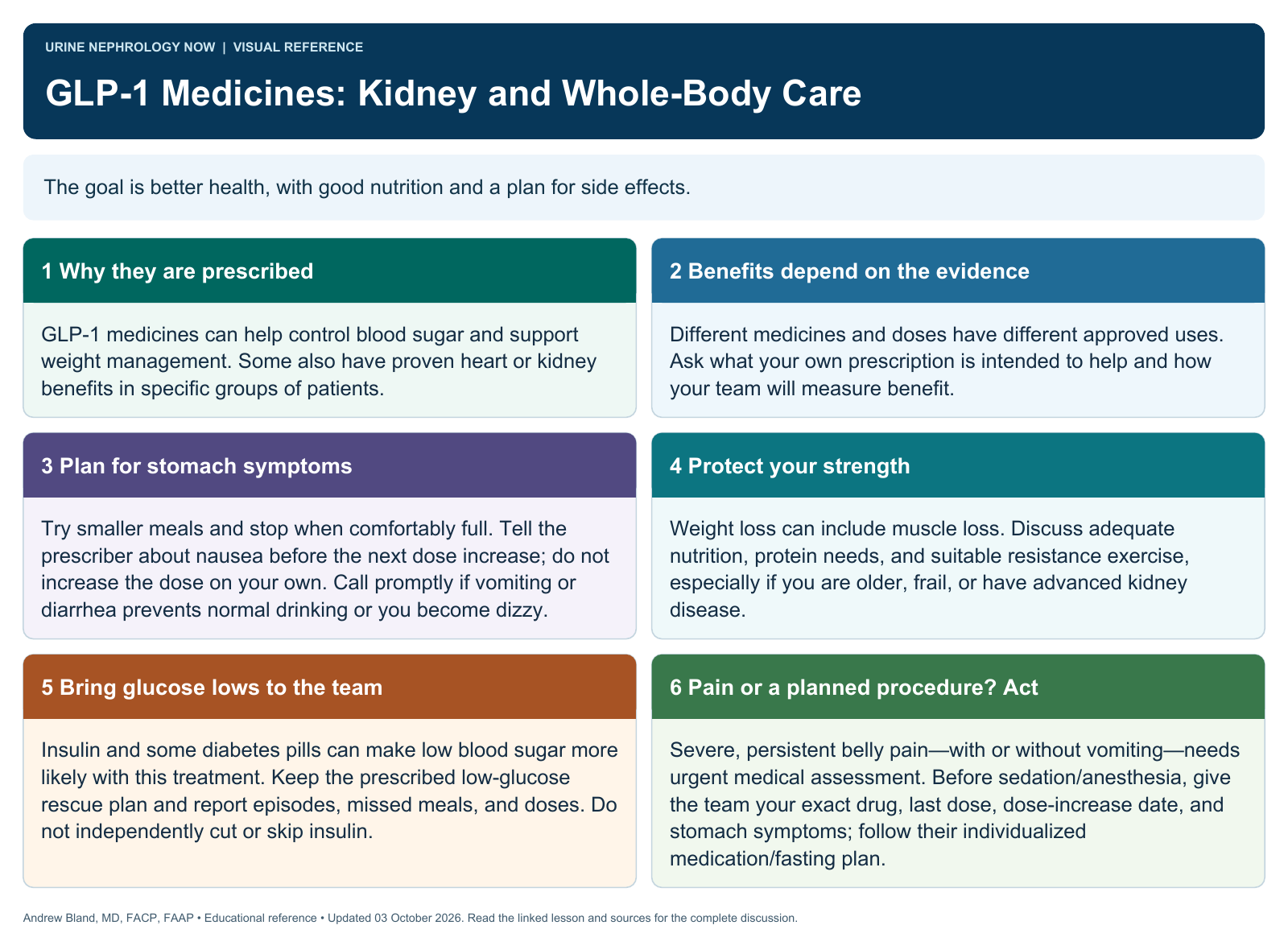
The goal is better health, with good nutrition and a plan for side effects.
Text version
Why they are prescribed
GLP-1 medicines can help control blood sugar and support weight management. Some also have proven heart or kidney benefits in specific groups of patients.
Benefits depend on the evidence
Different medicines and doses have different approved uses. Ask what your own prescription is intended to help and how your team will measure benefit.
Plan for stomach symptoms
Try smaller meals and stop when comfortably full. Tell the prescriber about nausea before the next dose increase; do not increase the dose on your own. Call promptly if vomiting or diarrhea prevents normal drinking or you become dizzy.
Protect your strength
Weight loss can include muscle loss. Discuss adequate nutrition, protein needs, and suitable resistance exercise, especially if you are older, frail, or have advanced kidney disease.
Bring glucose lows to the team
Insulin and some diabetes pills can make low blood sugar more likely with this treatment. Keep the prescribed low-glucose rescue plan and report episodes, missed meals, and doses. Do not independently cut or skip insulin.
Pain or a planned procedure? Act
Severe, persistent belly pain—with or without vomiting—needs urgent medical assessment. Before sedation/anesthesia, give the team your exact drug, last dose, dose-increase date, and stomach symptoms; follow their individualized medication/fasting plan.