Visual summary
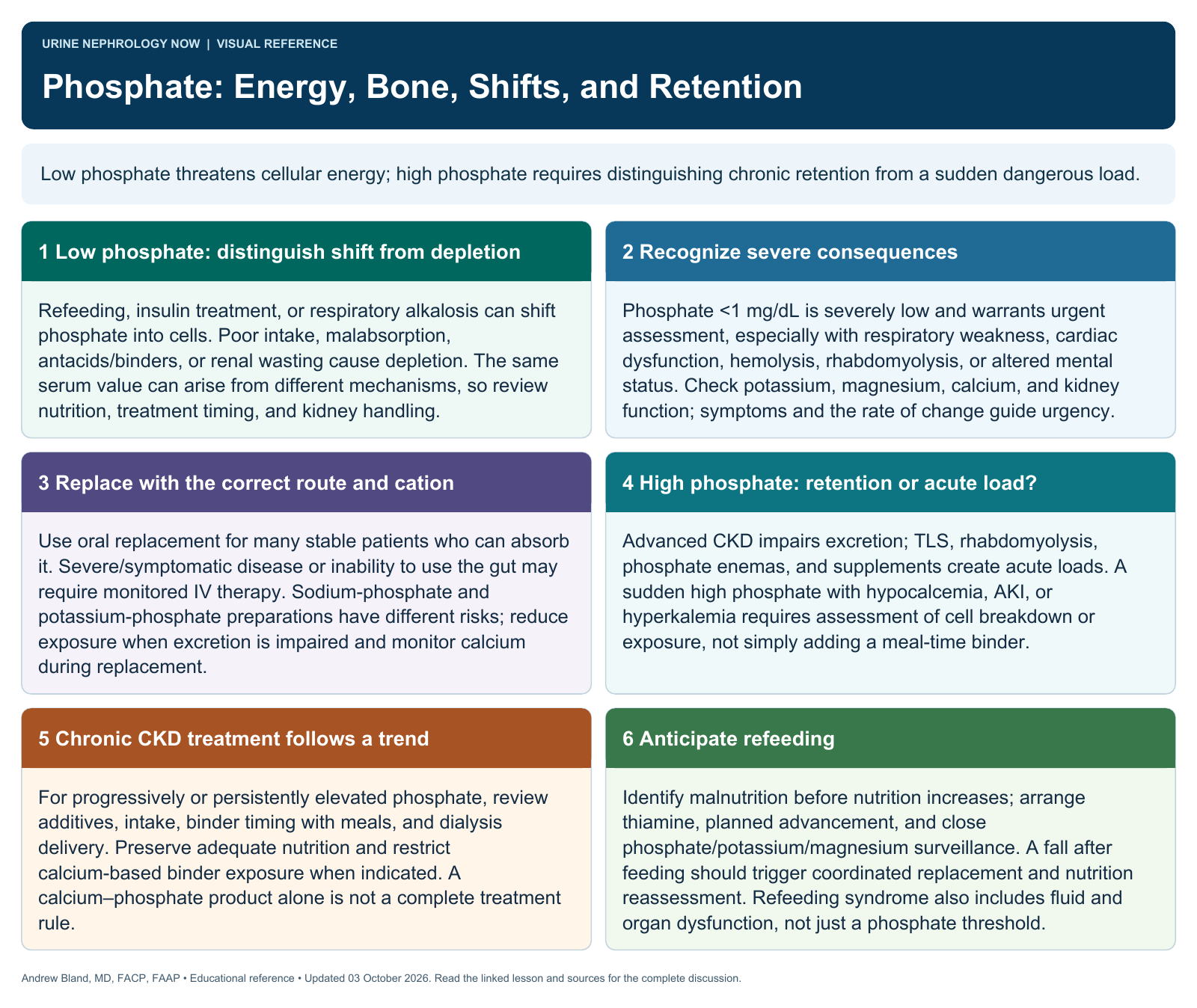
Low phosphate threatens cellular energy; high phosphate requires distinguishing chronic retention from a sudden dangerous load.
Text version
Low phosphate: distinguish shift from depletion
Refeeding, insulin treatment, or respiratory alkalosis can shift phosphate into cells. Poor intake, malabsorption, antacids/binders, or renal wasting cause depletion. The same serum value can arise from different mechanisms, so review nutrition, treatment timing, and kidney handling.
Recognize severe consequences
Phosphate <1 mg/dL is severely low and warrants urgent assessment, especially with respiratory weakness, cardiac dysfunction, hemolysis, rhabdomyolysis, or altered mental status. Check potassium, magnesium, calcium, and kidney function; symptoms and the rate of change guide urgency.
Replace with the correct route and cation
Use oral replacement for many stable patients who can absorb it. Severe/symptomatic disease or inability to use the gut may require monitored IV therapy. Sodium-phosphate and potassium-phosphate preparations have different risks; reduce exposure when excretion is impaired and monitor calcium during replacement.
High phosphate: retention or acute load?
Advanced CKD impairs excretion; TLS, rhabdomyolysis, phosphate enemas, and supplements create acute loads. A sudden high phosphate with hypocalcemia, AKI, or hyperkalemia requires assessment of cell breakdown or exposure, not simply adding a meal-time binder.
Chronic CKD treatment follows a trend
For progressively or persistently elevated phosphate, review additives, intake, binder timing with meals, and dialysis delivery. Preserve adequate nutrition and restrict calcium-based binder exposure when indicated. A calcium–phosphate product alone is not a complete treatment rule.
Anticipate refeeding
Identify malnutrition before nutrition increases; arrange thiamine, planned advancement, and close phosphate/potassium/magnesium surveillance. A fall after feeding should trigger coordinated replacement and nutrition reassessment. Refeeding syndrome also includes fluid and organ dysfunction, not just a phosphate threshold.