Visual summary
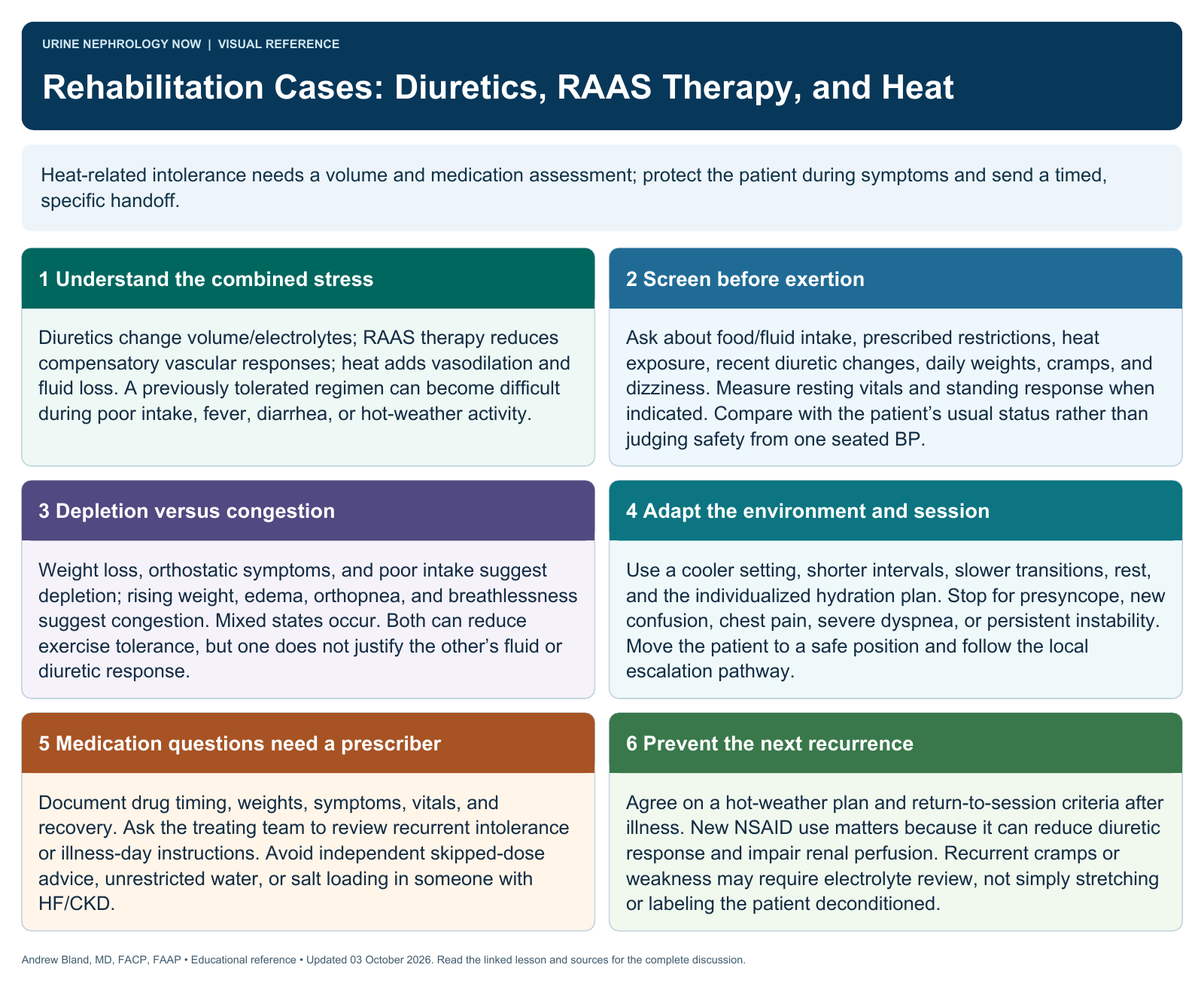
Safe exercise depends on the combined effect of medication, heat, intake, and symptoms on that particular day.
Text version
Several effects can add together
Diuretics affect volume and electrolytes, RAAS-pathway drugs alter vascular and renal responses, and heat increases vasodilation and fluid loss. The combination can impair exercise tolerance even when each treatment is appropriate in stable conditions.
Recognize early warning signs
Cases 28 and 30 emphasize dizziness, cramping, weakness, gait instability, reduced intake, and orthostatic symptoms. A patient need not cross a textbook BP-drop threshold to be unsafe during activity.
Check the day’s context
Review symptoms, recent illness, weather, fluid restrictions, medication timing, weights, and any available laboratory changes. Ask about new NSAIDs, which can affect kidney perfusion and reduce diuretic response.
Adapt activity to physiology
Use a cooler environment, gradual transitions, appropriate rest, and the individualized hydration plan. Stop the session when instability develops, assess the patient, and use the established escalation pathway for persistent or severe symptoms.
Coordinate the medication question
Document the timing and observed response for the prescribing team. Do not recommend skipped doses, unsupervised salt loading, or unrestricted fluid intake; patients with heart failure or CKD may need a carefully balanced plan.
Plan for the next session
Agree on symptom reporting, daily weights when prescribed, heat precautions, and return criteria after illness. Investigate recurrent intolerance rather than normalizing it as simply being deconditioned or an unavoidable medication effect.
Continue learning
This graphic summarizes a topic. The full educational pages provide the broader discussion and references.