Visual summary
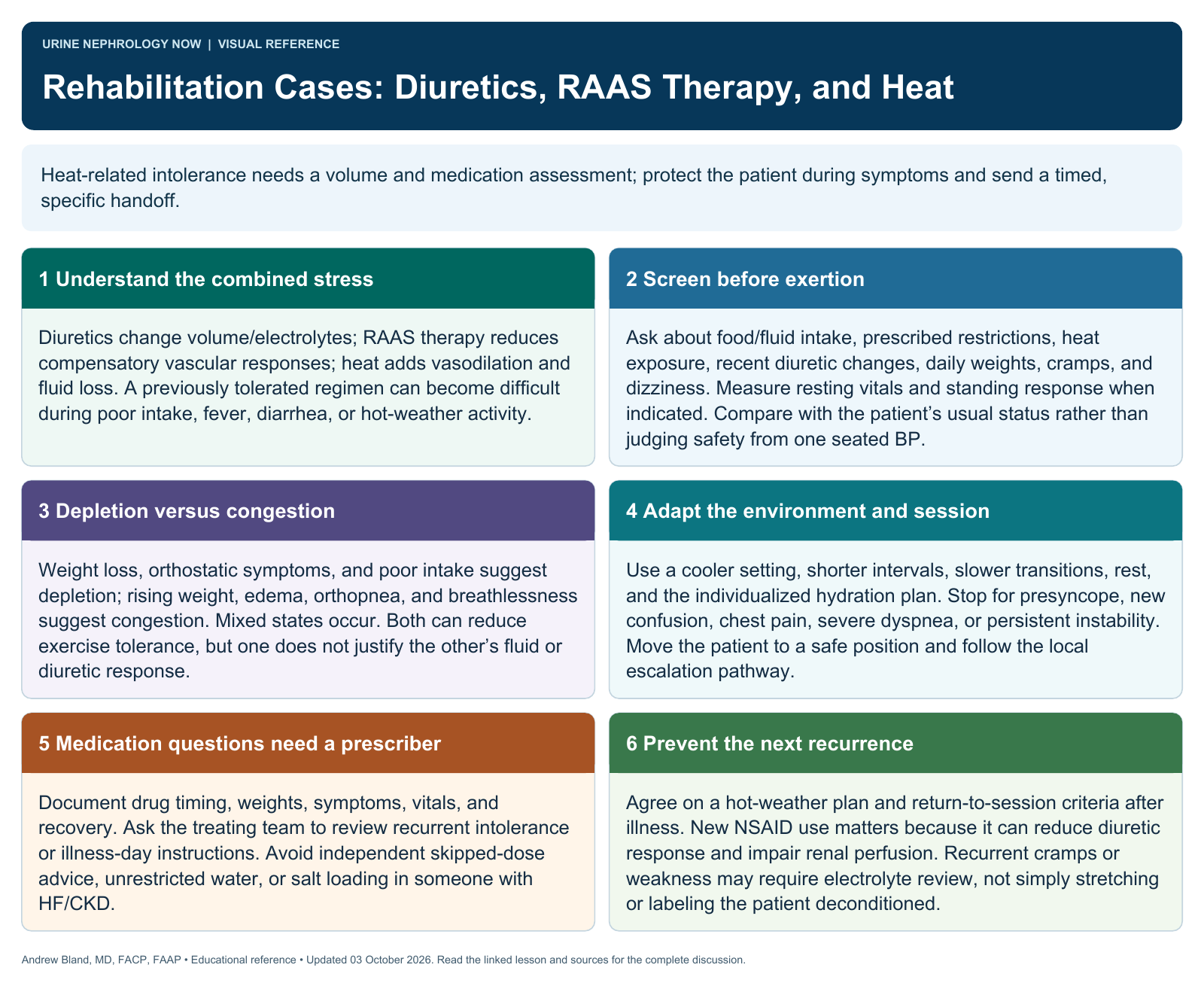
Heat-related intolerance needs a volume and medication assessment; protect the patient during symptoms and send a timed, specific handoff.
Text version
Understand the combined stress
Diuretics change volume/electrolytes; RAAS therapy reduces compensatory vascular responses; heat adds vasodilation and fluid loss. A previously tolerated regimen can become difficult during poor intake, fever, diarrhea, or hot-weather activity.
Screen before exertion
Ask about food/fluid intake, prescribed restrictions, heat exposure, recent diuretic changes, daily weights, cramps, and dizziness. Measure resting vitals and standing response when indicated. Compare with the patient’s usual status rather than judging safety from one seated BP.
Depletion versus congestion
Weight loss, orthostatic symptoms, and poor intake suggest depletion; rising weight, edema, orthopnea, and breathlessness suggest congestion. Mixed states occur. Both can reduce exercise tolerance, but one does not justify the other’s fluid or diuretic response.
Adapt the environment and session
Use a cooler setting, shorter intervals, slower transitions, rest, and the individualized hydration plan. Stop for presyncope, new confusion, chest pain, severe dyspnea, or persistent instability. Move the patient to a safe position and follow the local escalation pathway.
Medication questions need a prescriber
Document drug timing, weights, symptoms, vitals, and recovery. Ask the treating team to review recurrent intolerance or illness-day instructions. Avoid independent skipped-dose advice, unrestricted water, or salt loading in someone with HF/CKD.
Prevent the next recurrence
Agree on a hot-weather plan and return-to-session criteria after illness. New NSAID use matters because it can reduce diuretic response and impair renal perfusion. Recurrent cramps or weakness may require electrolyte review, not simply stretching or labeling the patient deconditioned.