Visual summary
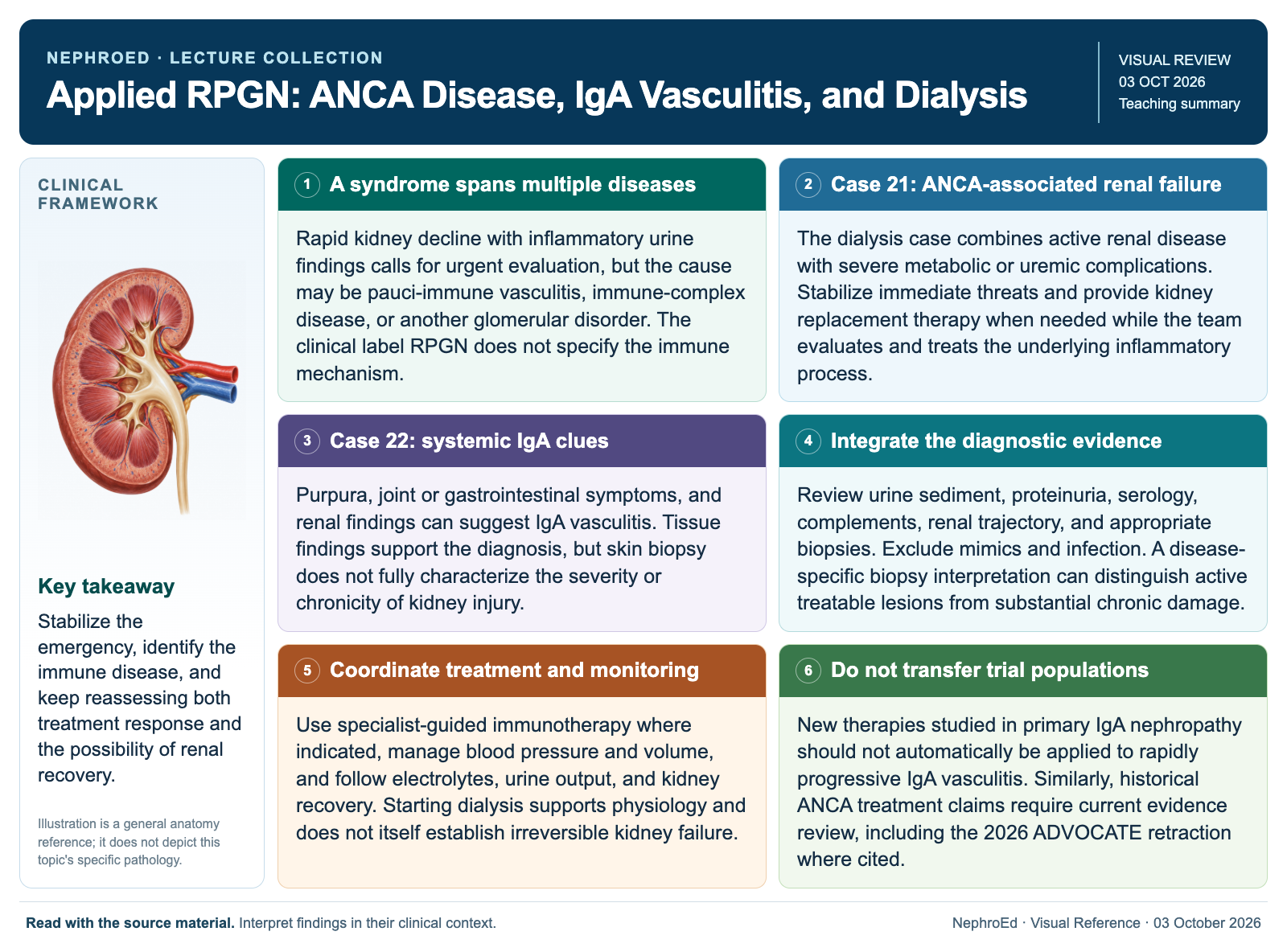
Stabilize the emergency, identify the immune disease, and keep reassessing both treatment response and the possibility of renal recovery.
Text version
A syndrome spans multiple diseases
Rapid kidney decline with inflammatory urine findings calls for urgent evaluation, but the cause may be pauci-immune vasculitis, immune-complex disease, or another glomerular disorder. The clinical label RPGN does not specify the immune mechanism.
Case 21: ANCA-associated renal failure
The dialysis case combines active renal disease with severe metabolic or uremic complications. Stabilize immediate threats and provide kidney replacement therapy when needed while the team evaluates and treats the underlying inflammatory process.
Case 22: systemic IgA clues
Purpura, joint or gastrointestinal symptoms, and renal findings can suggest IgA vasculitis. Tissue findings support the diagnosis, but skin biopsy does not fully characterize the severity or chronicity of kidney injury.
Integrate the diagnostic evidence
Review urine sediment, proteinuria, serology, complements, renal trajectory, and appropriate biopsies. Exclude mimics and infection. A disease-specific biopsy interpretation can distinguish active treatable lesions from substantial chronic damage.
Coordinate treatment and monitoring
Use specialist-guided immunotherapy where indicated, manage blood pressure and volume, and follow electrolytes, urine output, and kidney recovery. Starting dialysis supports physiology and does not itself establish irreversible kidney failure.
Do not transfer trial populations
New therapies studied in primary IgA nephropathy should not automatically be applied to rapidly progressive IgA vasculitis. Similarly, historical ANCA treatment claims require current evidence review, including the 2026 ADVOCATE retraction where cited.
Continue learning
This graphic summarizes a topic. The full educational pages provide the broader discussion and references.