Visual summary
Use the clinical syndrome to recognize urgency, then tissue and serology to distinguish ANCA from IgA disease and choose the appropriate treatment pathway.
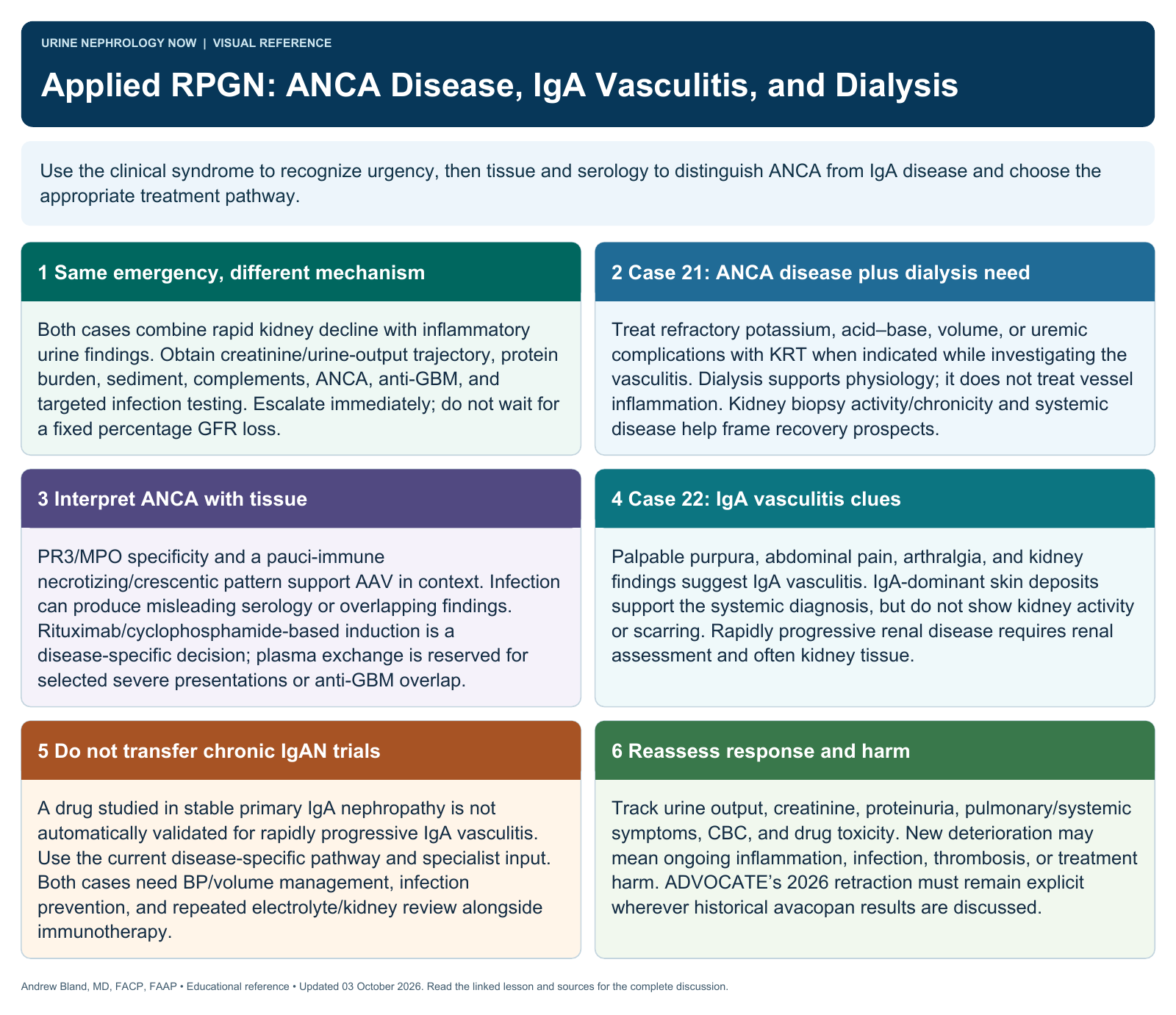
Text version
Same emergency, different mechanism
Both cases combine rapid kidney decline with inflammatory urine findings. Obtain creatinine/urine-output trajectory, protein burden, sediment, complements, ANCA, anti-GBM, and targeted infection testing. Escalate immediately; do not wait for a fixed percentage GFR loss.
Case 21: ANCA disease plus dialysis need
Treat refractory potassium, acid–base, volume, or uremic complications with KRT when indicated while investigating the vasculitis. Dialysis supports physiology; it does not treat vessel inflammation. Kidney biopsy activity/chronicity and systemic disease help frame recovery prospects.
Interpret ANCA with tissue
PR3/MPO specificity and a pauci-immune necrotizing/crescentic pattern support AAV in context. Infection can produce misleading serology or overlapping findings. Rituximab/cyclophosphamide-based induction is a disease-specific decision; plasma exchange is reserved for selected severe presentations or anti-GBM overlap.
Case 22: IgA vasculitis clues
Palpable purpura, abdominal pain, arthralgia, and kidney findings suggest IgA vasculitis. IgA-dominant skin deposits support the systemic diagnosis, but do not show kidney activity or scarring. Rapidly progressive renal disease requires renal assessment and often kidney tissue.
Do not transfer chronic IgAN trials
A drug studied in stable primary IgA nephropathy is not automatically validated for rapidly progressive IgA vasculitis. Use the current disease-specific pathway and specialist input. Both cases need BP/volume management, infection prevention, and repeated electrolyte/kidney review alongside immunotherapy.
Reassess response and harm
Track urine output, creatinine, proteinuria, pulmonary/systemic symptoms, CBC, and drug toxicity. New deterioration may mean ongoing inflammation, infection, thrombosis, or treatment harm. ADVOCATE’s 2026 retraction must remain explicit wherever historical avacopan results are discussed.