Visual summary
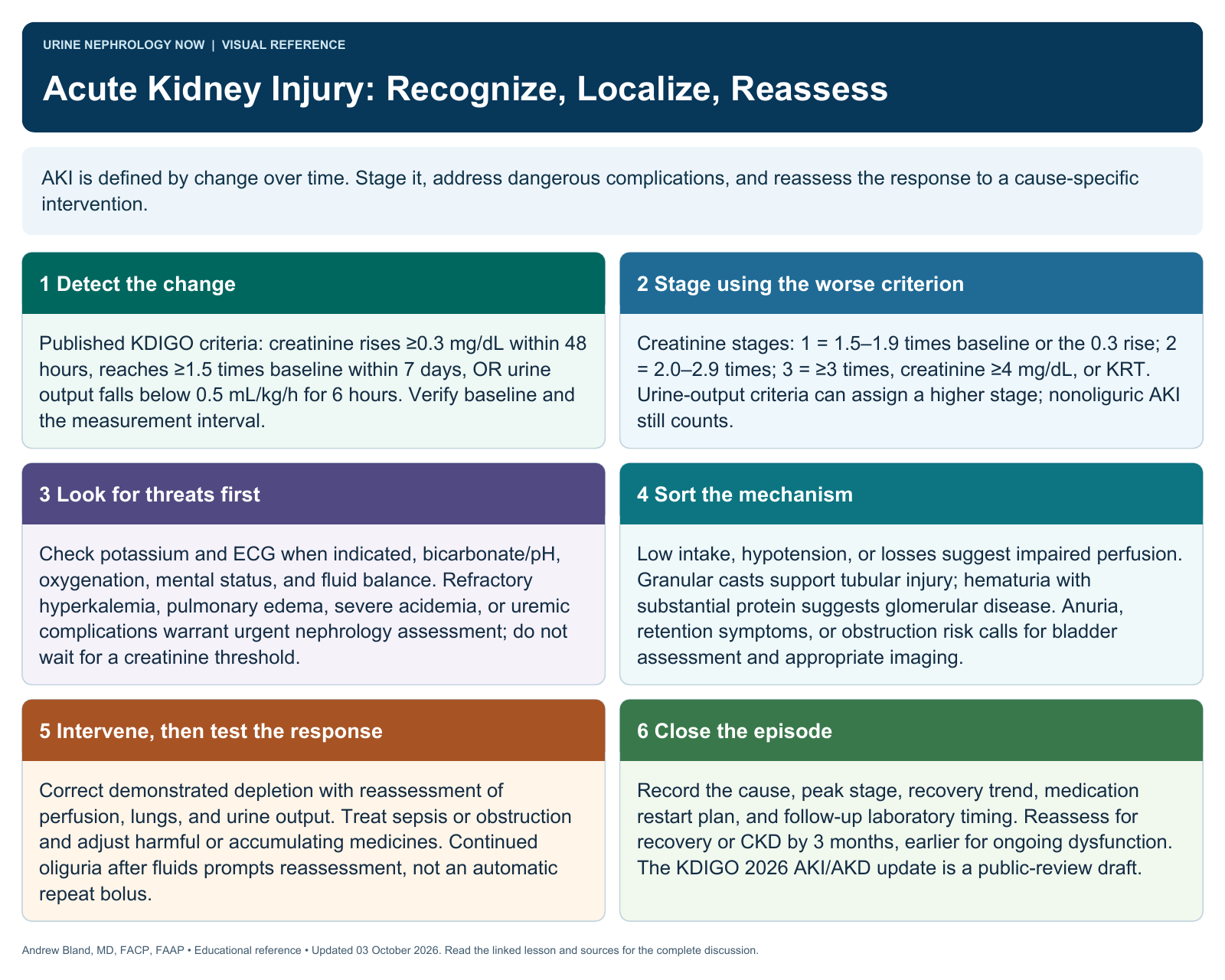
AKI is a time-dependent syndrome: stabilize immediate threats, identify reversible causes, and keep reassessing the trajectory.
Text version
A changing filtration signal
AKI is a rapid decline in kidney function. Creatinine lags behind injury, while urine output adds complementary information. Compare with a credible baseline and interpret both measures over time.
Recognize the urgent problem
Escalate immediately for dangerous hyperkalemia, pulmonary edema, severe acidemia, uremic complications, or anuria. Clinical instability determines urgency; an isolated creatinine value does not describe the whole patient.
Localize the cause
Review perfusion, infection, medications, recent procedures, and obstruction risk. Examine volume status, inspect urine sediment, quantify protein when appropriate, and obtain urinary tract imaging when obstruction is plausible.
Support the kidney
Restore adequate perfusion when depleted, treat infection, relieve obstruction, and stop or adjust implicated drugs. Reassess fluid responsiveness and congestion rather than continuing fluids automatically as creatinine rises.
Use tests in context
Fractional excretion indices and the BUN:creatinine ratio are clues with important confounders. Diuretics, CKD, sepsis, and glomerular disease can disrupt textbook patterns. Sediment findings also require clinical correlation.
Track recovery and risk
Review trajectories, drug dosing, fluid balance, and electrolytes. Arrange follow-up for recovery, albuminuria, BP, and CKD risk. The KDIGO 2026 AKI/AKD update remains a public-review draft; distinguish its proposals from published criteria.
Self-check: A rising creatinine with edema may reflect congestion, injury, or both. Which examination, urine finding, and trend would change your next action?
Continue learning
This graphic summarizes a topic. The full educational pages provide the broader discussion and references.