Visual summary
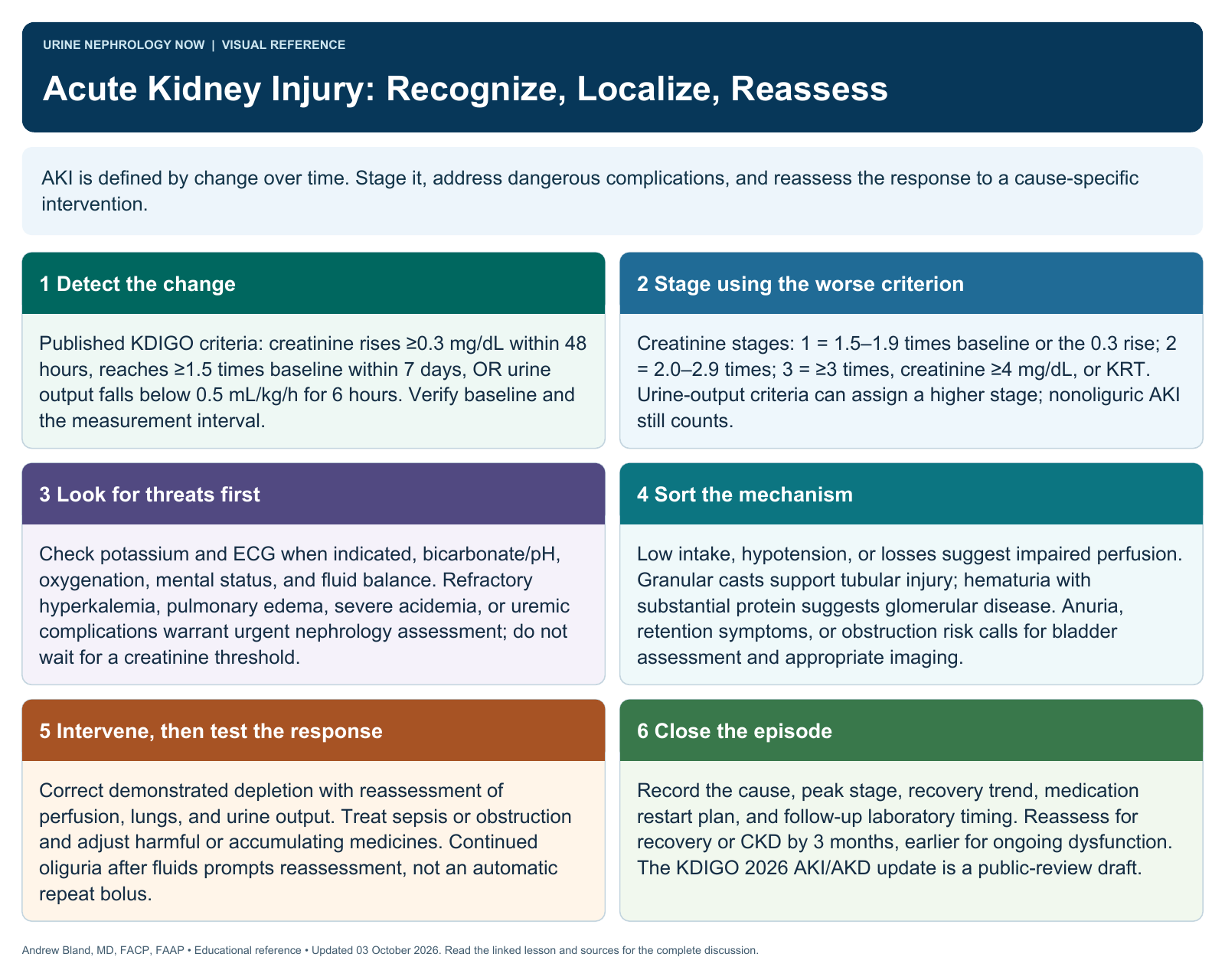
AKI is defined by change over time. Stage it, address dangerous complications, and reassess the response to a cause-specific intervention.
Text version
Detect the change
Published KDIGO criteria: creatinine rises ≥0.3 mg/dL within 48 hours, reaches ≥1.5 times baseline within 7 days, OR urine output falls below 0.5 mL/kg/h for 6 hours. Verify baseline and the measurement interval.
Stage using the worse criterion
Creatinine stages: 1 = 1.5–1.9 times baseline or the 0.3 rise; 2 = 2.0–2.9 times; 3 = ≥3 times, creatinine ≥4 mg/dL, or KRT. Urine-output criteria can assign a higher stage; nonoliguric AKI still counts.
Look for threats first
Check potassium and ECG when indicated, bicarbonate/pH, oxygenation, mental status, and fluid balance. Refractory hyperkalemia, pulmonary edema, severe acidemia, or uremic complications warrant urgent nephrology assessment; do not wait for a creatinine threshold.
Sort the mechanism
Low intake, hypotension, or losses suggest impaired perfusion. Granular casts support tubular injury; hematuria with substantial protein suggests glomerular disease. Anuria, retention symptoms, or obstruction risk calls for bladder assessment and appropriate imaging.
Intervene, then test the response
Correct demonstrated depletion with reassessment of perfusion, lungs, and urine output. Treat sepsis or obstruction and adjust harmful or accumulating medicines. Continued oliguria after fluids prompts reassessment, not an automatic repeat bolus.
Close the episode
Record the cause, peak stage, recovery trend, medication restart plan, and follow-up laboratory timing. Reassess for recovery or CKD by 3 months, earlier for ongoing dysfunction. The KDIGO 2026 AKI/AKD update is a public-review draft.