Visual summary
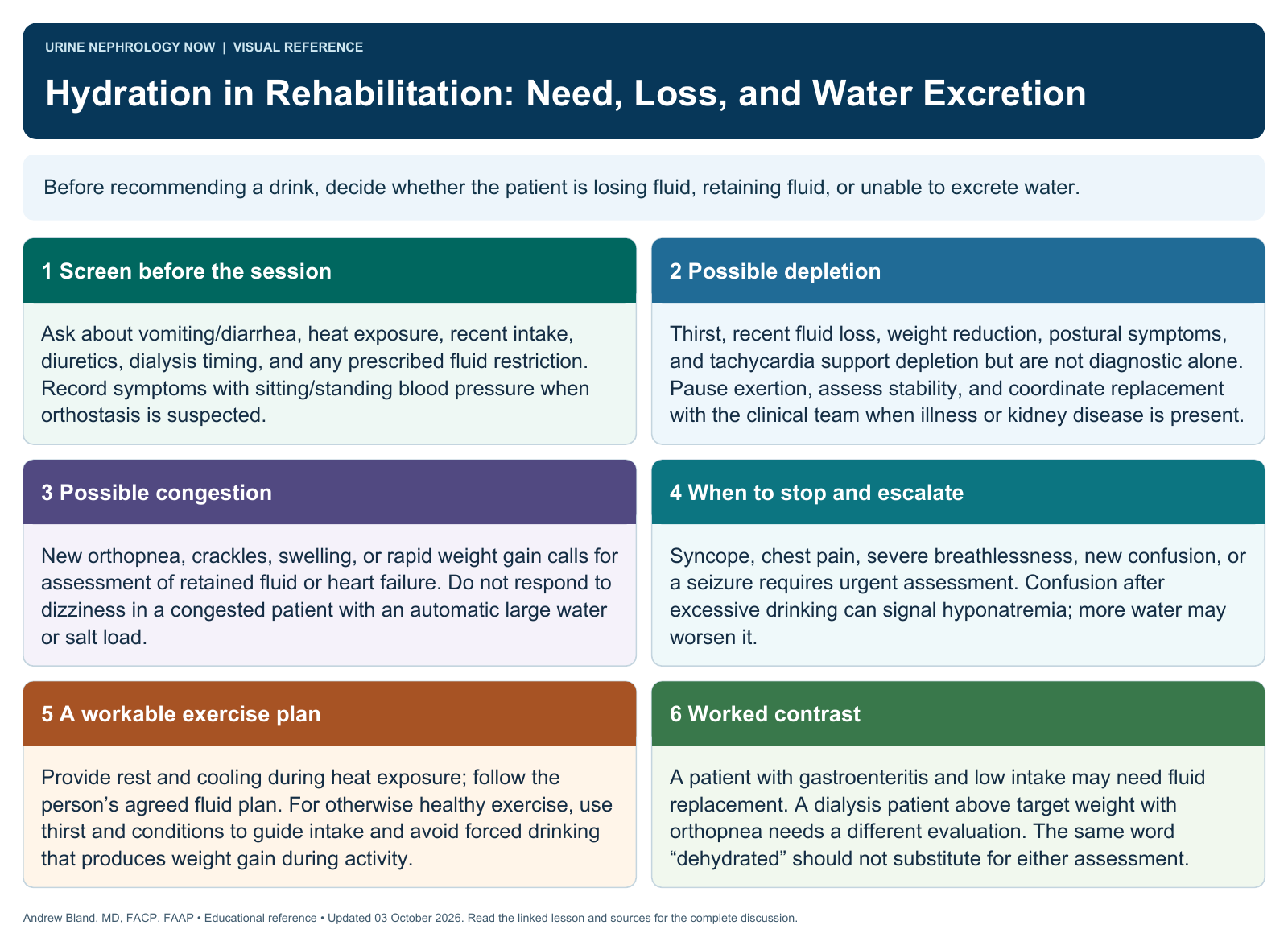
Hydration advice is safest when it answers the patient’s actual fluid-loss and water-excretion problem.
Text version
Intake must match physiology
Water balance depends on intake, renal excretion, and gastrointestinal or insensible losses. Thirst and access usually help maintain balance, but illness, medications, frailty, and impaired water handling can change the response.
Recognize opposite hazards
Dizziness, low intake, and heat exposure can suggest depletion, while excess hypotonic intake can contribute to hyponatremia in susceptible situations. Edema or heart failure may require a different plan from uncomplicated exercise-related fluid loss.
Ask before advising
Review symptoms, exercise conditions, sweating, recent illness, medication timing, and any prescribed fluid restriction. Weight change, urine pattern, and relevant laboratory information provide context but no single bedside cue perfectly measures hydration.
Tailor the session
Use rest, cooler conditions, and the agreed fluid plan when appropriate. Stop and assess significant instability. Do not replace a clinical evaluation of persistent dizziness or confusion with an automatic instruction to drink more water.
Explain water and solute
Beverages vary in water, sodium, carbohydrate, and other solutes. A sports label does not guarantee a suitable composition for every patient, and a large fluid volume can remain problematic despite added electrolytes.
Coordinate special situations
CKD, dialysis, heart failure, hyponatremia history, or substantial gastrointestinal losses warrant individualized guidance. Avoid promising fixed kidney benefits from “pushing water,” and document who will adjust the plan if symptoms recur.
Continue learning
This graphic summarizes a topic. The full educational pages provide the broader discussion and references.