Visual summary
Before recommending a drink, decide whether the patient is losing fluid, retaining fluid, or unable to excrete water.
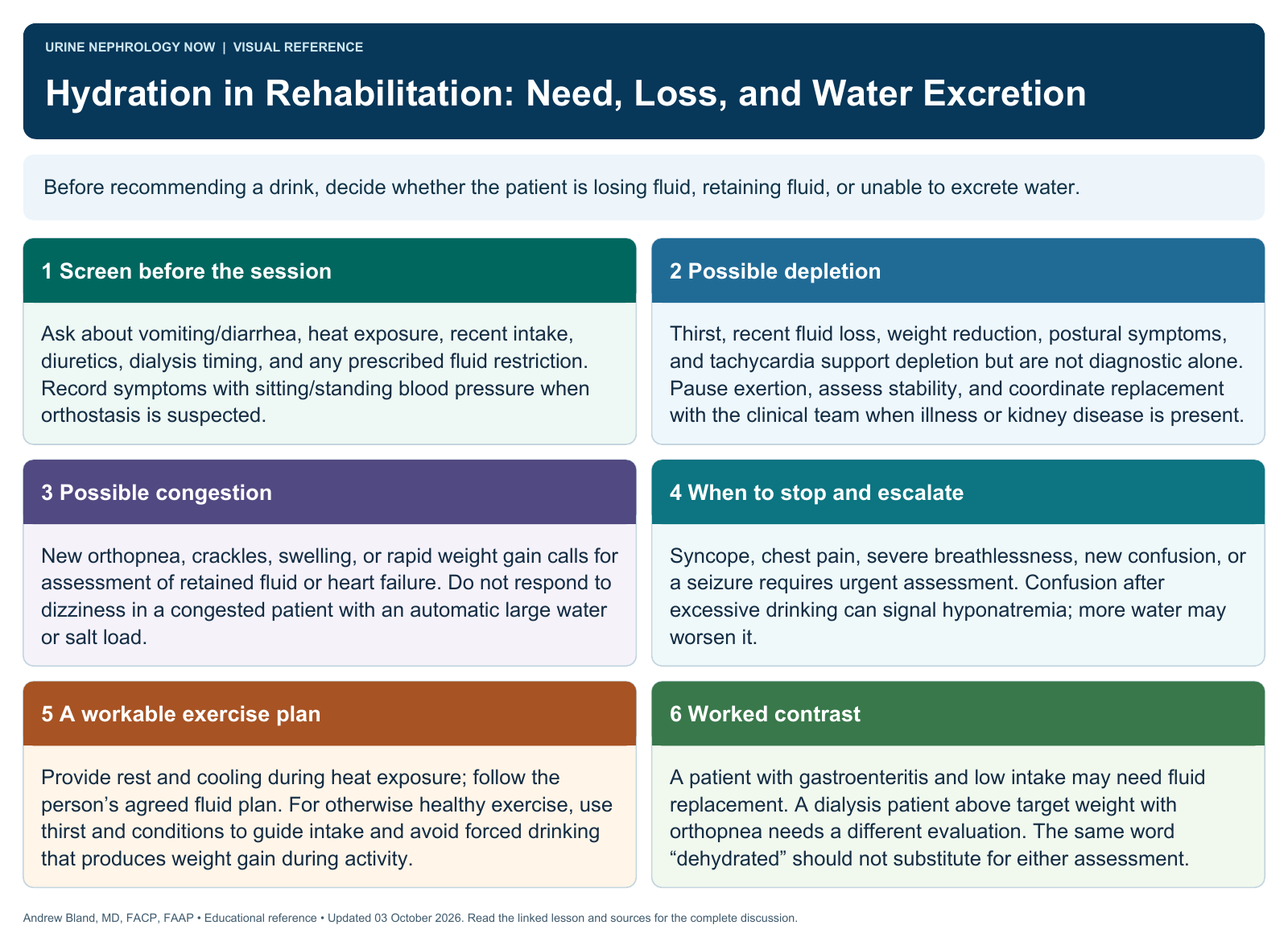
Text version
Screen before the session
Ask about vomiting/diarrhea, heat exposure, recent intake, diuretics, dialysis timing, and any prescribed fluid restriction. Record symptoms with sitting/standing blood pressure when orthostasis is suspected.
Possible depletion
Thirst, recent fluid loss, weight reduction, postural symptoms, and tachycardia support depletion but are not diagnostic alone. Pause exertion, assess stability, and coordinate replacement with the clinical team when illness or kidney disease is present.
Possible congestion
New orthopnea, crackles, swelling, or rapid weight gain calls for assessment of retained fluid or heart failure. Do not respond to dizziness in a congested patient with an automatic large water or salt load.
When to stop and escalate
Syncope, chest pain, severe breathlessness, new confusion, or a seizure requires urgent assessment. Confusion after excessive drinking can signal hyponatremia; more water may worsen it.
A workable exercise plan
Provide rest and cooling during heat exposure; follow the person’s agreed fluid plan. For otherwise healthy exercise, use thirst and conditions to guide intake and avoid forced drinking that produces weight gain during activity.
Worked contrast
A patient with gastroenteritis and low intake may need fluid replacement. A dialysis patient above target weight with orthopnea needs a different evaluation. The same word “dehydrated” should not substitute for either assessment.