Visual summary
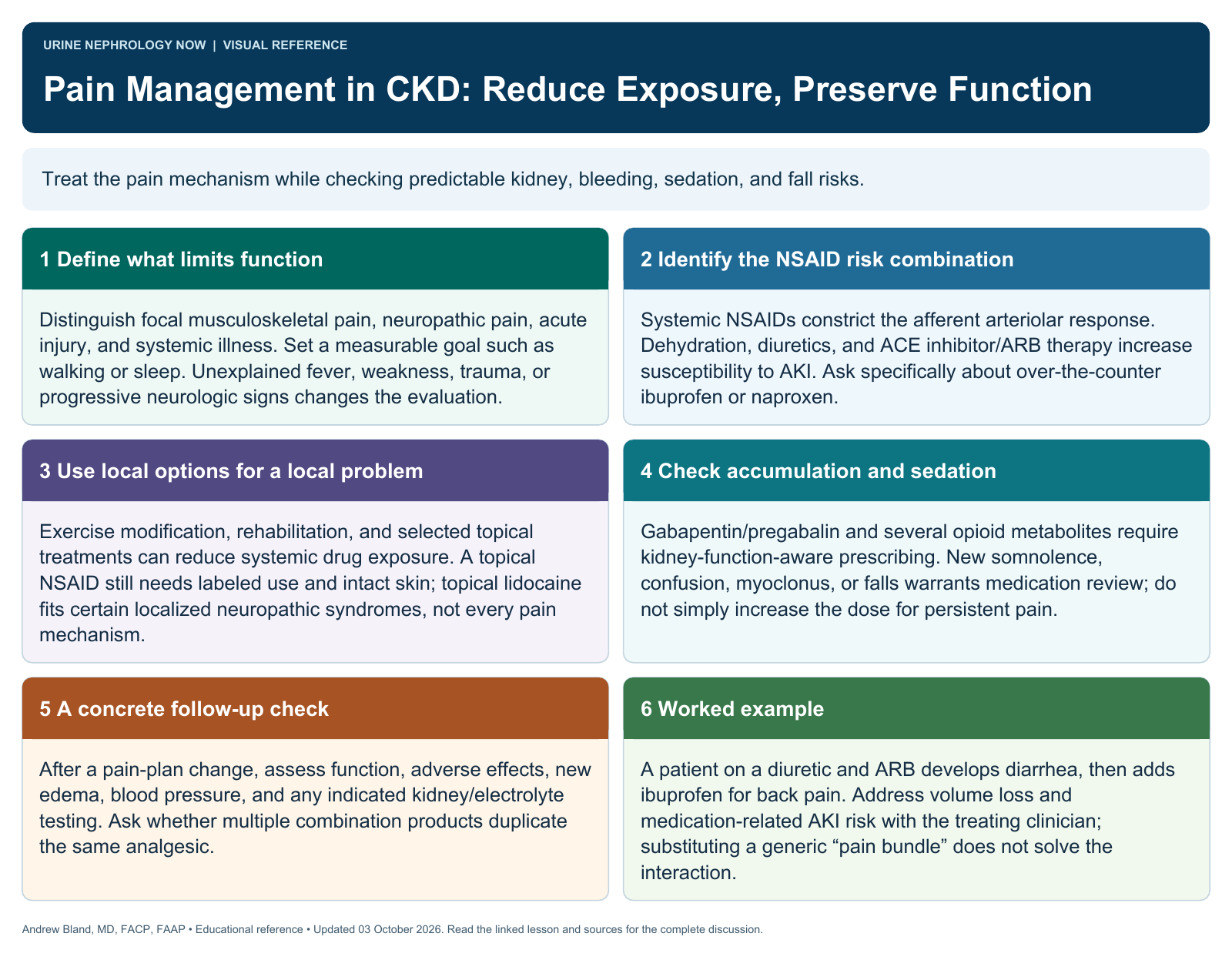
Treat the pain mechanism while checking predictable kidney, bleeding, sedation, and fall risks.
Text version
Define what limits function
Distinguish focal musculoskeletal pain, neuropathic pain, acute injury, and systemic illness. Set a measurable goal such as walking or sleep. Unexplained fever, weakness, trauma, or progressive neurologic signs changes the evaluation.
Identify the NSAID risk combination
Systemic NSAIDs constrict the afferent arteriolar response. Dehydration, diuretics, and ACE inhibitor/ARB therapy increase susceptibility to AKI. Ask specifically about over-the-counter ibuprofen or naproxen.
Use local options for a local problem
Exercise modification, rehabilitation, and selected topical treatments can reduce systemic drug exposure. A topical NSAID still needs labeled use and intact skin; topical lidocaine fits certain localized neuropathic syndromes, not every pain mechanism.
Check accumulation and sedation
Gabapentin/pregabalin and several opioid metabolites require kidney-function-aware prescribing. New somnolence, confusion, myoclonus, or falls warrants medication review; do not simply increase the dose for persistent pain.
A concrete follow-up check
After a pain-plan change, assess function, adverse effects, new edema, blood pressure, and any indicated kidney/electrolyte testing. Ask whether multiple combination products duplicate the same analgesic.
Worked example
A patient on a diuretic and ARB develops diarrhea, then adds ibuprofen for back pain. Address volume loss and medication-related AKI risk with the treating clinician; substituting a generic “pain bundle” does not solve the interaction.