Visual summary
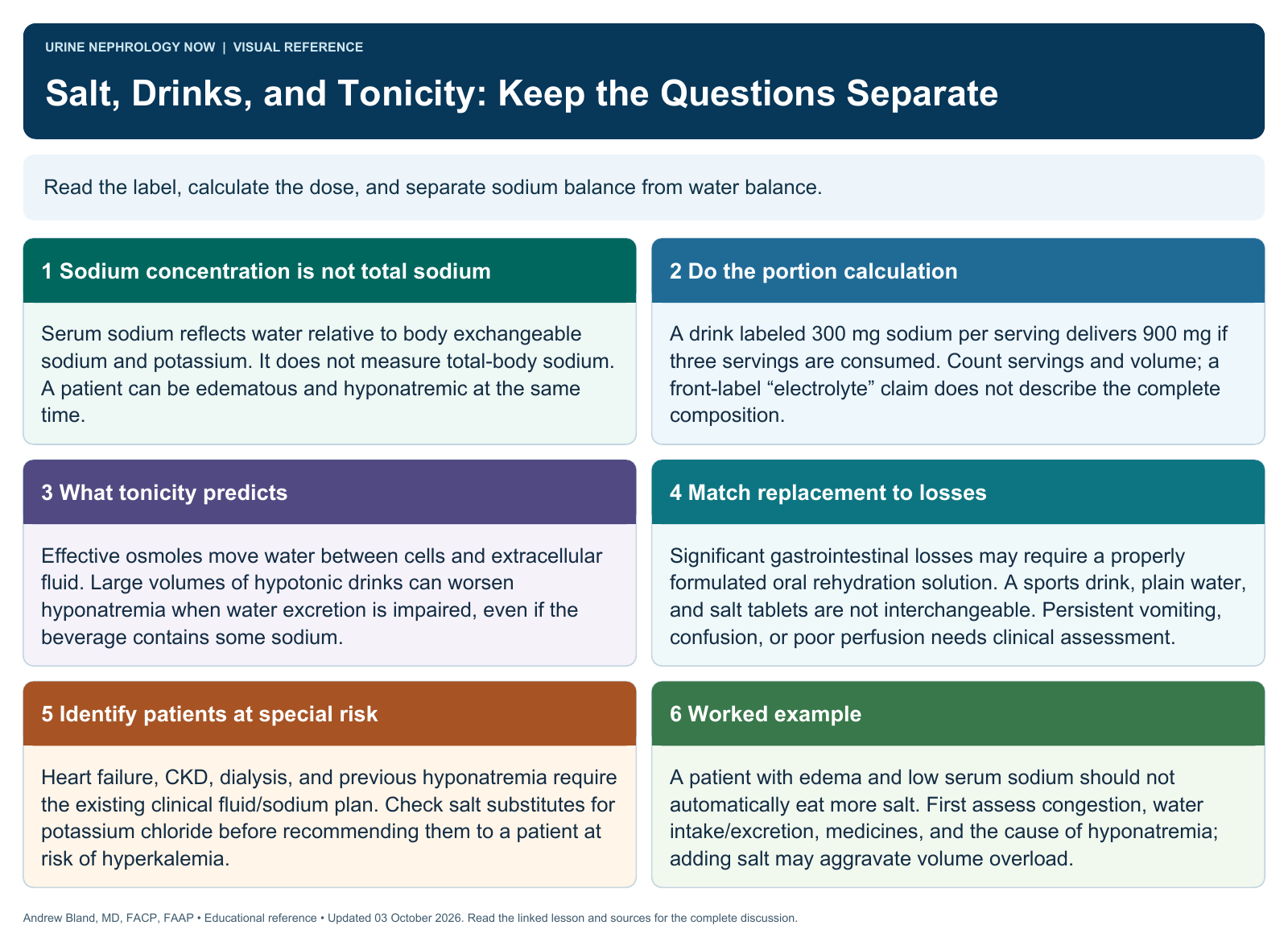
Read the label, calculate the dose, and separate sodium balance from water balance.
Text version
Sodium concentration is not total sodium
Serum sodium reflects water relative to body exchangeable sodium and potassium. It does not measure total-body sodium. A patient can be edematous and hyponatremic at the same time.
Do the portion calculation
A drink labeled 300 mg sodium per serving delivers 900 mg if three servings are consumed. Count servings and volume; a front-label “electrolyte” claim does not describe the complete composition.
What tonicity predicts
Effective osmoles move water between cells and extracellular fluid. Large volumes of hypotonic drinks can worsen hyponatremia when water excretion is impaired, even if the beverage contains some sodium.
Match replacement to losses
Significant gastrointestinal losses may require a properly formulated oral rehydration solution. A sports drink, plain water, and salt tablets are not interchangeable. Persistent vomiting, confusion, or poor perfusion needs clinical assessment.
Identify patients at special risk
Heart failure, CKD, dialysis, and previous hyponatremia require the existing clinical fluid/sodium plan. Check salt substitutes for potassium chloride before recommending them to a patient at risk of hyperkalemia.
Worked example
A patient with edema and low serum sodium should not automatically eat more salt. First assess congestion, water intake/excretion, medicines, and the cause of hyponatremia; adding salt may aggravate volume overload.