Visual summary
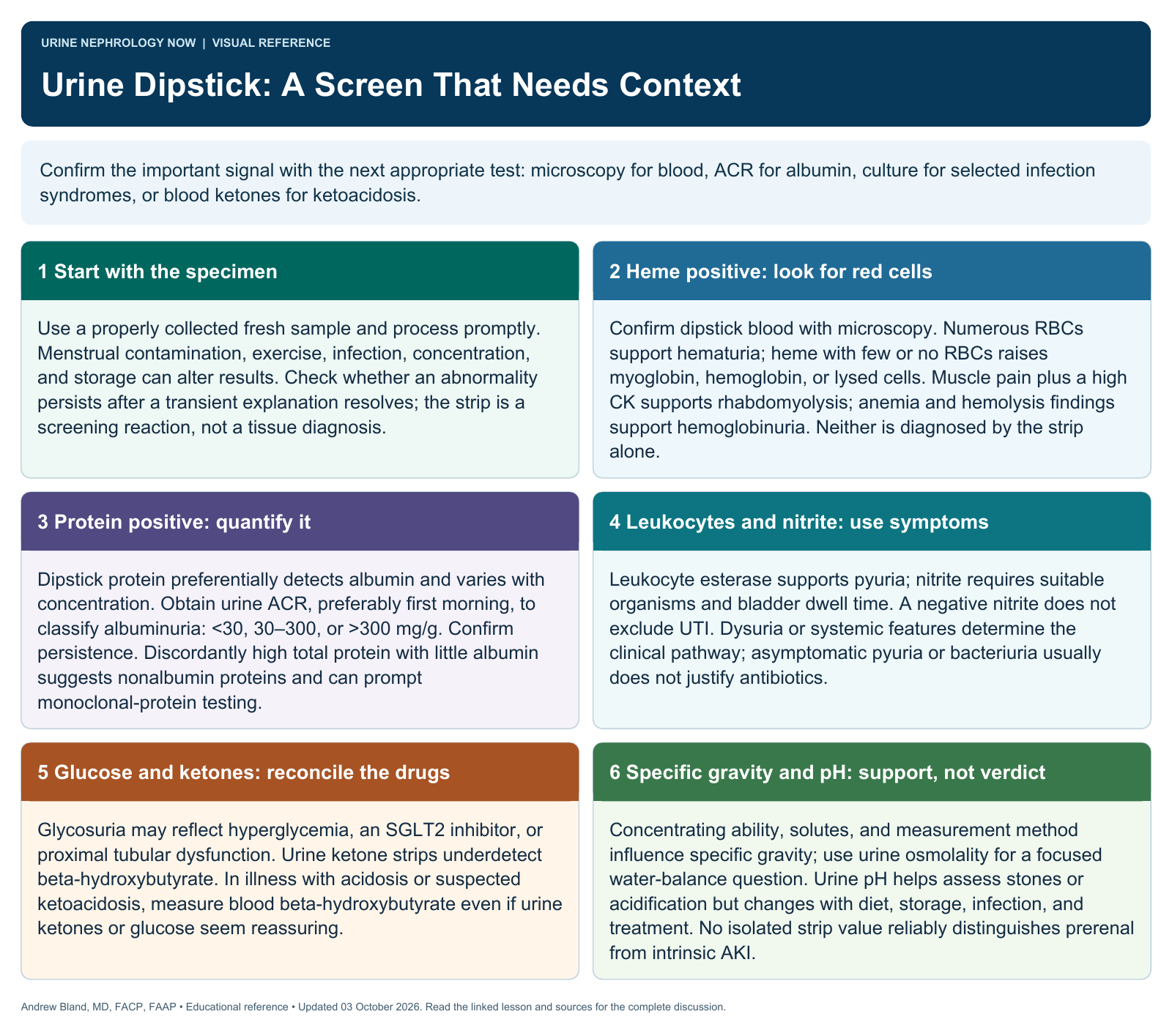
Confirm the important signal with the next appropriate test: microscopy for blood, ACR for albumin, culture for selected infection syndromes, or blood ketones for ketoacidosis.
Text version
Start with the specimen
Use a properly collected fresh sample and process promptly. Menstrual contamination, exercise, infection, concentration, and storage can alter results. Check whether an abnormality persists after a transient explanation resolves; the strip is a screening reaction, not a tissue diagnosis.
Heme positive: look for red cells
Confirm dipstick blood with microscopy. Numerous RBCs support hematuria; heme with few or no RBCs raises myoglobin, hemoglobin, or lysed cells. Muscle pain plus a high CK supports rhabdomyolysis; anemia and hemolysis findings support hemoglobinuria. Neither is diagnosed by the strip alone.
Protein positive: quantify it
Dipstick protein preferentially detects albumin and varies with concentration. Obtain urine ACR, preferably first morning, to classify albuminuria: <30, 30–300, or >300 mg/g. Confirm persistence. Discordantly high total protein with little albumin suggests nonalbumin proteins and can prompt monoclonal-protein testing.
Leukocytes and nitrite: use symptoms
Leukocyte esterase supports pyuria; nitrite requires suitable organisms and bladder dwell time. A negative nitrite does not exclude UTI. Dysuria or systemic features determine the clinical pathway; asymptomatic pyuria or bacteriuria usually does not justify antibiotics.
Glucose and ketones: reconcile the drugs
Glycosuria may reflect hyperglycemia, an SGLT2 inhibitor, or proximal tubular dysfunction. Urine ketone strips underdetect beta-hydroxybutyrate. In illness with acidosis or suspected ketoacidosis, measure blood beta-hydroxybutyrate even if urine ketones or glucose seem reassuring.
Specific gravity and pH: support, not verdict
Concentrating ability, solutes, and measurement method influence specific gravity; use urine osmolality for a focused water-balance question. Urine pH helps assess stones or acidification but changes with diet, storage, infection, and treatment. No isolated strip value reliably distinguishes prerenal from intrinsic AKI.