Visual summary
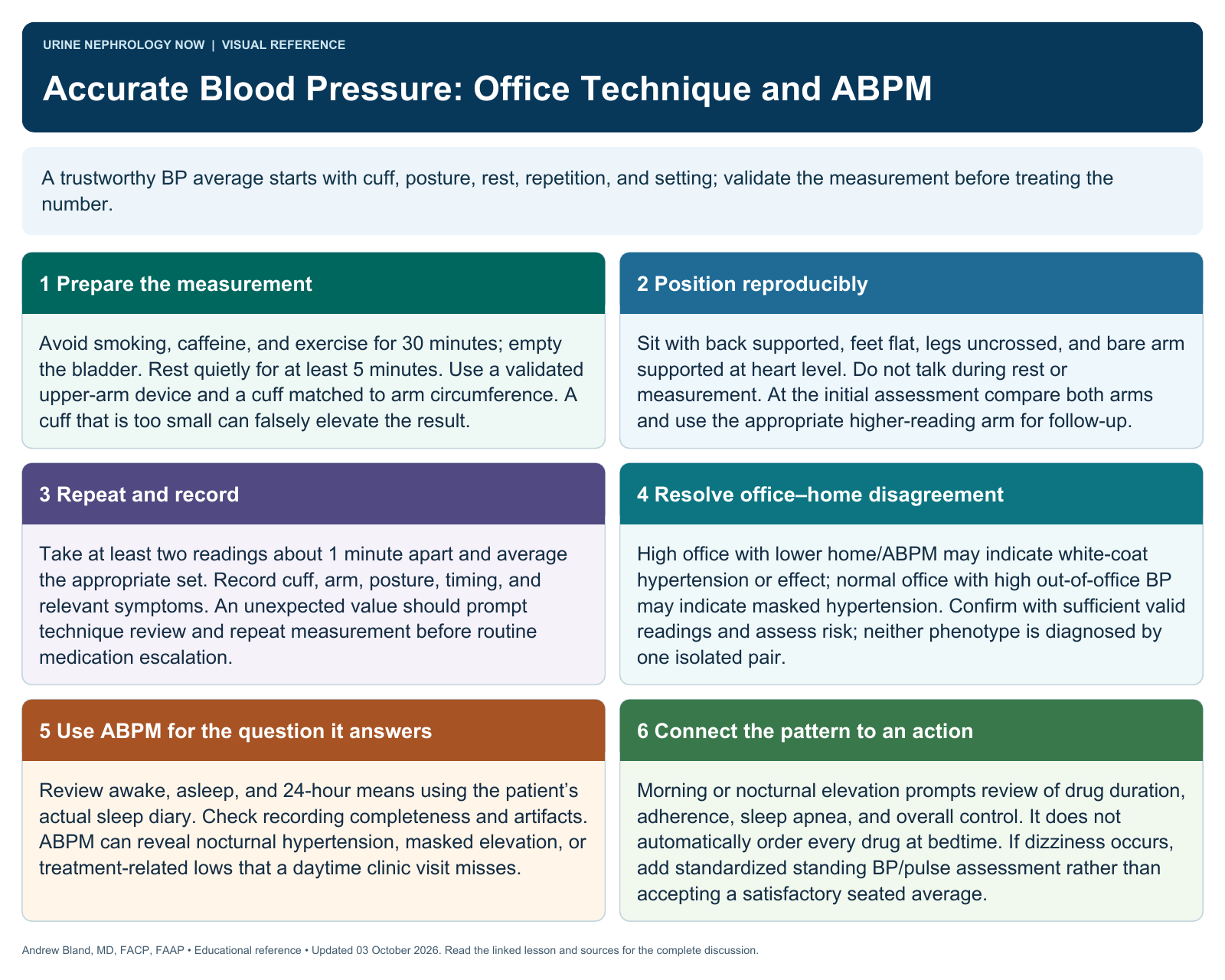
A trustworthy BP average starts with cuff, posture, rest, repetition, and setting; validate the measurement before treating the number.
Text version
Prepare the measurement
Avoid smoking, caffeine, and exercise for 30 minutes; empty the bladder. Rest quietly for at least 5 minutes. Use a validated upper-arm device and a cuff matched to arm circumference. A cuff that is too small can falsely elevate the result.
Position reproducibly
Sit with back supported, feet flat, legs uncrossed, and bare arm supported at heart level. Do not talk during rest or measurement. At the initial assessment compare both arms and use the appropriate higher-reading arm for follow-up.
Repeat and record
Take at least two readings about 1 minute apart and average the appropriate set. Record cuff, arm, posture, timing, and relevant symptoms. An unexpected value should prompt technique review and repeat measurement before routine medication escalation.
Resolve office–home disagreement
High office with lower home/ABPM may indicate white-coat hypertension or effect; normal office with high out-of-office BP may indicate masked hypertension. Confirm with sufficient valid readings and assess risk; neither phenotype is diagnosed by one isolated pair.
Use ABPM for the question it answers
Review awake, asleep, and 24-hour means using the patient’s actual sleep diary. Check recording completeness and artifacts. ABPM can reveal nocturnal hypertension, masked elevation, or treatment-related lows that a daytime clinic visit misses.
Connect the pattern to an action
Morning or nocturnal elevation prompts review of drug duration, adherence, sleep apnea, and overall control. It does not automatically order every drug at bedtime. If dizziness occurs, add standardized standing BP/pulse assessment rather than accepting a satisfactory seated average.