Visual summary
SGLT2 therapy, poor intake, and illness can uncouple glucose from ketones
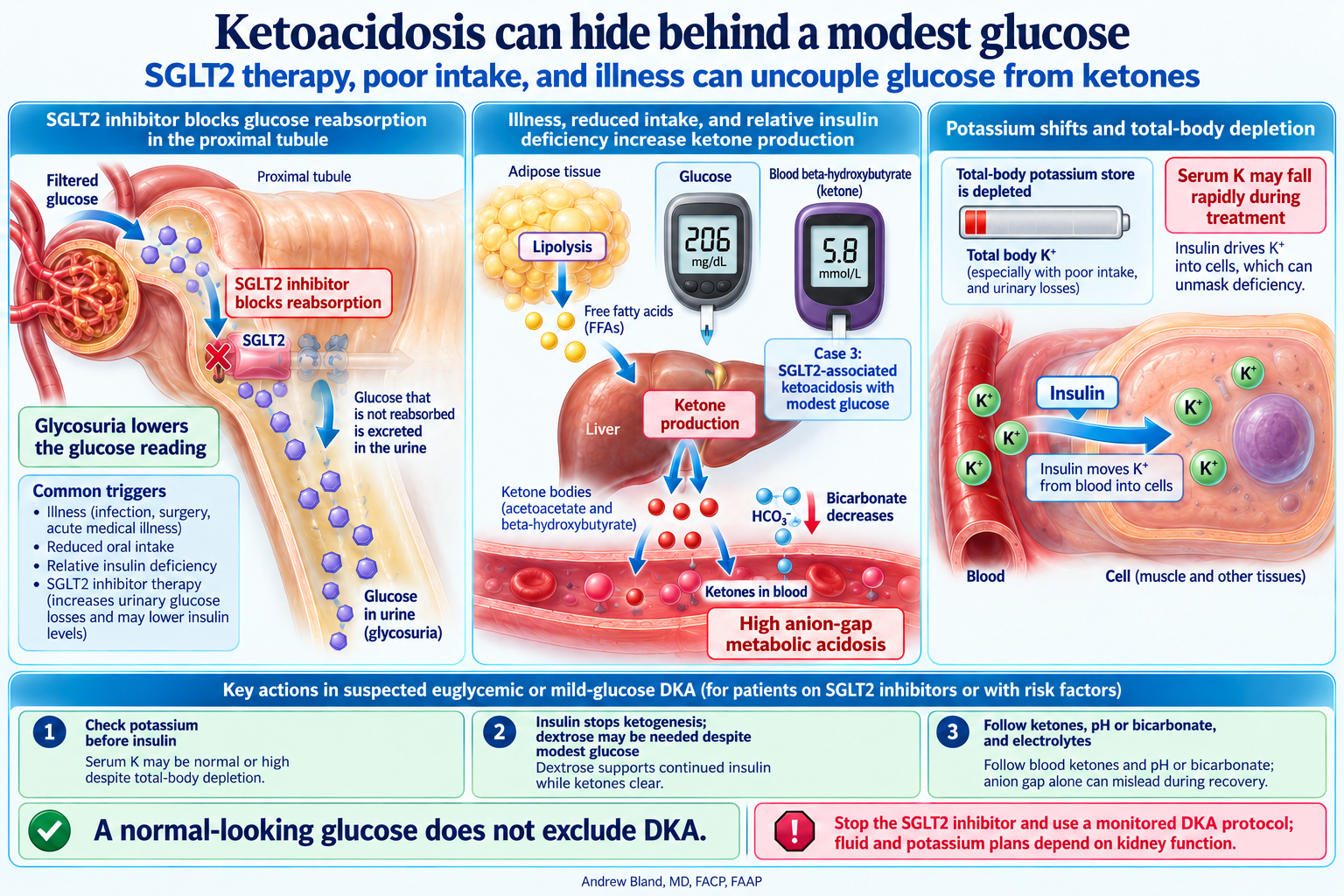
SGLT2 therapy, poor intake, and illness can uncouple glucose from ketones
Text version
Glucose and ketones can diverge
SGLT2 inhibition reduces proximal tubular glucose reabsorption. Glycosuria moderates the blood glucose reading while illness, reduced intake and relative insulin deficiency can promote lipolysis and hepatic ketone production. In Case 3, glucose is 206 mg/dL and beta-hydroxybutyrate is 5.8 mmol/L. This is SGLT2-associated ketoacidosis with modest glucose; 206 is just above the 2024 consensus definition of euglycemic DKA at glucose below 200.
Potassium can fall rapidly during treatment
Poor intake and urinary losses can deplete body potassium even when the serum result does not look severely low. Insulin moves potassium from blood into cells. Check and correct low potassium before insulin under a monitored protocol, then reassess repeatedly as treatment proceeds.
Treat ketogenesis and follow the right endpoints
Insulin stops ketone production; dextrose supports continued insulin when glucose is already modest or falls. Follow blood ketones, pH or bicarbonate, electrolytes and clinical status. Anion gap alone can mislead during recovery, especially after chloride-rich fluids. Hold the SGLT2 inhibitor and use the case's separate specialist review before any restart.
Why is a glucose of 206 insufficient to dismiss DKA in Case 3?
The SGLT2 drug promotes urinary glucose loss. Ketones and acidosis can remain substantial even with modest glucose; blood beta-hydroxybutyrate directly tests the suspected ketone burden.
Cases and related lectures
The linked case and lecture content provide the teaching sequence and patient data.