Visual summary
Recognize electrical toxicity; the ECG does not measure potassium.
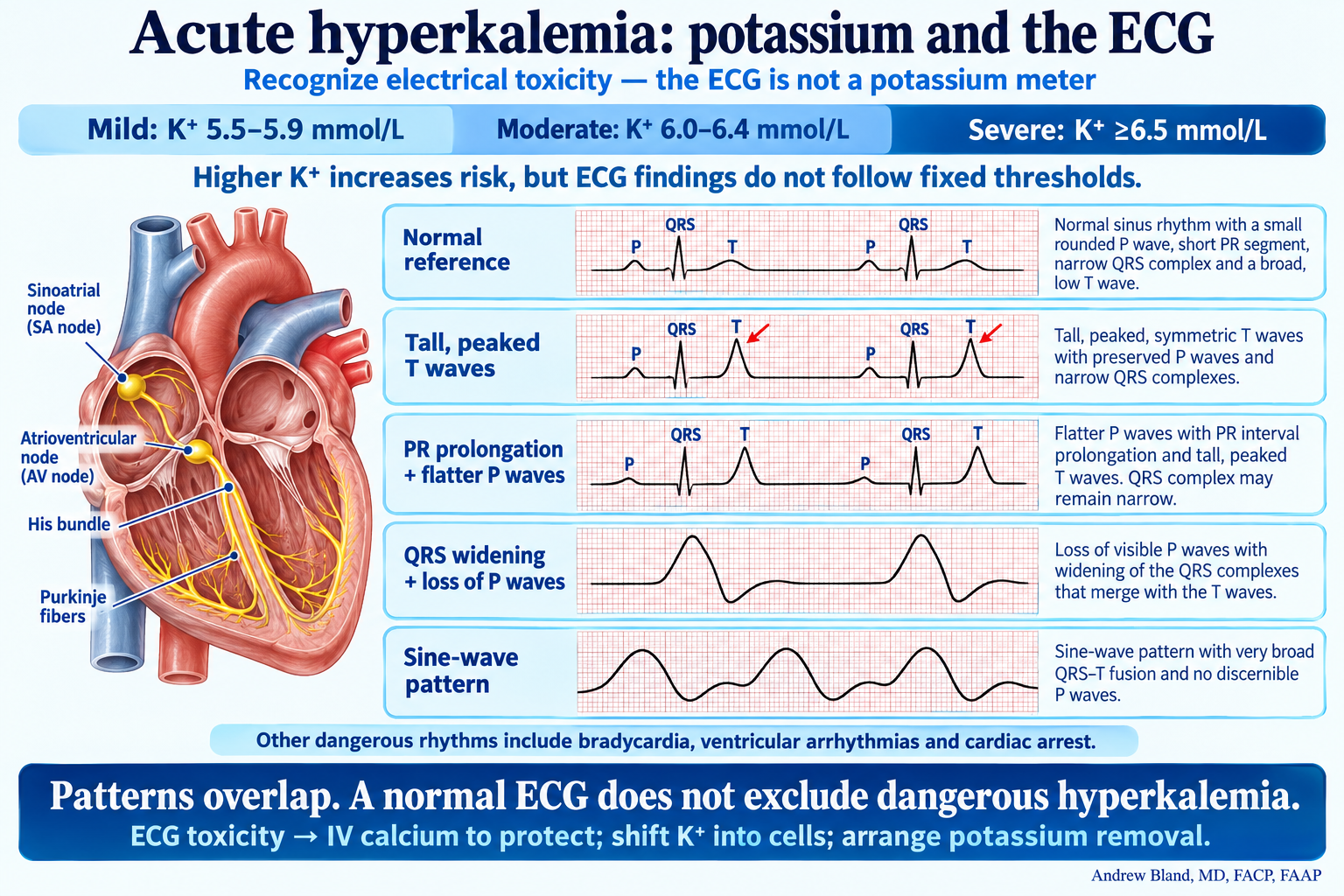
Recognize electrical toxicity; the ECG does not measure potassium.
Teaching text
Read the level and the tracing together
The UK Kidney Association classifies potassium 5.5–5.9 mmol/L as mild, 6.0–6.4 as moderate and ≥6.5 as severe hyperkalemia. The tracing can show peaked T waves, PR prolongation, P-wave flattening or disappearance, QRS widening and eventually QRS–T fusion. These are illustrative patterns, not potassium-specific thresholds or a dependable sequence.
Treat electrical toxicity promptly
A normal ECG does not exclude severe hyperkalemia. Interpret the potassium trend, symptoms, kidney function and ECG together. With convincing ECG toxicity, protect the myocardium with IV calcium while arranging potassium redistribution and removal. Calcium does not lower potassium. The clean repeat specimen and definitive treatment proceed alongside emergency care.