Visual summary
Symptoms first, cause-directed treatment, and control of the correction.
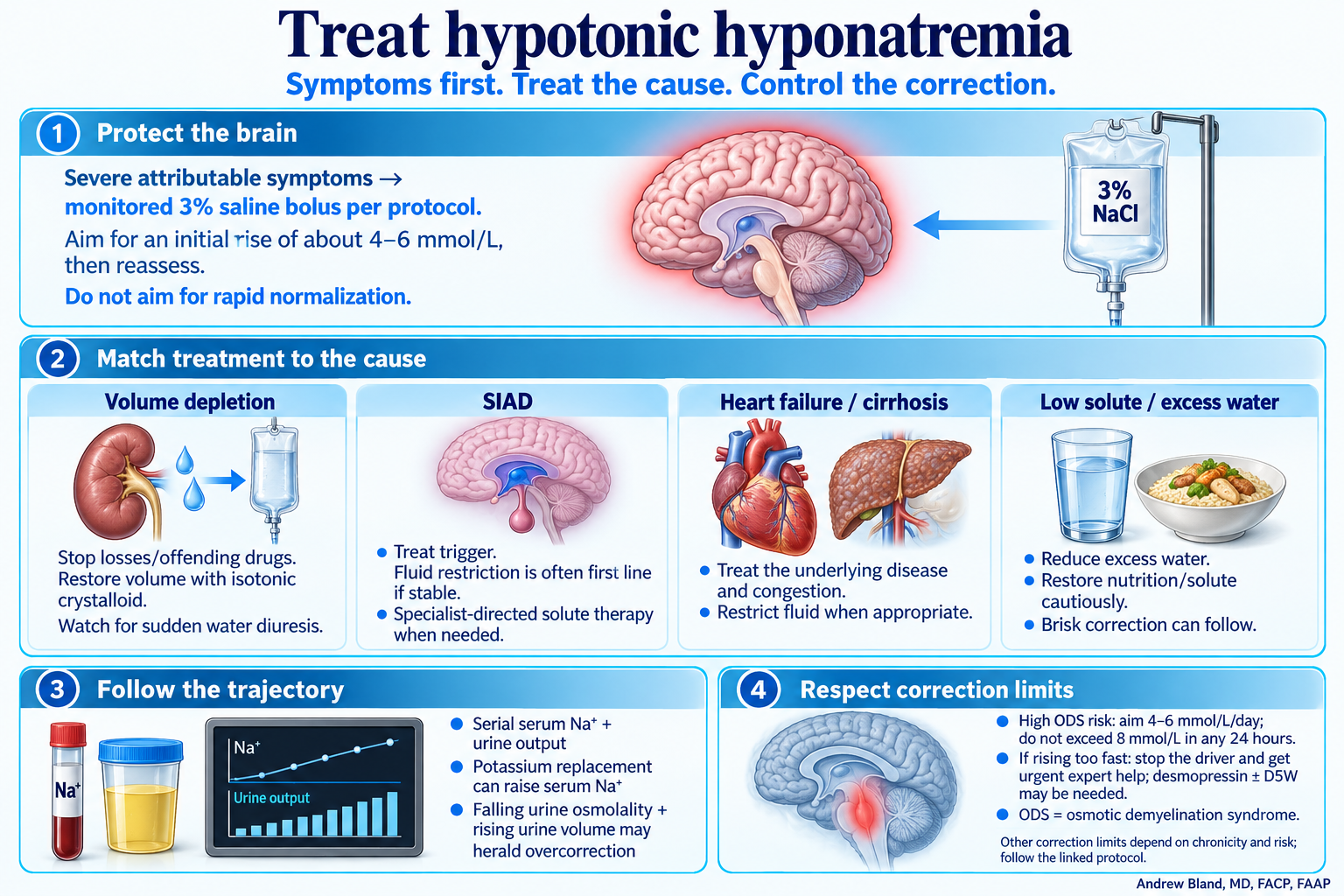
Symptoms first, cause-directed treatment, and control of the correction.
Teaching text
Protect the brain, then reassess
Severe attributable symptoms such as seizure, coma or major neurologic deterioration call for monitored 3% saline boluses under the local protocol while evaluating the cause. An initial sodium rise of about 4–6 mmol/L often provides useful symptom relief; rapid normalization is not the goal. Moderately severe attributable symptoms also warrant urgent assessment and may justify a monitored bolus.
Follow the same diagnostic lanes
Hypovolemic: stop offending drugs and losses, replace volume with an appropriate isotonic crystalloid and reassess. Euvolemic/SIAD: treat the trigger; fluid restriction is often initial therapy when stable, with specialist-directed solute therapy when needed. Hypervolemic: address the underlying disease and congestion, with fluid restriction when appropriate. Dilute urine/low solute: reduce excess water and restore nutrition or solute cautiously. These categories can overlap.
Set a correction plan before treatment
For chronic or uncertain-duration disease at high risk of osmotic demyelination, aim for approximately 4–6 mmol/L over 24 hours and avoid exceeding 8 mmol/L in any 24 hours. Major risk factors include very low sodium, hypokalemia, malnutrition, alcohol use disorder and advanced liver disease. For other patients, the European guideline limits correction to 10 mmol/L in the first 24 hours and 8 mmol/L per 24 hours thereafter. Limits are ceilings, not targets; account for all treatment and spontaneous changes.
Monitor water output as well as serum sodium
During active correction, follow serial sodium, urine output and clinical status frequently; monitoring intervals must shorten when the trajectory changes. Potassium replacement contributes to the rise in serum sodium. Volume restoration, thiazide withdrawal or solute replacement may suddenly permit a dilute water diuresis. If correction is running ahead of plan, stop the driver and obtain urgent expert help; desmopressin and electrolyte-free water such as D5W may be needed for controlled relowering.