Visual summary
A new water diuresis can outrun the original treatment plan
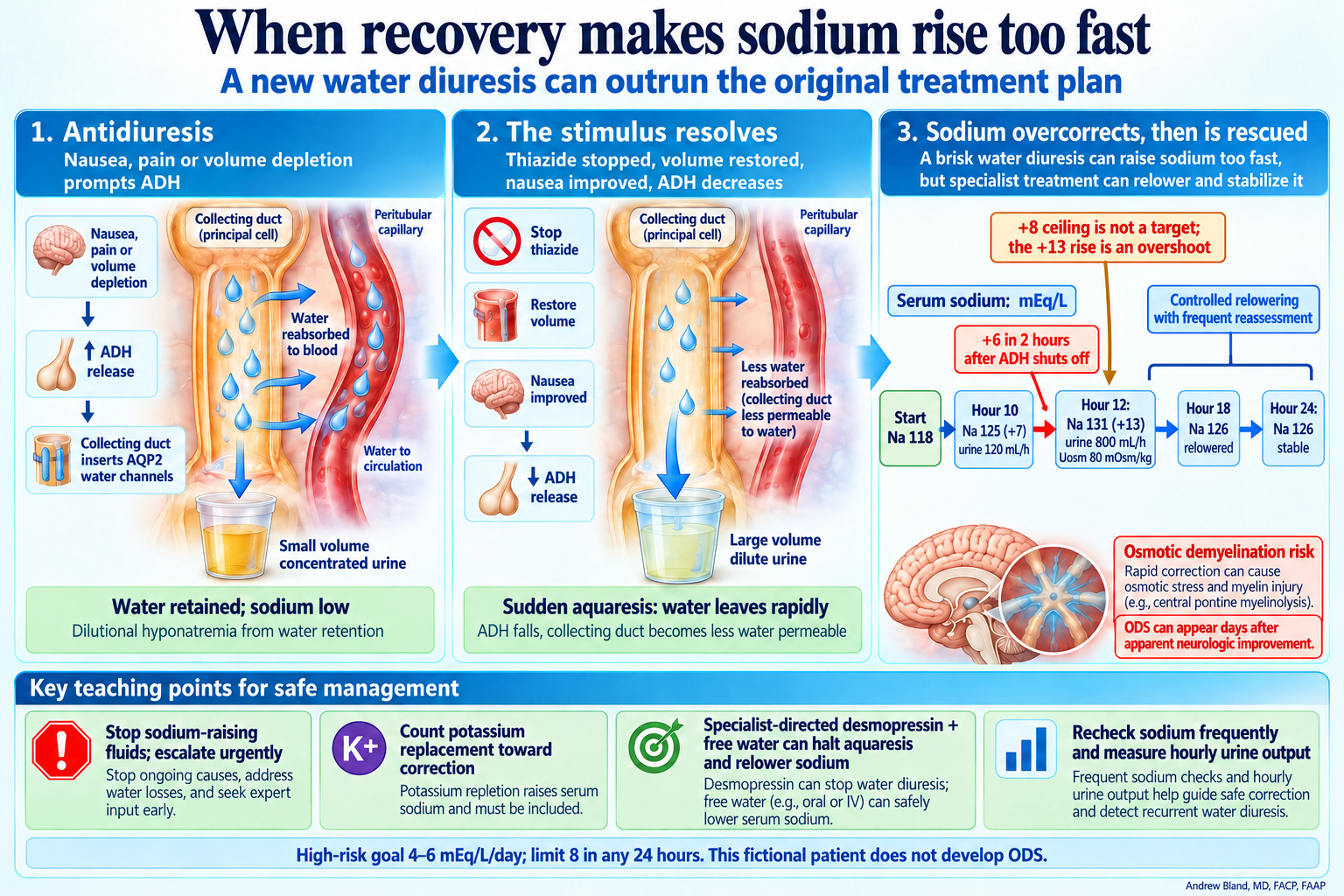
A new water diuresis can outrun the original treatment plan
Text version
The danger is the new water diuresis
At hour 10, sodium is 125 mEq/L, up 7 from 118; urine output is 120 mL/h. Saline stops. By hour 12, sodium is 131, urine output 800 mL/h and urine osmolality 80 mOsm/kg. Volume restoration and thiazide withdrawal have removed the antidiuretic stimulus and allowed dilution to recover. Sodium rises another 6 in two hours despite stopping saline: +13 overall.
Apparent improvement does not exclude delayed injury
During sustained hypotonicity, brain cells shed osmolytes. A rapid increase in extracellular tonicity can injure myelin. ODS may appear days after the patient initially seems better, with dysarthria, dysphagia, weakness or altered consciousness. Hypokalemia and poor nutrition increase concern in this case. An 8 mEq/L ceiling is not a target; a modest initial goal is approximately 4–6 in this higher-risk setting.
Recognize an overshoot and act
Escalate urgently to a monitored setting and nephrology; stop sodium-raising infusions and reassess all inputs, including potassium replacement. Specialist-directed desmopressin halts aquaresis and titrated free water permits controlled relowering, guided by frequent sodium checks and hourly urine output. In the fictional course, sodium returns to 126 by hour 18 and stays there through hour 24; no ODS develops. Rescue does not establish that the preceding overshoot was safe.
The saline is already off and she feels better. What is making sodium rise, and what is the urgent concern?
The kidney is suddenly losing large volumes of electrolyte-free water. The rise is 6 in two hours and 13 from baseline, so this is established overcorrection with delayed ODS risk. It requires an actively reassessed specialist rescue plan, not reassurance from her current appearance.
Cases and related lectures
The linked case and lecture content provide the teaching sequence and patient data.