Visual summary
HFpEF and CKD frequently interact; accurate phenotyping makes shared risk assessment and treatment more useful.
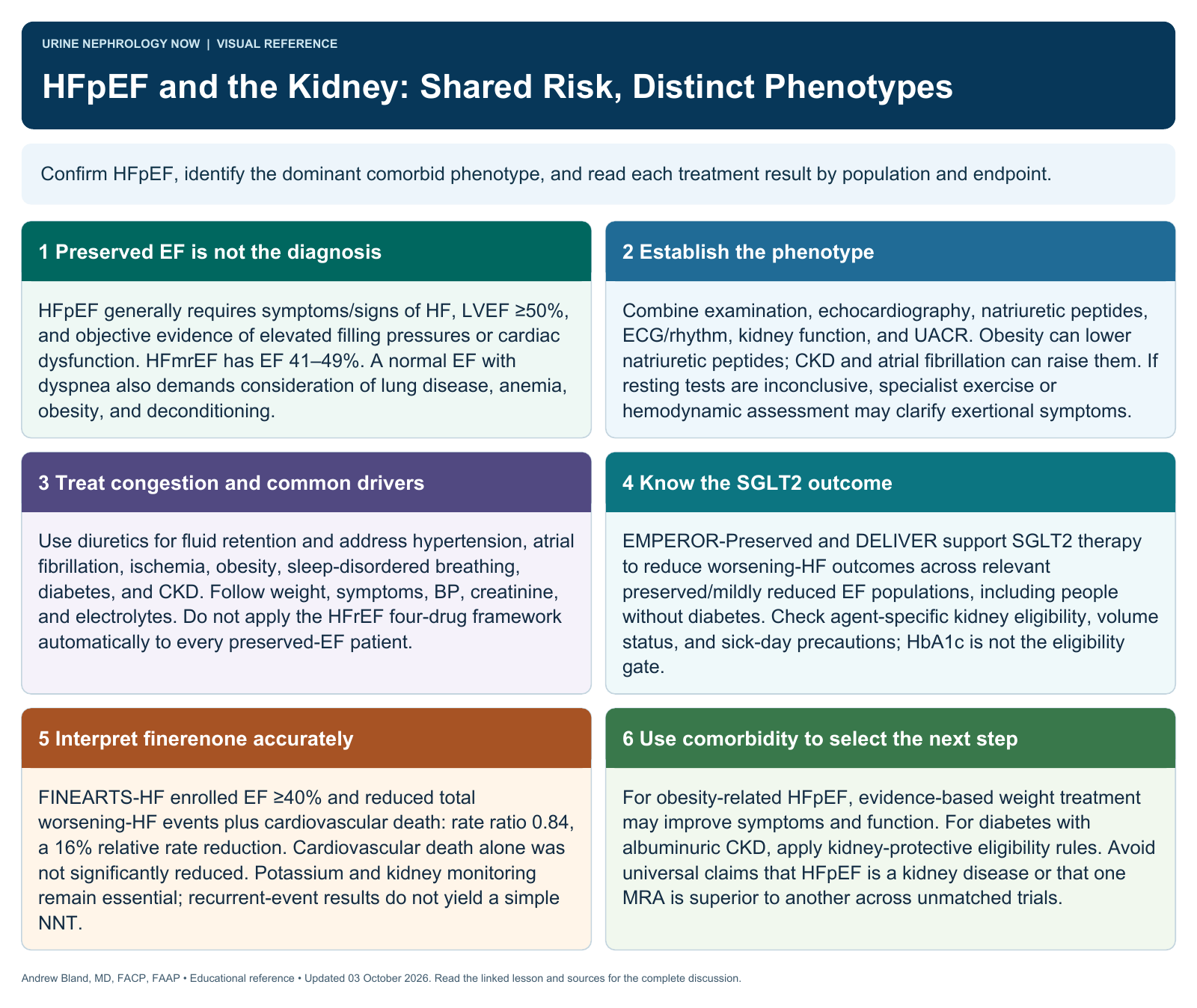
Text version
A heterogeneous syndrome
HFpEF involves heart failure with preserved ejection fraction and objective evidence supporting elevated filling pressures or cardiac dysfunction. Kidney disease, obesity, hypertension, atrial fibrillation, and systemic inflammation contribute in varying combinations.
Recognize overlapping symptoms
Dyspnea, exercise intolerance, edema, and fatigue can arise from congestion, anemia, pulmonary disease, deconditioning, or CKD. Preserved ejection fraction alone neither diagnoses HFpEF nor excludes clinically important heart failure.
Assess the heart–kidney profile
Combine clinical examination, echocardiography, natriuretic peptides when appropriate, kidney function, and albuminuria. Obesity and CKD influence biomarker interpretation. Consider specialist evaluation when resting studies do not explain exertional symptoms.
Treat proven targets
Relieve congestion and manage blood pressure, atrial fibrillation, obesity, diabetes, and kidney disease. Use therapies supported for the relevant HFpEF phenotype and current indication, with renal function and potassium monitoring where required.
Read trials by endpoint
Discuss SGLT2 and mineralocorticoid receptor antagonist evidence by enrolled population and measured outcomes. Changes in albuminuria, biomarkers, or mechanistic pathways do not automatically establish improvement in survival or kidney failure.
Keep mechanistic claims proportional
Inflammation, fibrosis, and kidney-mediated pathways offer useful explanatory models, but HFpEF should not be declared universally a renal disease. Phenomapping and emerging biomarkers remain distinct from a validated bedside treatment algorithm.
Continue learning
This graphic summarizes a topic. The full educational pages provide the broader discussion and references.