Visual summary
Confirm HFpEF, identify the dominant comorbid phenotype, and read each treatment result by population and endpoint.
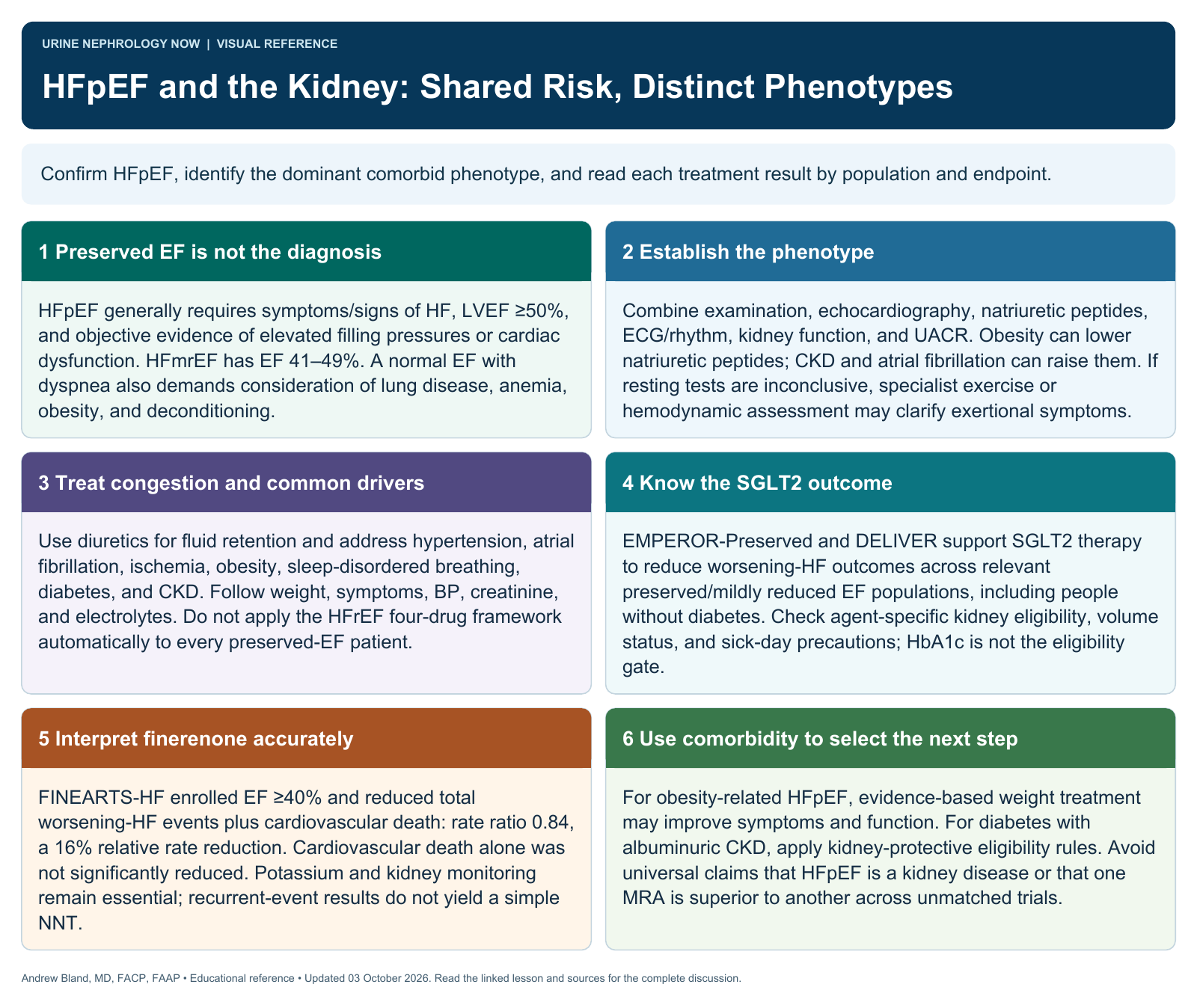
Text version
Preserved EF is not the diagnosis
HFpEF generally requires symptoms/signs of HF, LVEF ≥50%, and objective evidence of elevated filling pressures or cardiac dysfunction. HFmrEF has EF 41–49%. A normal EF with dyspnea also demands consideration of lung disease, anemia, obesity, and deconditioning.
Establish the phenotype
Combine examination, echocardiography, natriuretic peptides, ECG/rhythm, kidney function, and UACR. Obesity can lower natriuretic peptides; CKD and atrial fibrillation can raise them. If resting tests are inconclusive, specialist exercise or hemodynamic assessment may clarify exertional symptoms.
Treat congestion and common drivers
Use diuretics for fluid retention and address hypertension, atrial fibrillation, ischemia, obesity, sleep-disordered breathing, diabetes, and CKD. Follow weight, symptoms, BP, creatinine, and electrolytes. Do not apply the HFrEF four-drug framework automatically to every preserved-EF patient.
Know the SGLT2 outcome
EMPEROR-Preserved and DELIVER support SGLT2 therapy to reduce worsening-HF outcomes across relevant preserved/mildly reduced EF populations, including people without diabetes. Check agent-specific kidney eligibility, volume status, and sick-day precautions; HbA1c is not the eligibility gate.
Interpret finerenone accurately
FINEARTS-HF enrolled EF ≥40% and reduced total worsening-HF events plus cardiovascular death: rate ratio 0.84, a 16% relative rate reduction. Cardiovascular death alone was not significantly reduced. Potassium and kidney monitoring remain essential; recurrent-event results do not yield a simple NNT.
Use comorbidity to select the next step
For obesity-related HFpEF, evidence-based weight treatment may improve symptoms and function. For diabetes with albuminuric CKD, apply kidney-protective eligibility rules. Avoid universal claims that HFpEF is a kidney disease or that one MRA is superior to another across unmatched trials.