Visual summary
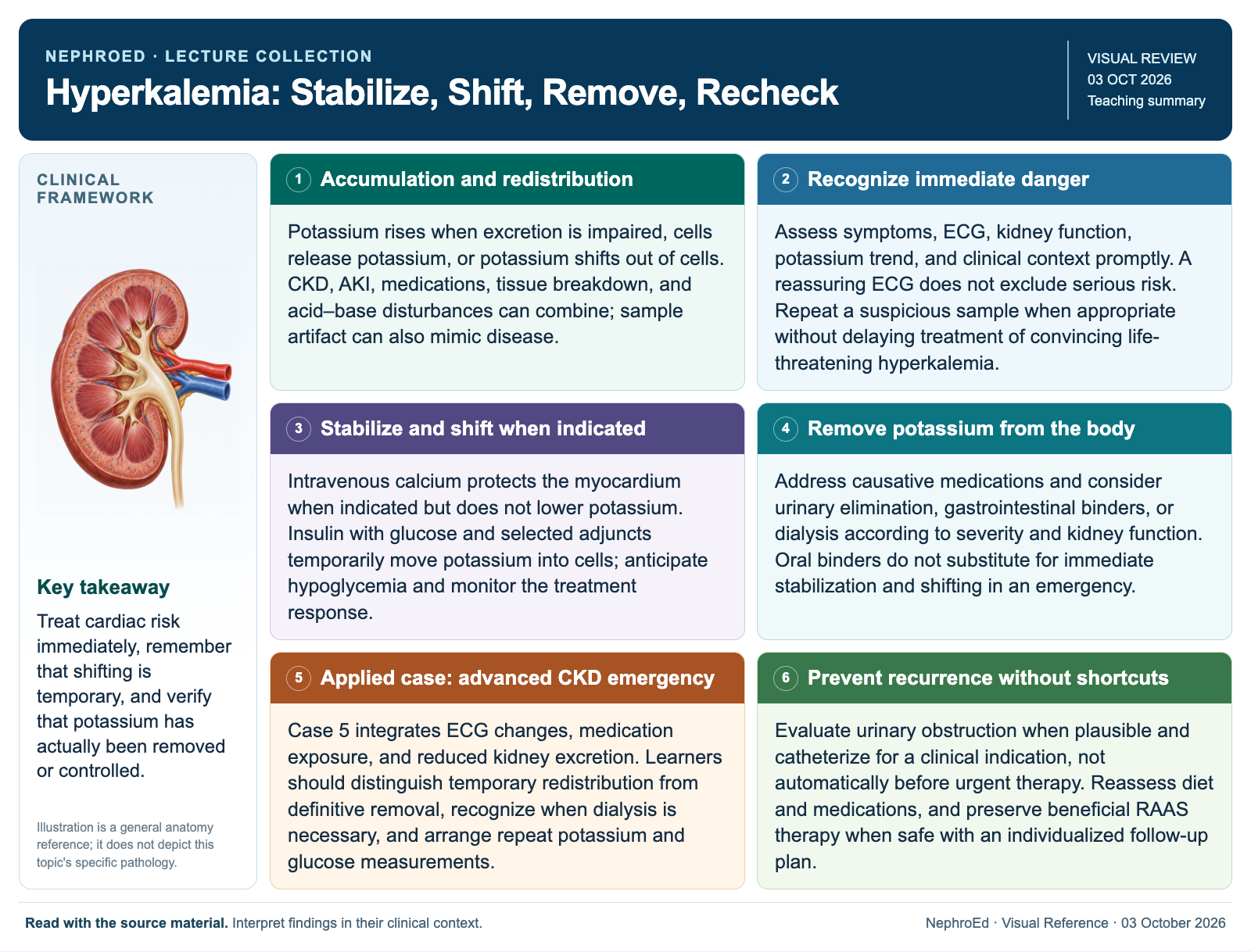
Treat cardiac risk immediately, remember that shifting is temporary, and verify that potassium has actually been removed or controlled.
Text version
Accumulation and redistribution
Potassium rises when excretion is impaired, cells release potassium, or potassium shifts out of cells. CKD, AKI, medications, tissue breakdown, and acid–base disturbances can combine; sample artifact can also mimic disease.
Recognize immediate danger
Assess symptoms, ECG, kidney function, potassium trend, and clinical context promptly. A reassuring ECG does not exclude serious risk. Repeat a suspicious sample when appropriate without delaying treatment of convincing life-threatening hyperkalemia.
Stabilize and shift when indicated
Intravenous calcium protects the myocardium when indicated but does not lower potassium. Insulin with glucose and selected adjuncts temporarily move potassium into cells; anticipate hypoglycemia and monitor the treatment response.
Remove potassium from the body
Address causative medications and consider urinary elimination, gastrointestinal binders, or dialysis according to severity and kidney function. Oral binders do not substitute for immediate stabilization and shifting in an emergency.
Applied case: advanced CKD emergency
Case 5 integrates ECG changes, medication exposure, and reduced kidney excretion. Learners should distinguish temporary redistribution from definitive removal, recognize when dialysis is necessary, and arrange repeat potassium and glucose measurements.
Prevent recurrence without shortcuts
Evaluate urinary obstruction when plausible and catheterize for a clinical indication, not automatically before urgent therapy. Reassess diet and medications, and preserve beneficial RAAS therapy when safe with an individualized follow-up plan.
Continue learning
This graphic summarizes a topic. The full educational pages provide the broader discussion and references.