Visual summary
The dietary plan should protect the person’s nutritional and functional health while addressing an individualized kidney-risk goal.
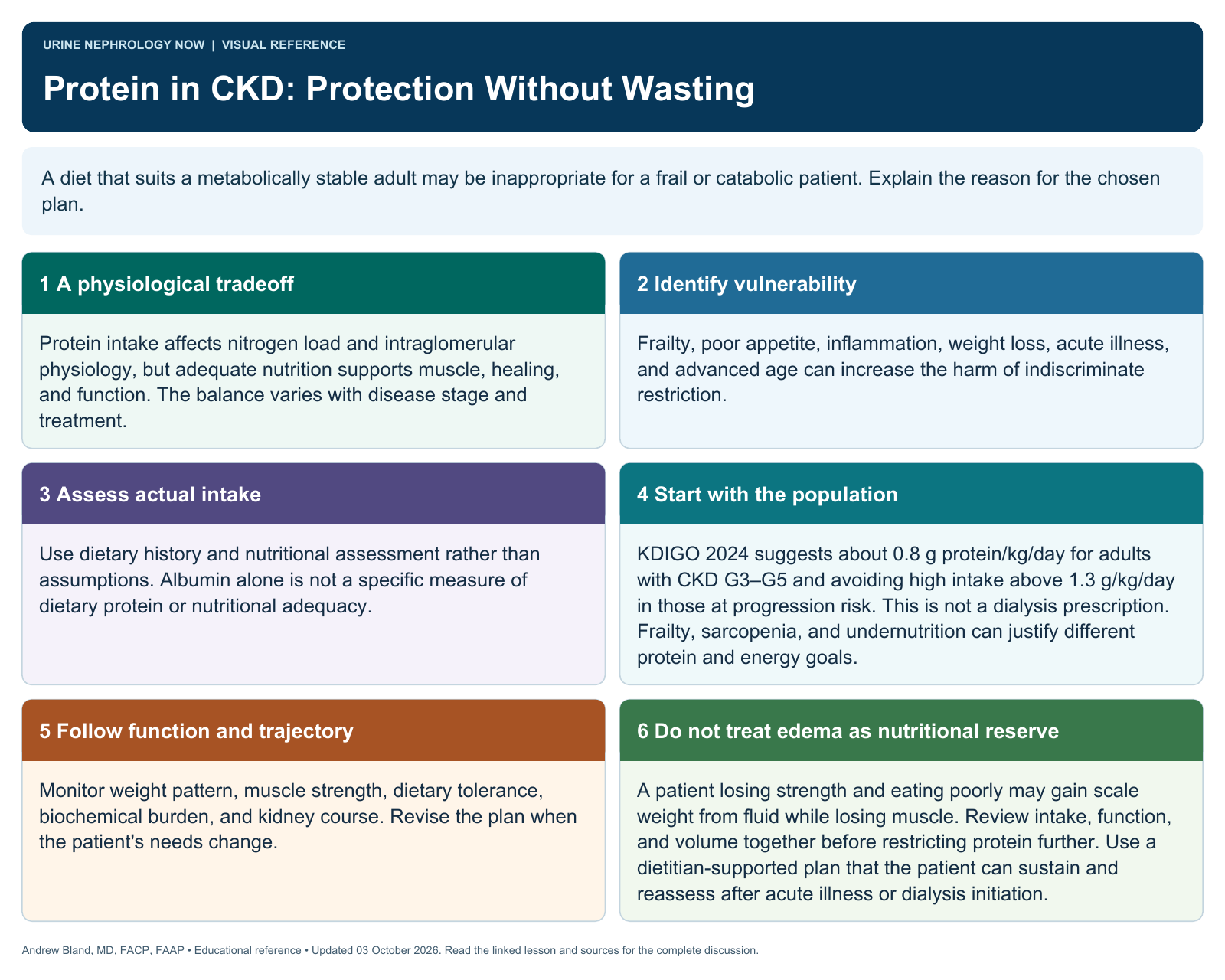
Text version
Protein serves competing needs
Protein supports muscle and tissue repair, while nitrogen handling changes with CKD and dialysis. The balance depends on nutritional status, activity, catabolism, renal trajectory, and treatment rather than one intake target for everyone.
Recognize nutritional vulnerability
Poor appetite, unintentional weight loss, reduced strength, frailty, and low intake can signal protein-energy wasting. Albumin alone is not a complete nutrition assessment because inflammation and fluid status also affect it.
Assess the whole diet
Review energy intake, protein sources, appetite, swallowing or gastrointestinal problems, food access, and rehabilitation demands. Involve a renal dietitian when restrictions compete or the patient is losing weight or function.
Individualize advice
Selected nondialysis patients may discuss a supervised protein strategy, while dialysis, acute illness, and existing malnutrition create different needs. Avoid automatic restriction in children or vulnerable patients without specialist assessment.
Support muscle deliberately
Appropriate activity and resistance exercise, sufficient overall energy, and a workable eating plan can support function. Per-meal distribution and supplements should be tailored, not promoted as a guaranteed method of preventing sarcopenia.
Review outcomes and evidence
Follow intake, weight trend, strength, symptoms, and laboratory context. Distinguish observational associations from dietary trial evidence, and reassess restrictions if the patient’s nutrition or quality of life deteriorates.
Continue learning
This graphic summarizes a topic. The full educational pages provide the broader discussion and references.