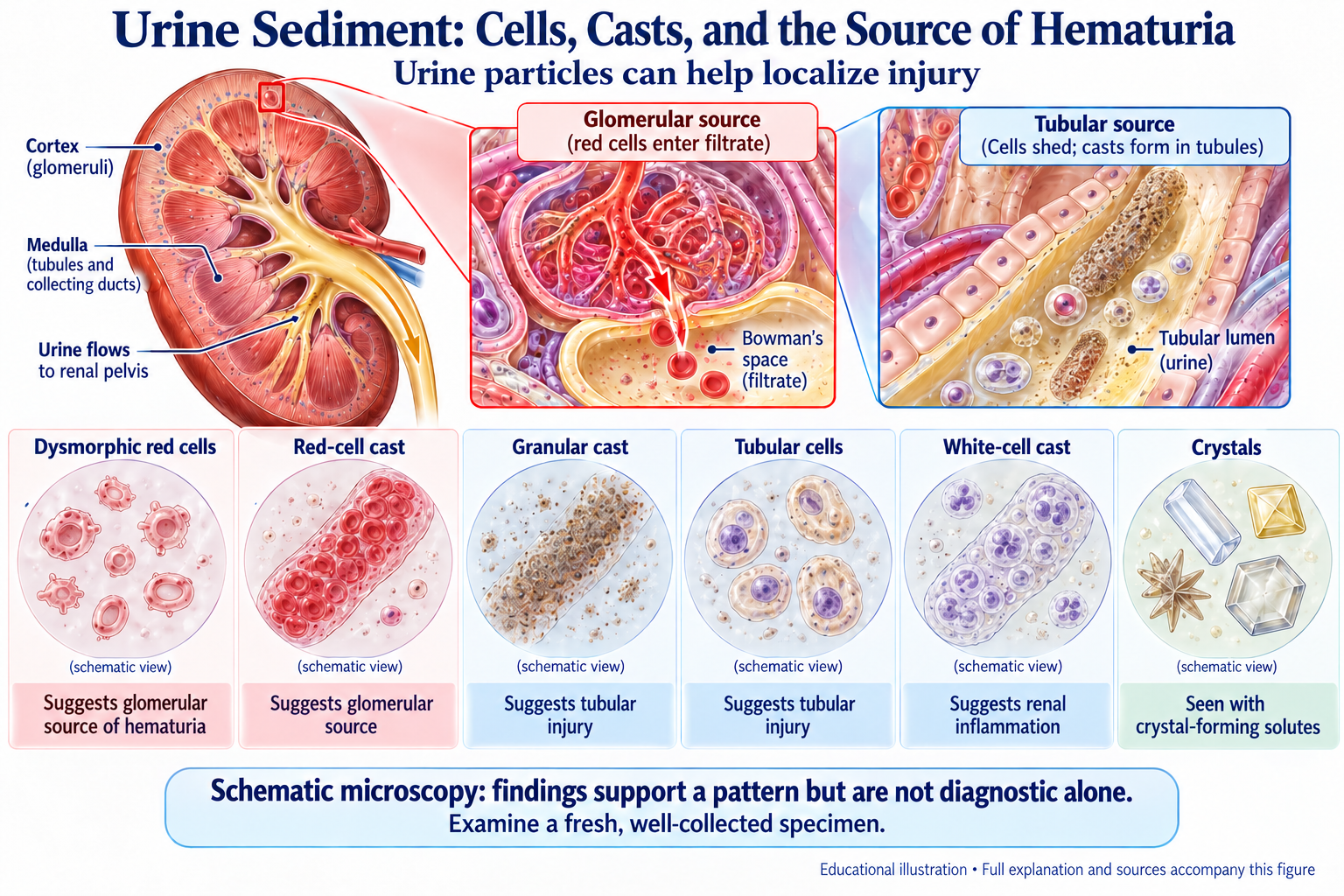
🎯 Why Dysmorphic RBCs Matter
Dysmorphic RBCs—especially acanthocytes—indicate glomerular bleeding and help distinguish glomerulonephritis from urologic sources (stones, tumors, infection). Glomerular patterns warrant expedited workup and often nephrology consultation.
Teaching Pearl: RBC casts and acanthocytes support a glomerular source of bleeding. Yield depends on specimen quality and microscopy expertise; absence of these findings does not exclude GN.
📋 Definitions & Thresholds
| Dysmorphic RBC | Misshapen erythrocyte from glomerular passage; spicules/blebs common |
| Acanthocyte (G1 cell) | Ring form with vesicle-like blebs—highly specific for glomerular origin |
| >5% Dysmorphic | Suggests glomerular source |
| >5% Acanthocytes | Highly specific for glomerulonephritis (Kohler 1991, PMID 1921146) |
🔬 Optimal Technique
1
Fresh Specimen: Midstream, clean-catch within 2 hours
2
Phase-Contrast: Preferred; bright-field acceptable with training
3
Scanning: Low power for casts, high power for morphology
Tip: If unavailable, partner with a lab using phase-contrast or send to a nephrology microscopy service.
📊 Test Characteristics
Specificity: Acanthocytes are highly specific; dysmorphia alone less so
Sensitivity: Improves with fresh samples and phase-contrast technique
Pitfalls: Prolonged storage, high osmolality, and severe hematuria can distort RBCs
⚠️ Common Errors to Avoid
✗
Over-calling dysmorphia in old specimens
✗
Misreading crenated cells (hypertonic urine) as dysmorphic
✗
Diagnosing after vigorous exercise (transient changes)
✗
Using standard bright-field without proper training
🚨 When to Escalate
→ Urgent Nephrology Consult
Dysmorphic RBCs or RBC casts + AKI/proteinuria
→ Expedite Serologies
Complements, ANCA, anti-GBM if GN suspected
→ Consider Urology
Gross hematuria with clots or terminal stream bleeding
🔗 Clinical Integration
Proteinuria + Dysmorphic RBCs
Strengthens GN likelihood—check UPCR
Hypertension/Edema
Supports nephritic syndrome pattern
Normal Complements
Narrows differential (IgA, ANCA, anti-GBM)
Case Tie-in: See Case 22 (RPGN with IgA vasculitis) for real-world application.
📚 Sources
- Köhler H, Wandel E, Brunck B. Acanthocyturia — a characteristic marker for glomerular bleeding. Kidney Int. 1991;40(1):115-120. PMID: 1921146. — Foundational paper establishing acanthocytes as a specific marker for glomerular bleeding; threshold of >5% acanthocytes corresponds to glomerular hematuria.
- Fairley KF, Birch DF. Hematuria: a simple method for identifying glomerular bleeding. Kidney Int. 1982;21(1):105-108. PMID: 7077941. — Original phase-contrast microscopy paper for dysmorphic RBC identification.
- Kidney Disease: Improving Global Outcomes (KDIGO) Glomerular Diseases Work Group. KDIGO 2021 Clinical Practice Guideline for the Management of Glomerular Diseases. Kidney Int. 2021;100(4S):S1–S276. PubMed.