Visual summary
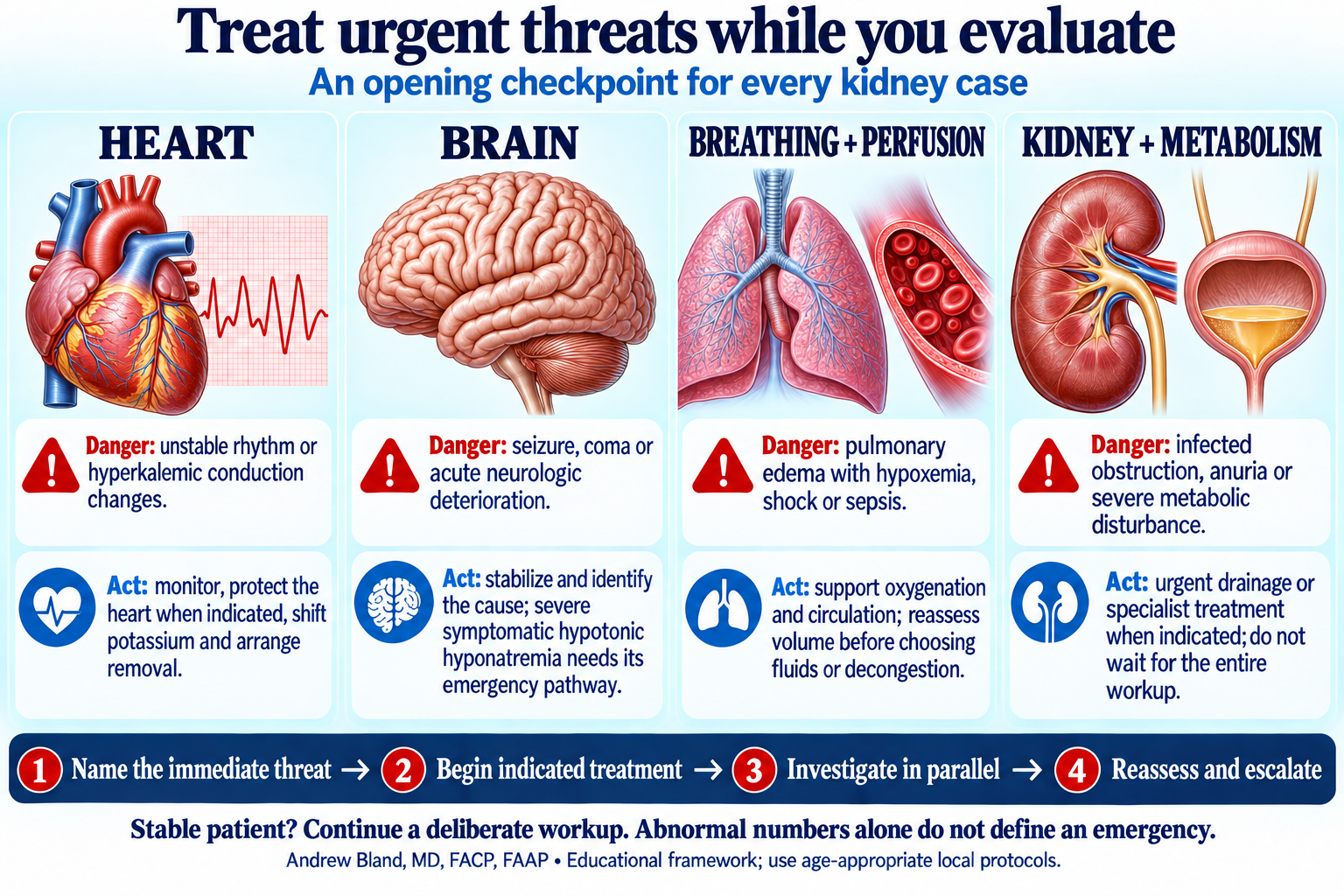
Name the threat, begin indicated treatment, investigate in parallel, then reassess.
Teaching text
Start every case with a safety decision
Identify whether the patient is unstable, needs prompt escalation, or can proceed through a deliberate workup. An abnormal creatinine, blood pressure or urinalysis alone does not establish an emergency. Revisit this decision when new findings arrive.
Heart and brain
Look for dangerous arrhythmia or hyperkalemic conduction changes, seizures, coma or acute neurologic deterioration. Use the relevant emergency pathway while clarifying the cause; not every neurologic symptom in a patient with low sodium is caused by hyponatremia.
Breathing and perfusion
Hypoxemic pulmonary edema, shock and sepsis change the pace of care. Support oxygenation and circulation, assess volume and reassess the response. Edema does not automatically mean intravascular volume is adequate; an elevated creatinine does not automatically call for IV fluid.
Kidney and metabolism
Infected obstruction needs urgent drainage and antibiotics. Anuria or a severe metabolic disturbance requires urgent evaluation. Dialysis decisions depend on the clinical problem and response to treatment, not a creatinine threshold alone.
Use the patient’s age and setting
This is a recognition framework, not a dosing protocol. Pediatric cases require pediatric blood-pressure interpretation, age-appropriate treatment and specialist escalation. Stable patients still need a clear investigation and follow-up plan.
Continue learning
Read the connected teaching · Summary-day capstone · Bring the lecture to the bedside