Visual summary
A medication interaction can explain a new neurologic symptom, several electrolyte abnormalities, and a creatinine rise together.
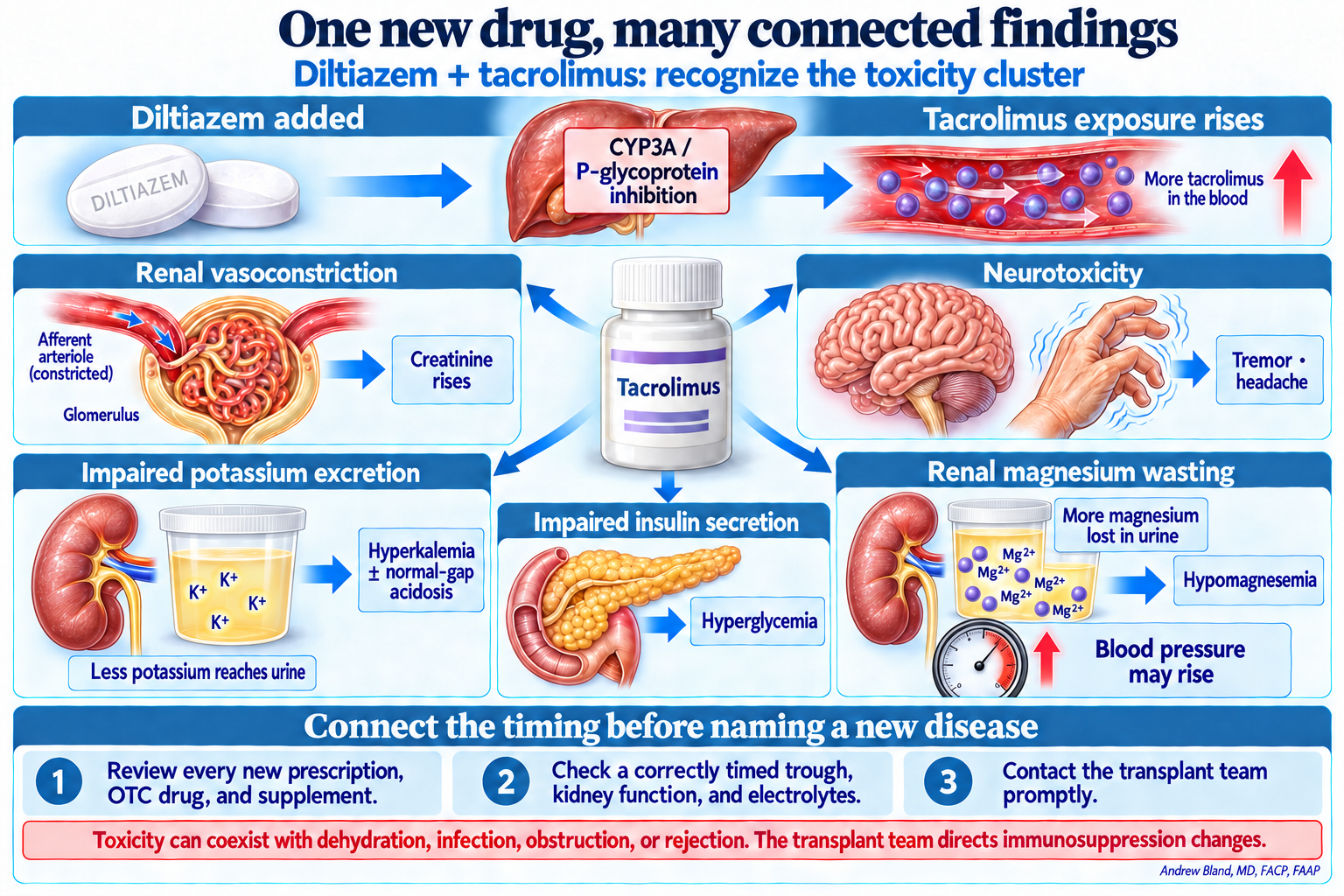
A medication interaction can explain a new neurologic symptom, several electrolyte abnormalities, and a creatinine rise together.
Text version
The timeline is a diagnostic tool
Diltiazem can raise tacrolimus exposure through inhibition of CYP3A and P-glycoprotein. Review the medication list by start date, including OTC drugs, supplements, and recent illness. A previously stable tacrolimus dose does not guarantee stable exposure after another drug is added.
One exposure, several organ effects
Excess tacrolimus can cause renal vasoconstriction and a creatinine rise, neurologic effects such as tremor, impaired potassium excretion with possible normal-gap acidosis, renal magnesium wasting, impaired insulin secretion, and increased blood pressure. The findings form a clue cluster; every feature need not be present.
Connect without anchoring
Check the timing of the trough sample, kidney-function trend, electrolytes, and other relevant findings. Toxicity can coexist with dehydration, infection, obstruction, or rejection. Contact the transplant team promptly; that team directs tacrolimus and other immunosuppression adjustments.
Does finding a high tacrolimus level exclude every other cause of a rising creatinine?
No. The interaction explains a plausible cluster, but transplant AKI still needs assessment for concurrent hemodynamic problems, infection, obstruction, and rejection as indicated.