Visual summary
Compare the mechanisms behind a swollen patient before deciding what the creatinine rise means.
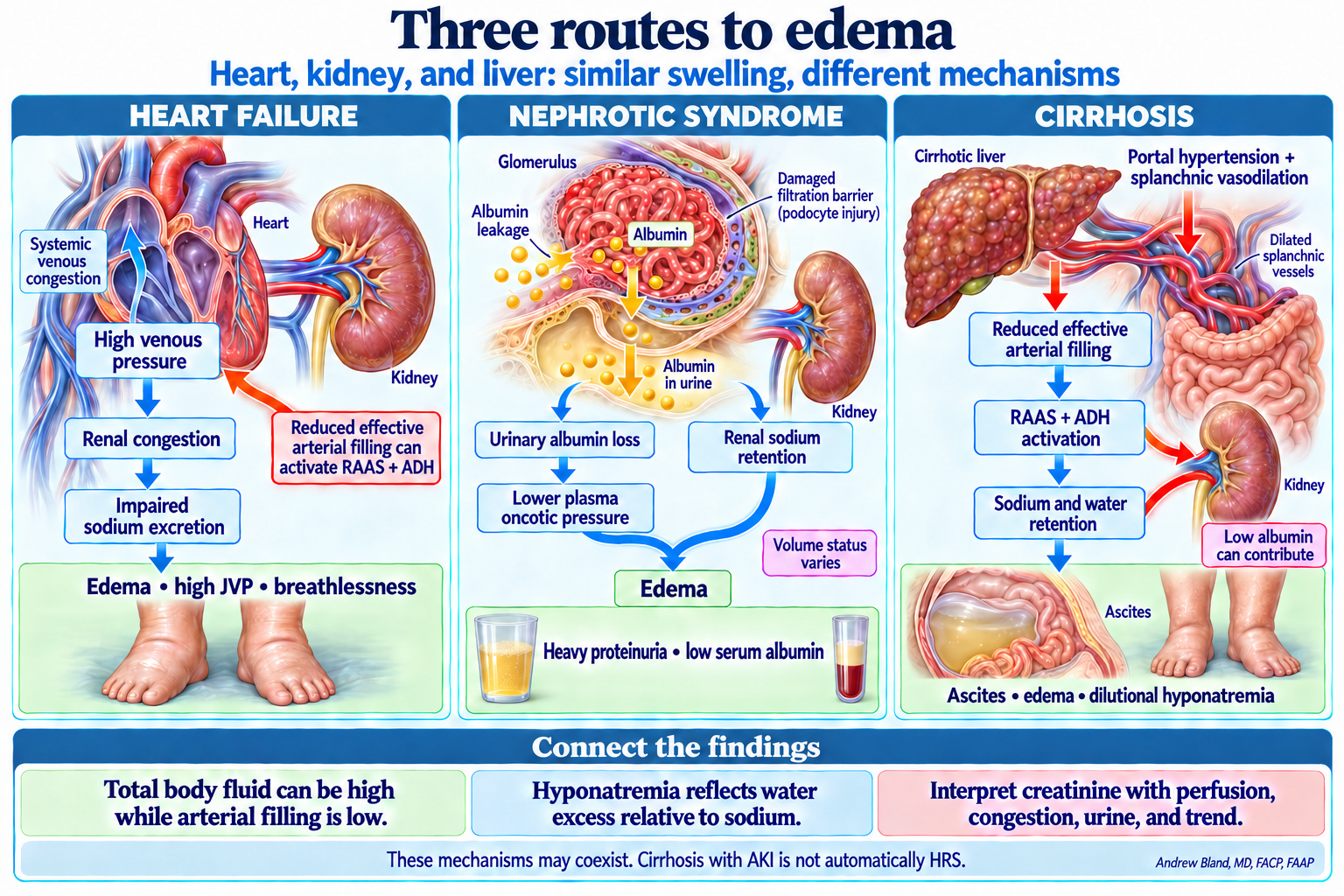
Compare the mechanisms behind a swollen patient before deciding what the creatinine rise means.
Text version
Heart failure and congestion
High renal venous pressure can impair kidney function. Reduced effective arterial filling may also activate RAAS and ADH. Read the creatinine trend with the JVP, weight, blood pressure, urine output, and response to decongestion; a rise alone does not establish volume depletion.
Nephrotic syndrome and edema
Urinary albumin loss lowers plasma oncotic pressure, while renal sodium retention also contributes. Intravascular volume varies. Heavy proteinuria and low serum albumin help explain swelling that might otherwise be labeled heart failure.
Cirrhosis and arterial filling
Portal hypertension and splanchnic vasodilation can produce low effective arterial filling despite ascites and edema. RAAS and ADH promote retention; disproportionate water retention can lower serum sodium. Infection, volume loss, tubular injury, and HRS may contribute to AKI, sometimes together. Ascites plus AKI does not by itself diagnose HRS.
Why can a patient have swollen legs and still have poor effective arterial filling?
Interstitial fluid, venous congestion, and effective arterial filling describe different compartments and pressures. Decide which mechanisms are present using the examination, urine, laboratory trends, and response to treatment.