Visual summary
A glomerular problem can explain edema, altered lipid levels, thrombosis, and infection risk in the same patient.
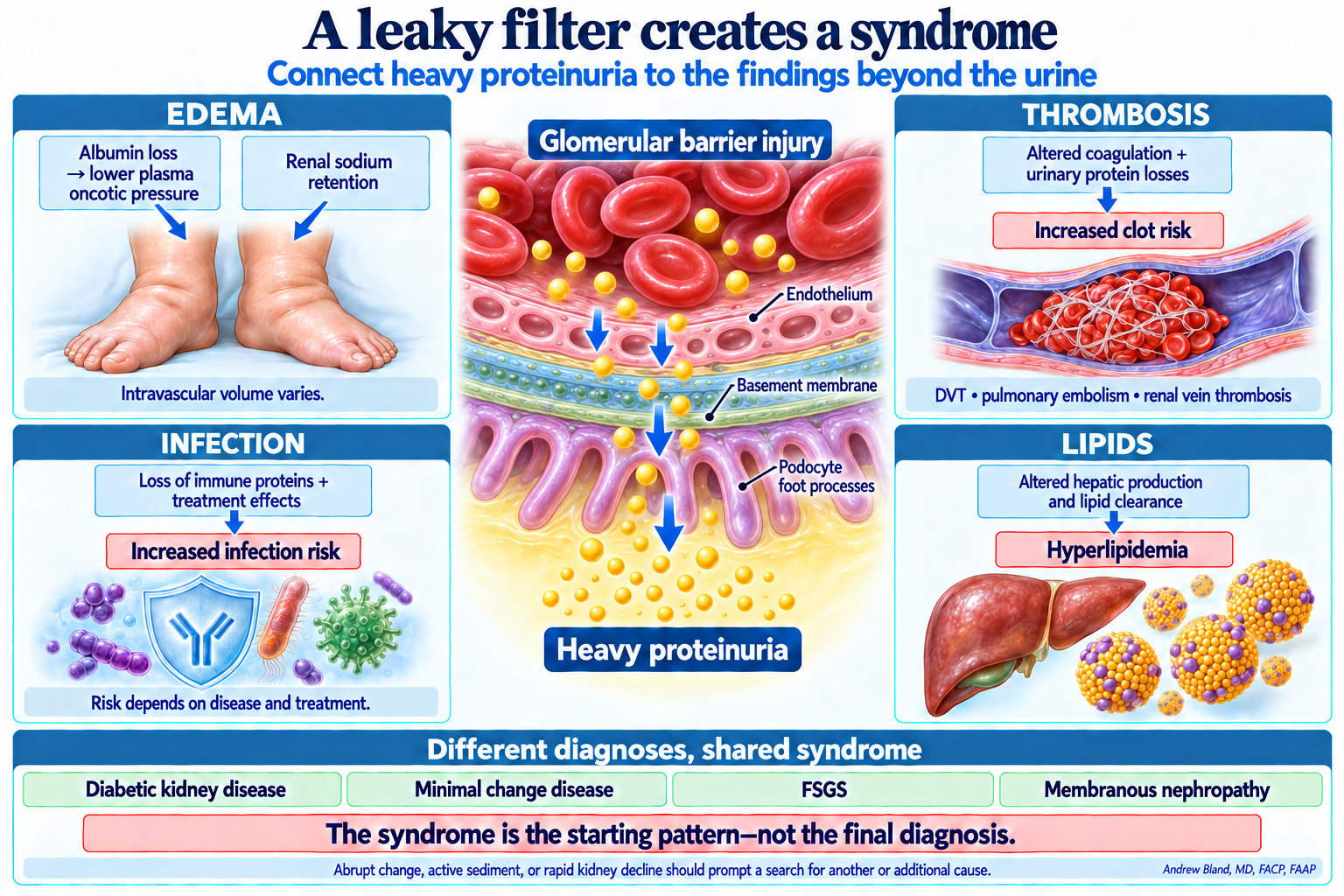
A glomerular problem can explain edema, altered lipid levels, thrombosis, and infection risk in the same patient.
Text version
A shared pattern with several causes
Diabetic kidney disease, minimal change disease, FSGS, and membranous nephropathy can produce nephrotic syndrome. The syndrome identifies a pattern; it does not establish the cause. Abrupt onset, an active sediment, or rapid kidney-function decline should prompt consideration of another or additional disease.
Edema and the rest of the syndrome
Albumin loss reduces plasma oncotic pressure, and renal sodium retention can independently contribute to edema. Altered hepatic production and lipid clearance produce hyperlipidemia. Intravascular volume must be assessed rather than inferred from the amount of peripheral edema.
Complications that change the case
Changes in coagulation and urinary protein losses increase thrombotic risk. A renal vein clot can add flank pain, hematuria, or AKI to a nephrotic presentation. Immune protein loss and immunosuppressive treatment can increase infection risk. Risk and management depend on the underlying disease, disease severity, treatment, and bleeding risk; the diagram does not imply universal prophylactic anticoagulation.
When a nephrotic patient develops new flank pain or a sudden creatinine rise, is progression of the original disease the only explanation?
No. Reassess for renal vein thrombosis, volume and hemodynamic changes, medication effects, infection, and other AKI causes. A new finding may be a complication superimposed on the original glomerular disease.