1 · Approach
Use the opening diagram and short lessons before the patient.
Session 5 · Classroom case · 12 questions
Andrew Bland, MD, FACP, FAAP · October 2026
Open all teaching, infographics and lecture links for this case →
Follow the history, examination, workup, and clinical course. Commit to each decision before opening the explanation.
Classroom pathway · Pause at each stage for discussion.
Read medicines by start date, connect exposures with the laboratory pattern, and keep infection, obstruction and rejection in the transplant differential.
Use the opening diagram and short lessons before the patient.
Revisit urgency as history, examination and initial data arrive.
Use the urine, blood or imaging guide at the relevant decision.
Connect the management plan with response, monitoring and follow-up.
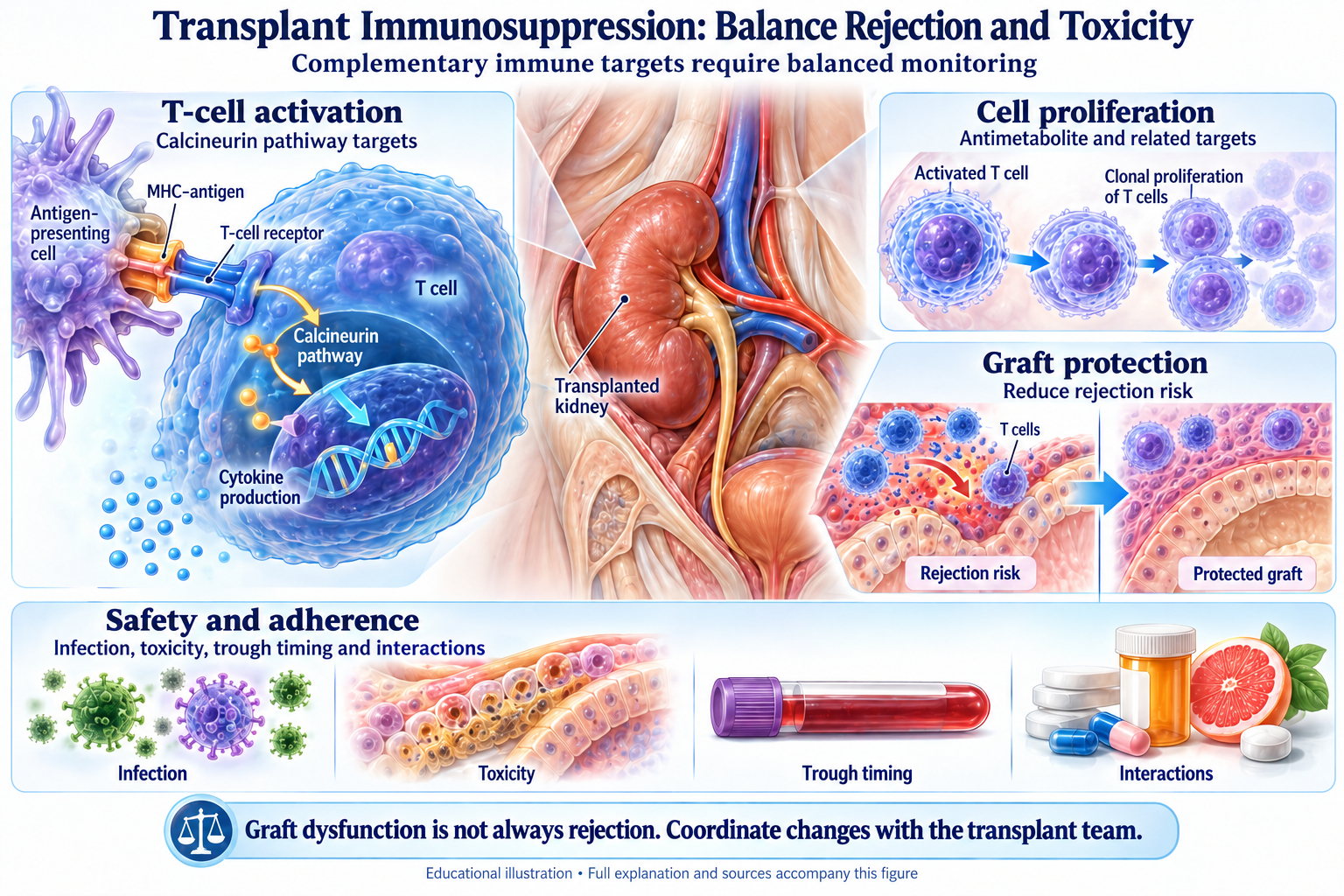
Use the diagram with the teaching text, then apply it to the case findings.
Session S5 · 2026-11-03 · in-session · 30 min Anchor: Integrative review — AKI in a kidney-transplant recipient, the hemodynamic-AKI frame in new dress · Integrates: CYP3A4 pharmacology, safe antihypertensive choice, hyperkalemia with type-4-RTA physiology, hypomagnesemia, hyperglycemia, outpatient creatinine-bump triage, the primary-care transplant checklist, the sick-day rule One-line hook: A transplant patient will walk into your primary-care clinic within your first year of practice. You will not manage her tacrolimus. You will be the clinician who sees her first when her creatinine moves — and who has to decide which parts of the problem are yours.
A 70-year-old woman on furosemide and lisinopril takes naproxen for three days for knee pain, and her creatinine rises from 1.1 to 1.8 mg/dL. Which statement best explains why the NSAID hurt her kidney?
NSAIDs remove the prostaglandins holding the afferent arteriole open, the support her two other drugs left her relying on
NSAIDs constrict the efferent arteriole, so adding one to an ACE inhibitor evens out the pressure inside each filter
NSAID kidney injury is an allergic interstitial nephritis, so her urine will show white cells and white-cell casts
Topical NSAIDs carry the same kidney risk as tablets, so a gel instead of naproxen would not have protected her
Show answer and explanation · Link to this question
Learning point: During reduced effective renal perfusion, prostaglandin-mediated afferent dilation helps preserve filtration. NSAIDs remove that support; a diuretic-associated volume deficit and RAAS blockade can compound the hemodynamic fall. ACEi/ARB is beneficial long term when indicated and tolerated; this acute interaction does not make it directly nephrotoxic or mean every diuretic user is depleted. NSAIDs can also cause other kidney lesions.
Why not the others: B reverses the physiology. C makes one less-common mechanism universal. D ignores the lower systemic exposure of topical NSAIDs, although kidney risk is not zero.
Concept link: aki-13, ckd-19, structural-20 · Question evidence and course reading
Back to W1 · All answers in this case
NSAID-induced kidney injury — Risk Factors for NSAID-Induced Kidney Injury
A 58-year-old man with type 2 diabetes and a urine albumin-to-creatinine ratio of 420 mg/g starts lisinopril 10 mg daily. At two weeks his creatinine is 1.2 mg/dL (baseline 1.0) and potassium 4.8 mEq/L. He feels well. What is the right move?
Stop lisinopril — any creatinine rise on an ACE inhibitor means the kidney is being injured
Order a renal artery duplex today, because a rise this early suggests bilateral renal artery stenosis
Continue lisinopril and recheck the BMP in about two weeks — a 20% rise is the expected effect
Halve the lisinopril and add an ARB so the two drugs protect the kidney from both directions
Show answer and explanation · Link to this question
Learning point: A small early creatinine rise can follow reduced intraglomerular pressure with ACE inhibition. In this well patient, 1.0 to 1.2 is 20%, so continue and recheck creatinine and potassium. KDIGO 2024 advises reassessment when creatinine rises more than 30% within 4 weeks: look for volume depletion, interacting drugs and renovascular disease, and reduce or stop if the problem cannot be corrected. Symptomatic hypotension or uncontrolled hyperkalemia can also require adjustment. A rise is not required to prove benefit.
Why not the others: A removes one component of evidence-based kidney protection from a small rise alone. B is not automatically required for a 20% rise in a well patient; evaluate symptoms, BP, potassium, volume and trajectory. D combines ACEi and ARB, increasing harm without added kidney benefit. Consider other indicated protective therapies, including an eligible SGLT2 inhibitor.
Concept link: aki-14 · Question evidence and course reading
Back to W2 · All answers in this case
Drug-induced AKI student handout — KDIGO drug classification framework
A 72-year-old man with CKD (eGFR 40 mL/min/1.73 m²) has taken colchicine 0.6 mg daily for a year to prevent gout flares. Urgent care prescribes clarithromycin for bronchitis. Five days later he has diarrhea, muscle weakness and a low white-cell count. What is the best explanation?
The antibiotic caused the diarrhea, and his weakness and low white count come from the bronchitis itself
Clarithromycin blocks the enzyme and the pump that clear colchicine, so it builds up on the same dose
Clarithromycin speeds colchicine's breakdown into a toxic product that his kidneys cannot excrete
His eGFR of 40 alone let colchicine accumulate, and the antibiotic is a coincidence of timing
Show answer and explanation · Link to this question
Learning point: Colchicine is cleared by CYP3A4 — a drug-metabolizing enzyme in the liver and the gut wall — and pumped out of cells by P-glycoprotein, and clarithromycin blocks both. On an unchanged dose the level climbs, and colchicine has a narrow window: diarrhea, muscle injury and a falling blood count are its toxicity, worse when kidney function is reduced. This combination is contraindicated in renal impairment: stop the interacting drugs and arrange urgent toxicity assessment. The rule travels: when a narrow-window drug is cleared by CYP3A4, a new inhibitor raises its level and a new inducer lowers it.
Why not the others: A blames the infection for a toxicity pattern that began after the new drug; C has the direction backwards — clarithromycin slows clearance, it does not speed it; D ignores a year on the same dose at the same eGFR without trouble.
Concept link: ckd-18 · Question evidence and course reading
Back to W3 · All answers in this case
Renal pharmacology lecture — 9. Key Drug Interactions in Nephrology
Ms. R. is 46. Three years ago her sister gave her a kidney. The cause of her own kidney failure was IgA nephropathy, diagnosed in her twenties. The transplant has gone well: at the transplant center's last visit three months ago her creatinine was 1.2 mg/dL (eGFR about 57 mL/min/1.73 m² by CKD-EPI 2021 — a transplant kidney is one kidney doing the work of two, so this is a good number for her), her tacrolimus trough was 7.1 ng/mL against a center target of 6–8, and her A1c was 6.1% (the center tracks it because tacrolimus and prednisone both cause post-transplant diabetes ). A dental hygienist who does not smoke or drink, she lives ninety minutes from the center with her husband and two teenagers. Her primary care lives with you.
A trough is the lowest blood level of a drug, drawn just before the next dose. Tacrolimus is a calcineurin inhibitor — the drug that holds her immune system back from attacking the kidney — and it has a narrow window: too low and the kidney is rejected; too high and the drug itself becomes toxic. That is why her center checks a trough every three months and asks to be told about any new medicine.
Four weeks ago she came to your clinic for a routine visit. Blood pressure was 152/92, repeated 149/90, and her home cuff had been averaging 148/90 for a month. Her labs that day were unremarkable for her: creatinine 1.2, potassium 4.6, bicarbonate 24, fasting glucose 118. The clinic started diltiazem ER 180 mg daily — "gentle, kidney-friendly, no cough" — and booked a four-week follow-up. Nobody called the transplant center.
Today she is back for that follow-up, and her blood pressure is 128/78. She is pleased about the number and nothing else. For two weeks her hands have shaken — a fine, fast tremor she first noticed holding a coffee cup, and her charting at work has become hard to read. She has had a headache most evenings for a week and is sleeping badly. Last week she and her husband had two days of watery diarrhea — five or six stools a day, no fever, no blood — which she managed with over-the-counter loperamide and did not report to anyone. Yesterday the headache was bad enough that she took ibuprofen 400 mg twice, at two in the afternoon and at ten at night. She has not missed or doubled a transplant dose; she stores them in a dated pill organizer and takes tacrolimus at 8 a.m. and 8 p.m. Urine output seems normal to her.
Her fasting labs for today's visit were drawn at 7:45 this morning.
Dose: 3 mg
Route: PO
Frequency: every 12 h (8 a.m. / 8 p.m.)
Indication: Prevent rejection of the kidney transplant (calcineurin inhibitor); dose unchanged for 14 months
Dose: 750 mg
Route: PO
Frequency: every 12 h
Indication: Prevent rejection (antimetabolite)
Dose: 5 mg
Route: PO
Frequency: daily
Indication: Prevent rejection (maintenance steroid)
Dose: 180 mg
Route: PO
Frequency: daily
Indication: Hypertension — started 4 weeks ago by this clinic
Dose: 20 mg
Route: PO
Frequency: nightly
Indication: Hyperlipidemia
Dose: 1,000 IU
Route: PO
Frequency: daily
Indication: Bone health after transplant
Dose: —
Route: intrauterine
Frequency: in place
Indication: Contraception (required while on mycophenolate, which causes birth defects)
Dose: 400 mg
Route: PO
Frequency: two doses yesterday (14:00, 22:00)
Indication: Headache — self-directed
Dose: 2 mg
Route: PO
Frequency: two doses last week
Indication: Diarrhea — self-directed
| Drug | Dose | Route | Frequency | Indication |
|---|---|---|---|---|
| Tacrolimus (immediate-release) | 3 mg | PO | every 12 h (8 a.m. / 8 p.m.) | Prevent rejection of the kidney transplant (calcineurin inhibitor); dose unchanged for 14 months |
| Mycophenolate mofetil | 750 mg | PO | every 12 h | Prevent rejection (antimetabolite) |
| Prednisone | 5 mg | PO | daily | Prevent rejection (maintenance steroid) |
| Diltiazem ER | 180 mg | PO | daily | Hypertension — started 4 weeks ago by this clinic |
| Atorvastatin | 20 mg | PO | nightly | Hyperlipidemia |
| Cholecalciferol (vitamin D₃) | 1,000 IU | PO | daily | Bone health after transplant |
| Levonorgestrel IUD | — | intrauterine | in place | Contraception (required while on mycophenolate, which causes birth defects) |
| Ibuprofen (OTC) | 400 mg | PO | two doses yesterday (14:00, 22:00) | Headache — self-directed |
| Loperamide (OTC) | 2 mg | PO | two doses last week | Diarrhea — self-directed |
What medication timeline and transplant information would you obtain first?
Verify the new diltiazem, tacrolimus dose and sampling time, recent diarrhea, over-the-counter medicines and the transplant center's target and contact plan. Ask what changed, not just what appears on the current list.
Return to the lecture: Transplant immunosuppression student handout — V. Drug Monitoring and Therapeutic Targets · Transplant complications student handout — VIII. Clinical Pearls
Vitals: BP 128/78 seated, 118/76 standing · Pulse 64 seated, 78 standing · T 36.9 °C · Respiratory rate 14 · Weight 68.0 kg (69.5 kg four weeks ago) · Height 165 cm.
Exam: Alert, anxious about her hands. Fine, fast tremor of both hands when held outstretched; no rigidity, normal gait. Mucous membranes slightly dry; no jugular venous distension; lungs clear; heart regular without murmur. Abdomen soft; the transplant kidney in the right lower quadrant is non-tender with no bruit. No edema. Skin: a few rough, scaly patches on both forearms (actinic keratoses). No rash, no lymphadenopathy.
Which findings should be documented even though the blood pressure has improved?
Describe tremor, mental status, hydration, blood pressure and graft-area findings. Improvement in one measurement does not explain the new symptoms or establish that graft function is stable.
Return to the lecture: Transplant immunosuppression student handout — V. Drug Monitoring and Therapeutic Targets · Transplant complications student handout — VIII. Clinical Pearls
Use what you know from the history and examination. Select an initial workup, name the question each test answers, and decide what can wait. Discuss urgent bedside assessment and treatment in parallel.
Some results in this case occur later, after new findings. Selecting a test does not imply that it is needed now.
Your selections last while this page is open. This is a discussion activity, not a scored MCQ. Results remain at their original points in the case; tests without supplied results are identified after you commit.
Pause — commit before the reveal
The lab calls while she is still in the room: creatinine 2.0 mg/dL (1.2 four weeks ago), potassium 5.8 mEq/L. She has a new tremor, a mild orthostatic drop, and one working kidney — the transplant. What is the right disposition today?
Stop the ibuprofen, push oral fluids and recheck a BMP in 48–72 hours — the classic bump after an NSAID and a stomach bug
Order a CT of the abdomen and pelvis with IV contrast today to look for obstruction or a collection around the transplant
Same-day work-up: ECG, urinalysis, bladder scan and ultrasound, magnesium and a tacrolimus level, and a call to the center
Ask the center to book a transplant biopsy first — a creatinine rise in a transplant is rejection until proven otherwise
Show answer and explanation · Link to this question
Learning point: Three things take her out of the 48–72-hour lane: a potassium of 5.8 that needs an ECG today; a creatinine 1.67 times her baseline — the size of a KDIGO stage 1 rise, although with the last value four weeks old the 7-day clock cannot be applied [3]; and new symptoms in a patient whose only working kidney is a transplant. The outpatient creatinine-bump work-up is the usual one — confirm the change, review the medications, check the urine and the bladder, assess volume — and in a transplant recipient it adds a tacrolimus level and a same-day call to the center.
Why not the others: A is the right recheck on the wrong clock for a transplant kidney with a potassium of 5.8, and it leaves the center out; B gives iodinated contrast to an injured kidney when a bladder scan and an ultrasound answer the obstruction question without it; D is biopsy before the bladder scan — rejection is a center diagnosis, and it would not explain the tremor.
Concept link: aki-27, structural-27 · Question evidence and course reading
Back to Q4 · All answers in this case
AKI BMP pattern recognition guide — Part 6: BMP-Guided Clinical Decision-Making
Before the full panel is back you already have: a new fine tremor, evening headaches, creatinine 2.0 (from 1.2), potassium 5.8, and a fasting point-of-care glucose of 238 mg/dL. Yesterday's ibuprofen and last week's diarrhea are one story. Which two findings does that story fail to explain?
The new tremor and the fasting glucose of 238
The creatinine of 2.0 and the potassium of 5.8
The potassium of 5.8 and the fasting glucose
The new tremor and the creatinine rise of 0.8
Show answer and explanation · Link to this question
Learning point: Ibuprofen on top of lost volume explains a creatinine rise (W1's afferent squeeze) and can raise the potassium, because NSAIDs lower renin and with it aldosterone. That explanation does not adequately account for the new tremor and worsening glucose on an unchanged prednisone dose; stress can raise glucose, so these are supporting clues rather than proof; the headaches could belong to either story. Two findings outside the first story mean a second process — in a tacrolimus patient, what a level above range looks like, which is why a level was added to this morning's sample. Whether it is high, and whether it also explains the creatinine, the result will say.
Why not the others: B — both fit the first story: the afferent squeeze, and an NSAID's hold on aldosterone; C — the potassium fits the NSAID even though diarrhea alone would lower it; D — the creatinine needs nothing beyond the NSAID and the lost volume.
Concept link: structural-27 · Question evidence and course reading
Back to Q5 · All answers in this case
Transplant immunosuppression student handout — V. Drug Monitoring and Therapeutic Targets
Her tacrolimus dose has not changed in fourteen months, and she has not missed or doubled a dose. If the level has risen, which drug on her list is the most likely reason?
Atorvastatin — CYP3A4 also breaks it down, so it competes with tacrolimus and slows its clearance
Ibuprofen, taken yesterday — NSAIDs slow the liver's breakdown of tacrolimus within hours
Prednisone — steroids slow tacrolimus breakdown, and she has taken hers for three years
Diltiazem, started four weeks ago — it blocks CYP3A4 and P-glycoprotein, which clear tacrolimus
Show answer and explanation · Link to this question
Learning point: When a stable patient destabilizes on an unchanged dose, look for the new drug that changed how the old one is cleared — read the medication list by start date. Tacrolimus is broken down by CYP3A4 in the liver and gut wall and pumped back out of gut cells by P-glycoprotein; diltiazem and verapamil, the heart-rate-slowing (non-dihydropyridine) calcium-channel blockers, block both, so the same 3 mg gives a higher level. Azole antifungals, clarithromycin and erythromycin, and grapefruit juice do the same; the inducers rifampin, phenytoin, carbamazepine and St John's wort push the level down and risk rejection.
Why not the others: A confuses a substrate (a drug the enzyme works on) with an inhibitor (a drug that blocks it), and atorvastatin has sat on her list for years without moving her trough; B adds its own afferent squeeze but does not slow tacrolimus clearance, and two doses yesterday cannot explain a tremor that began two weeks ago; C is a long-standing drug at an unchanged dose — nothing new happened on that line.
Concept link: structural-27 · Question evidence and course reading
Back to Q6 · All answers in this case
Renal pharmacology lecture — 9. Key Drug Interactions in Nephrology
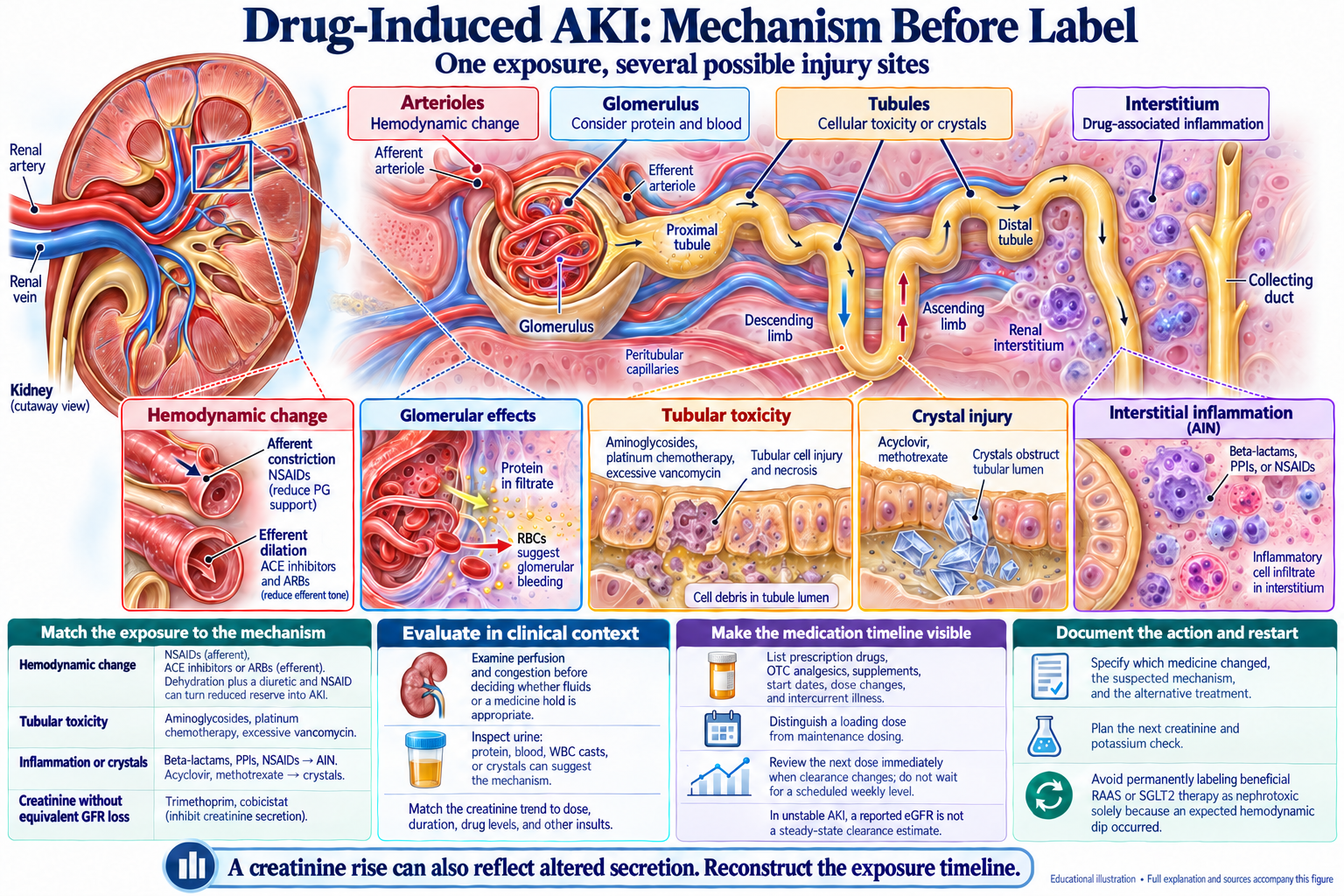
Use the diagram with the teaching text, then apply it to the case findings.
Use this general framework to explain the case results. State what fits, what does not, and which finding changes the next action.
The same-day work-up comes back over the next ninety minutes. Walk the table — kidney numbers, electrolytes, urine, pictures — asking what each result excludes before what it proves.
Serum chemistry and blood counts (drawn 07:45, fasting)
How does sodium compare with the supplied range or prior value? Explain what it adds to the pattern, whether the timing or specimen matters, and whether it changes your next step.
Transplant immunosuppression student handout — V. Drug Monitoring and Therapeutic Targets
How does potassium compare with the supplied range or prior value? Explain what it adds to the pattern, whether the timing or specimen matters, and whether it changes your next step.
Hyperkalemia lecture — Find the mechanism and reversible contributors
How does chloride compare with the supplied range or prior value? Explain what it adds to the pattern, whether the timing or specimen matters, and whether it changes your next step.
Transplant immunosuppression student handout — V. Drug Monitoring and Therapeutic Targets
How does bicarbonate compare with the supplied range or prior value? Explain what it adds to the pattern, whether the timing or specimen matters, and whether it changes your next step.
Transplant immunosuppression student handout — V. Drug Monitoring and Therapeutic Targets
How does anion gap (na − [cl + hco₃]) compare with the supplied range or prior value? Explain what it adds to the pattern, whether the timing or specimen matters, and whether it changes your next step.
Transplant immunosuppression student handout — V. Drug Monitoring and Therapeutic Targets
How does bun compare with the supplied range or prior value? Explain what it adds to the pattern, whether the timing or specimen matters, and whether it changes your next step.
Transplant immunosuppression student handout — V. Drug Monitoring and Therapeutic Targets
How does creatinine compare with the supplied range or prior value? Explain what it adds to the pattern, whether the timing or specimen matters, and whether it changes your next step.
Drug-induced AKI student handout — KDIGO drug classification framework
How does bun:creatinine compare with the supplied range or prior value? Explain what it adds to the pattern, whether the timing or specimen matters, and whether it changes your next step.
Drug-induced AKI student handout — KDIGO drug classification framework
How does egfr compare with the supplied range or prior value? Explain what it adds to the pattern, whether the timing or specimen matters, and whether it changes your next step.
Drug dosing in CKD quick reference — Part 1: Principles of Drug Dosing in CKD
How does glucose (fasting) compare with the supplied range or prior value? Explain what it adds to the pattern, whether the timing or specimen matters, and whether it changes your next step.
Transplant immunosuppression student handout — V. Drug Monitoring and Therapeutic Targets
How does hemoglobin a1c compare with the supplied range or prior value? Explain what it adds to the pattern, whether the timing or specimen matters, and whether it changes your next step.
Transplant immunosuppression student handout — V. Drug Monitoring and Therapeutic Targets
How does calcium compare with the supplied range or prior value? Explain what it adds to the pattern, whether the timing or specimen matters, and whether it changes your next step.
Transplant immunosuppression student handout — V. Drug Monitoring and Therapeutic Targets
How does albumin compare with the supplied range or prior value? Explain what it adds to the pattern, whether the timing or specimen matters, and whether it changes your next step.
Transplant immunosuppression student handout — V. Drug Monitoring and Therapeutic Targets
How does phosphorus compare with the supplied range or prior value? Explain what it adds to the pattern, whether the timing or specimen matters, and whether it changes your next step.
Transplant immunosuppression student handout — V. Drug Monitoring and Therapeutic Targets
How does magnesium compare with the supplied range or prior value? Explain what it adds to the pattern, whether the timing or specimen matters, and whether it changes your next step.
Hypomagnesemia lecture — Causes of Hypomagnesemia; Treatment Strategies
How does wbc compare with the supplied range or prior value? Explain what it adds to the pattern, whether the timing or specimen matters, and whether it changes your next step.
Transplant immunosuppression student handout — V. Drug Monitoring and Therapeutic Targets
How does hemoglobin compare with the supplied range or prior value? Explain what it adds to the pattern, whether the timing or specimen matters, and whether it changes your next step.
Transplant immunosuppression student handout — V. Drug Monitoring and Therapeutic Targets
How does platelets compare with the supplied range or prior value? Explain what it adds to the pattern, whether the timing or specimen matters, and whether it changes your next step.
Transplant immunosuppression student handout — V. Drug Monitoring and Therapeutic Targets
How does tacrolimus level (added to the 07:45 sample) compare with the supplied range or prior value? Explain what it adds to the pattern, whether the timing or specimen matters, and whether it changes your next step.
Transplant immunosuppression student handout — V. Drug Monitoring and Therapeutic Targets
| Test | Result | Reference range |
|---|---|---|
| Sodium | 137 mEq/L | 135–145 |
| Potassium | 5.8 mEq/L | 3.5–5.0 |
| Chloride | 107 mEq/L | 98–107 |
| Bicarbonate | 19 mEq/L | 22–28 |
| Anion gap (Na − [Cl + HCO₃]) | 137 − (107 + 19) = 11 | 8–12 (this lab) |
| BUN | 36 mg/dL | 7–20 |
| Creatinine | 2.0 mg/dL | 0.6–1.1 (her baseline 1.2) |
| BUN:creatinine | 18:1 | — (below 20; a ratio alone cannot assign the mechanism) |
| eGFR | not valid — creatinine is moving (baseline about 57 mL/min/1.73 m² at Cr 1.2, CKD-EPI 2021, 46-year-old woman) | ≥60 |
| Glucose (fasting) | 238 mg/dL | 70–99 |
| Hemoglobin A1c | 6.9% | <5.7% (hers was 6.1% three months ago) |
| Calcium | 9.0 mg/dL | 8.5–10.5 |
| Albumin | 4.0 g/dL | 3.5–5.0 |
| Phosphorus | 3.9 mg/dL | 2.5–4.5 |
| Magnesium | 1.3 mg/dL | 1.8–2.4 |
| WBC | 5.8 ×10³/µL | 4.0–11.0 |
| Hemoglobin | 12.6 g/dL | 12.0–16.0 |
| Platelets | 212 ×10³/µL | 150–400 |
| Tacrolimus level (added to the 07:45 sample) | pending — hospital lab reports about 4:30 p.m. | center target 6–8 ng/mL (trough) |
Apply your interpretation in Q7
Revisit the framework: Transplant immunosuppression student handout — V. Drug Monitoring and Therapeutic Targets
Urinalysis
How does color / clarity compare with the supplied range or prior value? Explain what it adds to the pattern, whether the timing or specimen matters, and whether it changes your next step.
Transplant immunosuppression student handout — V. Drug Monitoring and Therapeutic Targets
How does specific gravity compare with the supplied range or prior value? Explain what it adds to the pattern, whether the timing or specimen matters, and whether it changes your next step.
Transplant immunosuppression student handout — V. Drug Monitoring and Therapeutic Targets
How does ph compare with the supplied range or prior value? Explain what it adds to the pattern, whether the timing or specimen matters, and whether it changes your next step.
Transplant immunosuppression student handout — V. Drug Monitoring and Therapeutic Targets
How does protein compare with the supplied range or prior value? Explain what it adds to the pattern, whether the timing or specimen matters, and whether it changes your next step.
Transplant immunosuppression student handout — V. Drug Monitoring and Therapeutic Targets
How does glucose compare with the supplied range or prior value? Explain what it adds to the pattern, whether the timing or specimen matters, and whether it changes your next step.
Transplant immunosuppression student handout — V. Drug Monitoring and Therapeutic Targets
How does ketones compare with the supplied range or prior value? Explain what it adds to the pattern, whether the timing or specimen matters, and whether it changes your next step.
Transplant immunosuppression student handout — V. Drug Monitoring and Therapeutic Targets
How does blood (heme) compare with the supplied range or prior value? Explain what it adds to the pattern, whether the timing or specimen matters, and whether it changes your next step.
Transplant immunosuppression student handout — V. Drug Monitoring and Therapeutic Targets
How does leukocyte esterase / nitrite compare with the supplied range or prior value? Explain what it adds to the pattern, whether the timing or specimen matters, and whether it changes your next step.
Transplant immunosuppression student handout — V. Drug Monitoring and Therapeutic Targets
How does microscopy compare with the supplied range or prior value? Explain what it adds to the pattern, whether the timing or specimen matters, and whether it changes your next step.
Transplant immunosuppression student handout — V. Drug Monitoring and Therapeutic Targets
| Component | Result | Reference |
|---|---|---|
| Color / clarity | yellow, clear | — |
| Specific gravity | 1.020 | 1.005–1.030 |
| pH | 5.5 | 4.5–8.0 |
| Protein | trace | negative |
| Glucose | 2+ | negative |
| Ketones | negative | negative |
| Blood (heme) | negative | negative |
| Leukocyte esterase / nitrite | negative / negative | negative |
| Microscopy | RBC 0–2/hpf; WBC 0–2/hpf; occasional hyaline casts; no granular, cellular or red-cell casts; no crystals | — |
Apply your interpretation in Q7
Revisit the framework: Transplant immunosuppression student handout — V. Drug Monitoring and Therapeutic Targets
Bedside and imaging: Post-void residual 30 mL. Transplant kidney ultrasound (same afternoon): normal size, no hydronephrosis, no fluid collection around the kidney. ECG: sinus rhythm 66/min, PR 160 ms, QRS 88 ms, QTc 430 ms, normal T waves — no peaking.
What the table supports. The bladder scan and ultrasound show no obstruction, and the bland sediment supports a hemodynamic contribution from volume loss, ibuprofen and tacrolimus. A bland urine does not exclude tubular injury, interstitial nephritis or rejection. Glycosuria can occur at this serum glucose and is not by itself evidence of proximal tubular damage. Persistent dysfunction despite correction of volume and drug exposure needs transplant-center reassessment for rejection, infection and other intrinsic disease.
Sodium 137, chloride 107, bicarbonate 19, potassium 5.8, albumin 4.0, urine pH 5.5. Which interpretation is correct?
A high anion gap acidosis — the diarrhea left lactic acid behind and the injured kidney cannot clear it
A normal-gap (11) acidosis with high potassium — the type 4 RTA pattern, a duct ignoring aldosterone
A type 1 (distal) RTA — the kidney cannot acidify the urine, which is why her bicarbonate is low
A diarrhea acidosis — stool carried bicarbonate off last week, and the potassium rose along with it
Show answer and explanation · Link to this question
Learning point: Compute the gap before you name the acidosis: 137 − (107 + 19) = 11, inside this lab's 8–12, and an albumin of 4.0 needs no correction. A normal-gap acidosis with high potassium points to the collecting duct: aldosterone normally drives sodium in and potassium and acid out, and when the duct cannot respond — type 4 renal tubular acidosis (RTA) — both are retained, giving a mild acidosis (bicarbonate 17–24) with potassium 5.5–7.0 and a urine that can still acidify. High tacrolimus does this, NSAIDs add to it, and correcting the contributors may improve the bicarbonate. This is a type 4 pattern, not a definitive isolated RTA diagnosis from one BMP; the center directs any tacrolimus change.
Why not the others: A — the calculated gap is normal. C — classic distal RTA usually has low potassium; a urine pH of 5.5 alone cannot establish normal acid excretion. D — diarrhea generally loses potassium and has ended, although mixed causes can coexist with reduced kidney function.
Concept link: lytes-14 · Question evidence and course reading
Back to Q7 · All answers in this case
Hyperkalemia lecture — Find the mechanism and reversible contributors
Pause — commit before the reveal
It is 2 p.m. The tacrolimus level will report at about 4:30 p.m., and the transplant nephrologist will call you once it does. Her ECG is normal. What is the right plan between now and tomorrow's recheck?
IV calcium gluconate, then insulin with dextrose, given here in clinic — her potassium is 5.8 and she has one kidney
Oral furosemide 40 mg now to push the potassium out, and a repeat BMP first thing tomorrow morning
Hold tonight's tacrolimus and mycophenolate to rest the kidney, and repeat her labs in 48 hours
Stop ibuprofen, rehydrate and repeat potassium today; use the transplant center's same-day plan for medication and follow-up
Show answer and explanation · Link to this question
Learning point: Remove ibuprofen, assess and correct volume loss, review potassium intake and repeat potassium promptly. A normal ECG does not exclude dangerous hyperkalemia. Discuss disposition with the transplant center now; outpatient follow-up is acceptable only if repeat results and the clinical assessment support it and rapid re-evaluation is reliable. Escalate to the ED if potassium rises, symptoms develop or timely reassessment is unavailable. The center directs any immunosuppression change.
Why not the others: A — immediate calcium is not supported by the current ECG; severe hyperkalemia treatment requires a monitored setting. B — a loop may worsen volume depletion. C — independently holding immunosuppression and waiting 48 hours bypasses urgent transplant assessment. Normal ECG findings do not remove the need for same-day potassium reassessment.
Concept link: aki-27, ckd-19, structural-27 · Question evidence and course reading
Back to Q8 · All answers in this case
Renal pharmacology lecture — 7. Sick Day Rules: Medications to Hold During Acute Illness
At 4:30 p.m. the hospital lab reports the tacrolimus level from the 07:45 sample: 18.2 ng/mL (center target 6–8; her last three troughs 6.9, 7.4 and 7.1).
If you were thinking tacrolimus toxicity — not the ibuprofen-and-diarrhea story alone — is driving her creatinine rise, and you then learn that the tacrolimus level in this morning's 07:45 sample is 18.2 ng/mL, this hypothesis becomes:
Much less likely
Less likely
Unchanged
More likely
Much more likely
Show answer and explanation · Link to this question
Learning point: Notice the clock first: she takes tacrolimus at 8 a.m. and 8 p.m., so a 07:45 draw is a true trough — the same 18 drawn an hour after a dose would mean little. A true trough more than double her target, on a dose unchanged for fourteen months and four weeks after a CYP3A4 inhibitor started, explains the whole board (creatinine, tremor, potassium and acid, magnesium, glucose), where the ibuprofen-and-diarrhea story explains only the creatinine and the potassium. The two stories do not compete: persistent diarrhea can raise tacrolimus exposure, so it fed the same problem — the NSAID is demoted, not discarded, and it still had to go.
Why not the others: E is the teaching anchor; D is also acceptable with sound reasoning. Correctly timed high exposure, the new inhibitor and the symptom cluster strongly support toxicity, but do not prove that it is the only cause of graft dysfunction. C discounts relevant evidence; A/B move against it without justification.
Concept link: structural-27, aki-03 · Question evidence and course reading
Back to Q9 · All answers in this case
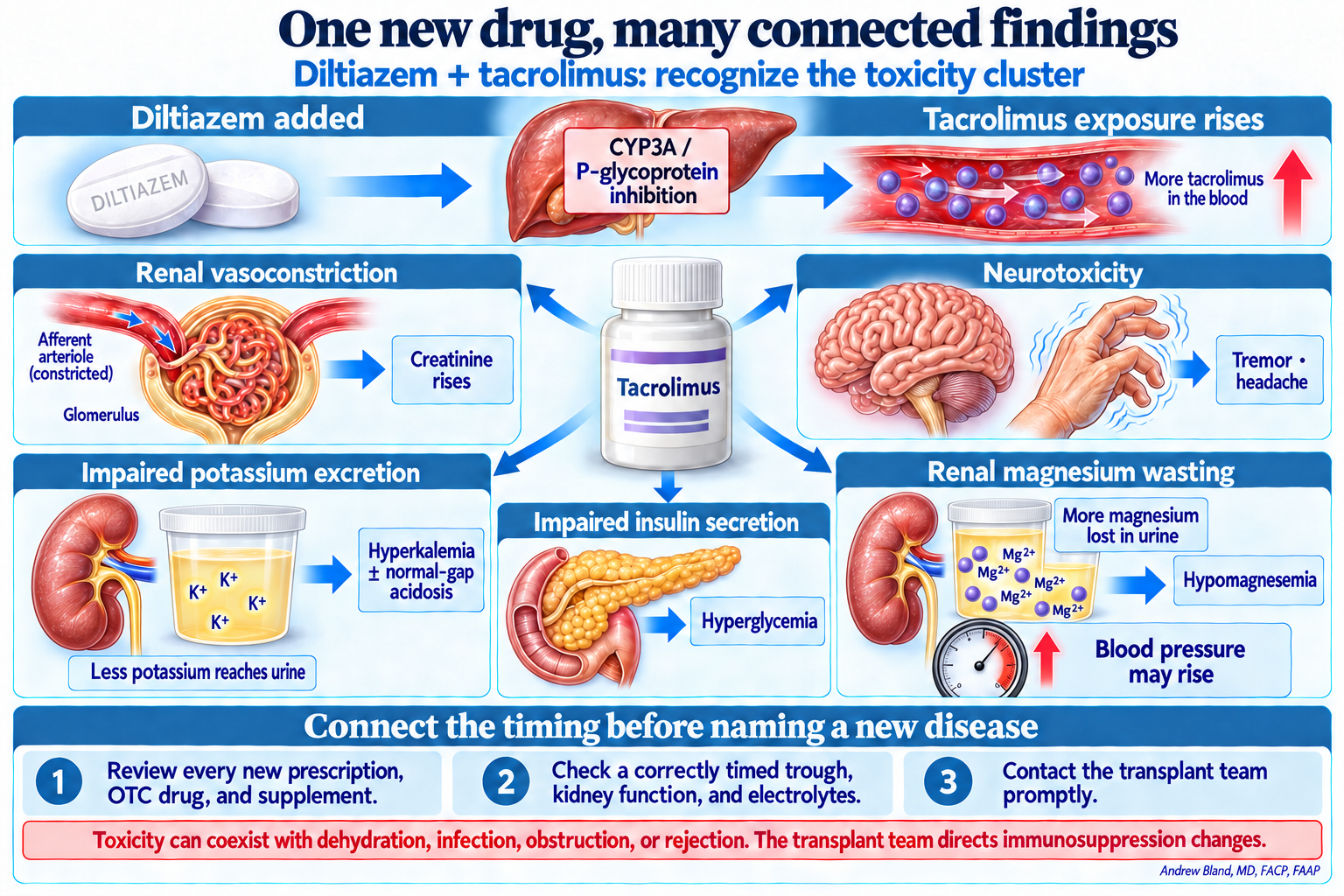
Use the diagram with the teaching text, then apply it to the case findings.
Explain the intended effect, the major treatment risk and the observation that will tell you whether the plan is working.
At 4:45 p.m. the transplant nephrologist calls back.
Pause — commit before the reveal
The transplant nephrologist reviews the level of 18.2 and recommends ending the unplanned diltiazem interaction. Which plan carries that decision out safely?
Lower the tacrolimus dose yourself to bring the level back toward 6–8, and recheck the level in a week
Stop the diltiazem, leave the tacrolimus dose to the center, and recheck labs and troughs on its schedule
Keep the diltiazem — her pressure is finally at goal — and ask the center to lower the tacrolimus to match
Stop the diltiazem and skip further levels — without the inhibitor the trough will settle back to 6–8
Show answer and explanation · Link to this question
Learning point: Implement the center's plan: stop diltiazem, communicate the exact time and have the center adjust tacrolimus and schedule troughs. Exposure can change over the ensuing days, with variable timing. Continued creatinine elevation despite correction of exposure and volume requires reassessment for other allograft problems.
Why not the others: A — changes the immunosuppressant outside the agreed monitoring plan. C — intentional diltiazem boosting can be used by a transplant team, but it contradicts the center's stated decision in this case. D — withdrawing an inhibitor still requires trough monitoring and dose adjustment.
Concept link: structural-27 · Question evidence and course reading
Evidence and objective for Q10
Back to Q10 · All answers in this case
Renal pharmacology lecture — 9. Key Drug Interactions in Nephrology
The electrolyte and glucose plan, decided on the phone.
| Problem | What the clinic does today | What the center adds | What would send her to the ED |
|---|---|---|---|
| Potassium 5.8, normal ECG | Stop every contributor you own (the NSAID is already gone; no ACEi/ARB, no potassium-sparing diuretic, no TMP-SMX, no salt substitutes); low-potassium diet counseling; recheck in 24 h | The definitive fix is the tacrolimus reduction; a short course of a loop diuretic once she is rehydrated, or a potassium binder, if the number does not fall | Potassium at or above 6.0–6.5, any ECG change, weakness or palpitations |
| Magnesium 1.3, no arrhythmia or tetany | Oral magnesium selected and dosed by the transplant team, accounting for renal function and diarrhea tolerance | Tacrolimus wastes magnesium in the urine (last week's diarrhea added to the loss), so expect oral replacement until the trough is back in range; recheck with each BMP | Magnesium below 1.0, torsades or any arrhythmia, tetany or seizure, or inability to take oral — then IV magnesium sulfate in a monitored setting |
| Fasting glucose 238, A1c 6.9%, ketones negative (Transplant complications handout §IV — post-transplant diabetes) | Tacrolimus and prednisone may contribute; these results do not establish ketoacidosis; home fasting glucose checks; expect improvement as the trough falls; no metformin or SGLT2 inhibitor started during an AKI with an unsettled eGFR | Whether this is post-transplant diabetes is judged once the trough is back to 6–8; if glucose stays high, the center and primary care choose an agent together — dosed to the eGFR at that visit, not today's invalid number | Glucose above 300 with symptoms, or any ketones |
The headache gets acetaminophen (up to 3 g/day). Every NSAID is off her list permanently, with a note in the chart and a sentence to her: "Nothing from the pain aisle except acetaminophen, ever, without asking."
Diltiazem is stopped. Her blood pressure will drift back toward 150/90 over the next week, and with one kidney that matters. Potassium today is 5.8. Which replacement is the best choice once her home readings climb?
Lisinopril 10 mg daily — she has one kidney to protect and may have albuminuria
Losartan 50 mg daily — the same kidney protection without the ACE-inhibitor cough
Amlodipine 5 mg daily, cleared with the center and titrated to her home readings
Verapamil SR 180 mg daily — the drug class that just brought her pressure to goal
Show answer and explanation · Link to this question
Learning point: Match the agent to the patient: ACE inhibitors and ARBs raise potassium, and diltiazem and verapamil raise tacrolimus. Amlodipine, a dihydropyridine calcium-channel blocker (a different subclass from diltiazem), does not usually raise potassium and needs no renal dose adjustment, but can increase tacrolimus exposure; the center checks a trough after it starts, and ankle edema is the side effect to warn about. Her target is below 130/80 (2025 AHA/ACC); KDIGO's lower systolic target of 120 explicitly excludes transplant recipients [2].
Why not the others: A and B would add potassium-raising therapy while she has acute graft dysfunction and potassium 5.8. Revisit their indications after potassium and the acute illness are controlled with the transplant team; this is not a permanent prohibition at every potassium above 5. D repeats the interacting non-dihydropyridine class. Even amlodipine requires transplant-team awareness and level monitoring.
Concept link: htn-cardiorenal-07, htn-cardiorenal-08 · Question evidence and course reading
Evidence and objective for Q11
Back to Q11 · All answers in this case
Hypertension medical management — First-Line Agent Selection
The primary-care transplant checklist — what she should hear from you before she leaves, and what every transplant patient in your panel should have on a card:
| Checklist item | The rule in one line |
|---|---|
| Drugs that raise tacrolimus | Diltiazem and verapamil, azole antifungals (fluconazole, ketoconazole), clarithromycin and erythromycin, grapefruit juice → toxicity. Clear every new prescription with the center. |
| Drugs that lower tacrolimus | Rifampin, phenytoin, carbamazepine, St John's wort → rejection risk. The same phone call — and stopping a drug that raises the level makes it fall, so stopping needs the call too. |
| The azathioprine trap | If a transplant patient is on azathioprine instead of mycophenolate, allopurinol (and febuxostat) can cause fatal bone-marrow suppression. Do not start either without the center. |
| NSAIDs | Never — acetaminophen or topical agents instead . The same afferent arteriole tacrolimus already constricts. |
| Vaccines | Inactivated vaccines only (and encouraged): injected influenza, COVID-19, pneumococcal, recombinant zoster, Tdap, hepatitis B. No live vaccines — no nasal-spray influenza, MMR, varicella or yellow fever. Household contacts should be vaccinated. |
| Infection red flags | Fever is never "just a virus" in an immunosuppressed patient — same-day call. Dysuria, cough, diarrhea lasting more than a day, any new rash. Infection and rejection both show up as a rising creatinine; the center sorts them. |
| Cancer screening | Skin cancer is the most common cancer after transplant: sun protection, yearly skin exam by dermatology (her forearm keratoses get that referral today). Cervical screening on schedule. Age-appropriate colon and breast screening as for anyone else. |
| Call the center when | Fever; a creatinine that rises on any lab; less urine; vomiting or diarrhea; before starting or stopping any prescription or over-the-counter product; any hospital admission or procedure; a positive pregnancy test on mycophenolate. |
| Sick-day rule | Use a written, individualized plan for medicines during a dehydrating illness, including when to restart. Do not independently hold tacrolimus, mycophenolate or prednisone; contact the transplant center urgently because illness can change exposure and the center may need to adjust treatment. |
She calls your nurse line in February: twenty-four hours of vomiting, a temperature of 38.3 °C, and a cough. Urgent care last night prescribed clarithromycin for "bronchitis" and offered the nasal-spray influenza vaccine. She asks whether to hold her transplant pills until she can keep food down, the way her neighbor holds his blood-pressure pills on sick days. Which instruction is correct?
Do not independently hold transplant drugs; defer clarithromycin and the live vaccine, and obtain urgent center advice today
Hold tacrolimus and mycophenolate until she can eat again, exactly as she would hold a SADMANS drug
Take the clarithromycin and accept the nasal vaccine — infection is the bigger danger after a transplant
Keep taking everything, use ibuprofen for the fever, and recheck her labs at the next routine visit
Show answer and explanation · Link to this question
Learning point: Three checklist items in one call. Patients should not independently interrupt immunosuppression: missed doses risk rejection and illness can alter exposure. The transplant center may intentionally hold or adjust a drug and directs the dose, route and monitoring. Clarithromycin is a CYP3A4 inhibitor that would do to her trough in days what diltiazem did in weeks; the nasal-spray influenza vaccine is live (she gets the injected inactivated one); and a fever in an immunosuppressed patient is a same-day call.
Why not the others: B applies the right rule to the wrong drugs — the single most dangerous misreading of a sick-day card; C gets the infection risk right and every move wrong — a live vaccine and a drug that raises her tacrolimus; D puts an NSAID back on her list and waits weeks to learn what vomiting did to her level.
Concept link: structural-27, ckd-20 · Question evidence and course reading
Evidence and objective for Q12
Back to Q12 · All answers in this case
Renal pharmacology lecture — 7. Sick Day Rules (What NOT to Hold)
Lemahieu et al. (PMID 15888045) documented increased tacrolimus exposure in kidney-transplant recipients with persistent diarrhea. The direction is not guaranteed for every illness; check the trough and contact the transplant team. Do not independently change maintenance immunosuppression. The teaching checklist prompts contact and assessment; the receiving transplant center determines its own protocol.
A drug interaction links tremor, kidney dysfunction, potassium, magnesium, glucose, and blood pressure.
A medication interaction can explain a new neurologic symptom, several electrolyte abnormalities, and a creatinine rise together.
No. The interaction explains a plausible cluster, but transplant AKI still needs assessment for concurrent hemodynamic problems, infection, obstruction, and rejection as indicated.
Diltiazem stopped that afternoon. The center lowered her tacrolimus dose before the 8 p.m. dose and set troughs for day 4 and day 10. She left with oral magnesium, a low-potassium diet sheet, acetaminophen for the headache, a dermatology referral for the forearm keratoses, and a transplant card for her wallet.
Day 1: she drank about two liters overnight; potassium 5.6, creatinine 1.9, magnesium 1.4, fasting glucose 206 — fluids and no ibuprofen barely moved the creatinine, as expected while the level was still high. Day 2: potassium 5.3, creatinine 1.8. Day 3: her home average passed 130/80, and amlodipine 5 mg started with the center's agreement.
Two weeks later: creatinine 1.3 mg/dL, potassium 4.7, bicarbonate 23, magnesium 1.8 on oral replacement, fasting glucose 131, trough 7.4 ng/mL on the new dose. The tremor was gone by day 8 and the headaches with it — she realized afterward that the headache she took ibuprofen for was itself a symptom of the level. Blood pressure 134/84 on home readings; amlodipine increased to 10 mg daily.
Three months later: creatinine 1.2 (eGFR back to about 57), potassium 4.4, magnesium 1.9, A1c 6.4% (below the 6.5% diabetes threshold), trough 6.9, blood pressure 126/78. Dermatology treated two actinic keratoses and booked yearly skin checks. The chart now carries a banner — kidney transplant recipient on tacrolimus: check every new drug against the interaction list and notify the center — and the clinic added the same banner to its other four transplant patients.
Clinical Pearl — The med list by date When a stable patient destabilizes on an unchanged dose, the usual answer is a new drug changing how an old drug is cleared — not progression of disease. Read the medication list by start date before you read it by drug class.
Clinical Pearl — The high-tacrolimus cluster Tremor or headache, a creatinine rise, hyperkalemia with a mild normal-gap acidosis, low magnesium, high glucose, a blood pressure that climbs. Any two in a tacrolimus patient should buy a trough — drawn before the morning dose, with the clock time written on the requisition.
Clinical Pearl — Same arteriole, same urine NSAIDs and excess tacrolimus both injure the kidney by constricting the afferent arteriole, so both give a bland, concentrated urine. The urinalysis sorts out post-renal and structural intrinsic causes; it cannot choose between two hemodynamic ones — the trough can. Caught early, the tacrolimus injury reverses as the level falls; years of high levels scar the kidney for good.
Clinical Pearl — Whose drug is it? The interacting drug you started is yours to stop. The transplant drugs are the center's to adjust or hold. The electrolytes are yours to start treating and theirs to co-sign. Hand them clean numbers the same day.
Clinical Pearl — Why "call" is on the sick-day card, not "hold" Vomiting and diarrhea change tacrolimus levels — persistent diarrhea can raise them. That is the reason transplant drugs are never held by the patient and the center is called instead. SADMANS drugs are held; transplant drugs are reported.
Pitfall — Treating the cluster one organ at a time An ACE inhibitor for the pressure (the potassium climbs), insulin for the glucose, magnesium for the tremor, "watchful waiting" for the creatinine — four correct-looking moves and nobody asks why four things moved together. One trough answers all four.
Pitfall — "The blood pressure is finally controlled, so keep the diltiazem and lower the tacrolimus to match" This leaves the interaction in place and turns every future dose change into a guess — the same error as the paroxetine–metoprolol case (site Case 31) with different drugs. Remove the inhibitor; let the center re-titrate the drug that matters.
Assigned reading: the explanations in this case and the question-linked course evidence guide. The objective map distinguishes tested decisions from concepts taught in explanations.
Concepts: aki-03, aki-13, aki-14, aki-27, ckd-18, ckd-19, ckd-20, htn-cardiorenal-07, htn-cardiorenal-08, lytes-14, lytes-18, structural-20, structural-27.
Transplant immunosuppression student handout — V. Drug Monitoring and Therapeutic Targets · Transplant complications student handout — VIII. Clinical Pearls
AKI lecture — Systematic Diagnostic Approach · AKI BMP pattern recognition guide — Part 1: Three-Compartment AKI Framework
NSAID-induced kidney injury — Risk Factors for NSAID-Induced Kidney Injury · Drug-induced AKI student handout — The Major Categories
Drug-induced AKI student handout — KDIGO drug classification framework · Contrast-associated AKI — Practice-Changing Medication Recommendations
Hyperkalemia lecture — Find the mechanism and reversible contributors · RTA types — Type 4: Hyperkalemic Renal Tubular Acidosis
Hypomagnesemia lecture — Causes of Hypomagnesemia; Treatment Strategies
Hypertension medical management — First-Line Agent Selection · Hypertension and comorbidities — Chronic Kidney Disease
ACEi vs ARB comparison — Comparative Side Effect Profiles · RAAS inhibitors student handout
Drug dosing in CKD quick reference — Part 1: Principles of Drug Dosing in CKD · Renal pharmacology lecture — 1. Drug Dosing in CKD
Renal pharmacology lecture — 2. Nephrotoxic Medication Avoidance; 6. NSAID Alternatives
Renal pharmacology lecture — 7. Sick Day Rules: Medications to Hold During Acute Illness · Cardiorenal disease lecture — Critical: Sick Day Management
NSAID-induced kidney injury — Risk Factors for NSAID-Induced Kidney Injury · Renal pharmacology lecture — 6. NSAID Alternatives for Pain Management in CKD
First choices and optional confidence stay in this browser and are not sent to the website. Opening an explanation first is recorded. Revisiting an unchanged case preserves the first response; revised cases receive a new version. Website visit analytics are separate. On a shared device, export and clear the history when finished.