Explain how the findings fit together
Use these summaries after working through the cases. Follow the trigger, the mechanism, the connected findings, and the clues that distinguish competing diagnoses. A patient can have more than one process at the same time.
Six integrated infographics appear in 15 case debriefs. All 30 cases have linked visual review resources.
Three routes to edema
Heart, kidney, and liver: similar swelling, different mechanisms
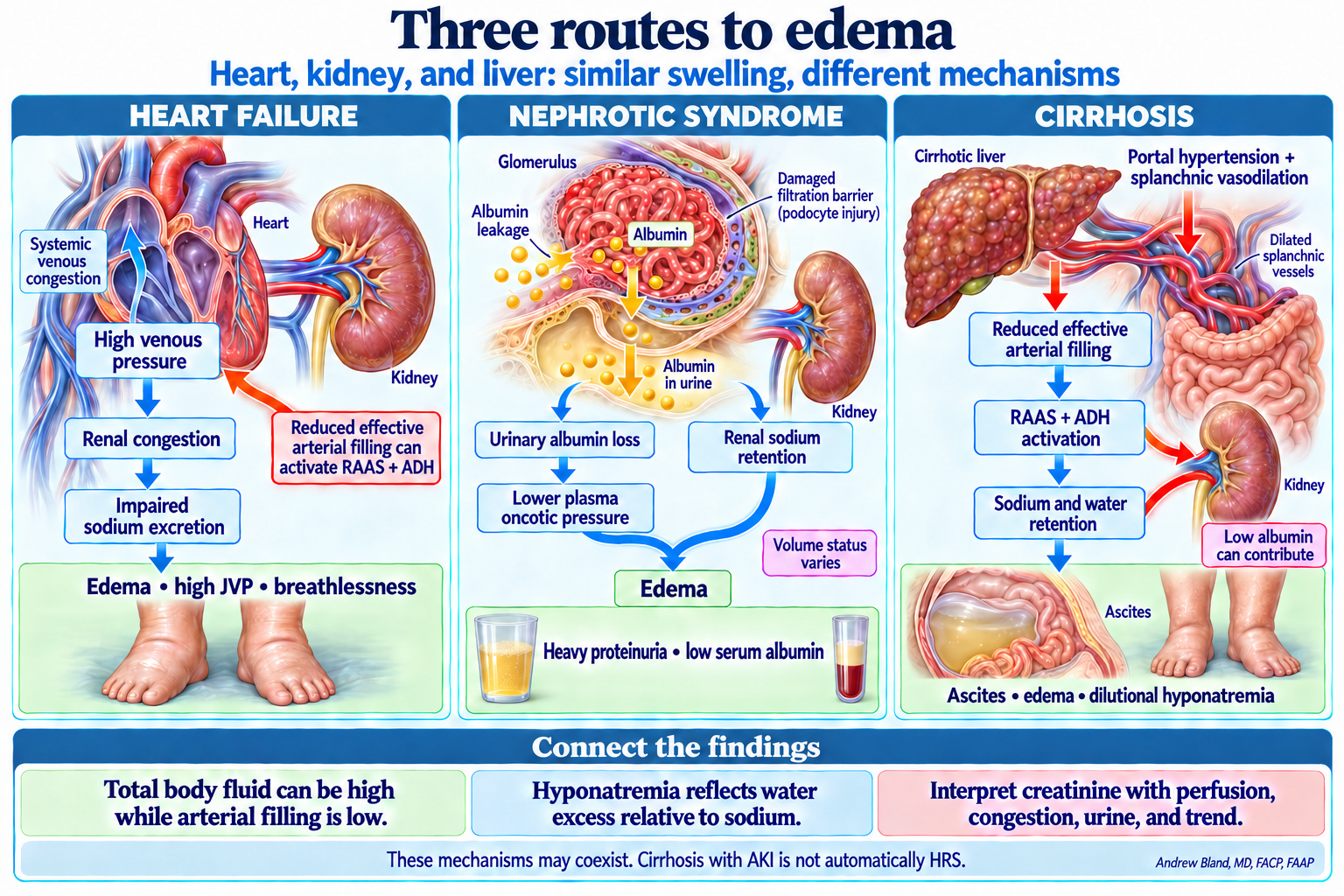
Compare the mechanisms behind a swollen patient before deciding what the creatinine rise means.
Open the complete visual, text explanation, evidence, and lecture links
Why can a patient have swollen legs and still have poor effective arterial filling?
Interstitial fluid, venous congestion, and effective arterial filling describe different compartments and pressures. Decide which mechanisms are present using the examination, urine, laboratory trends, and response to treatment.
The sick-day cascade
One illness can produce several kidney and acid–base problems
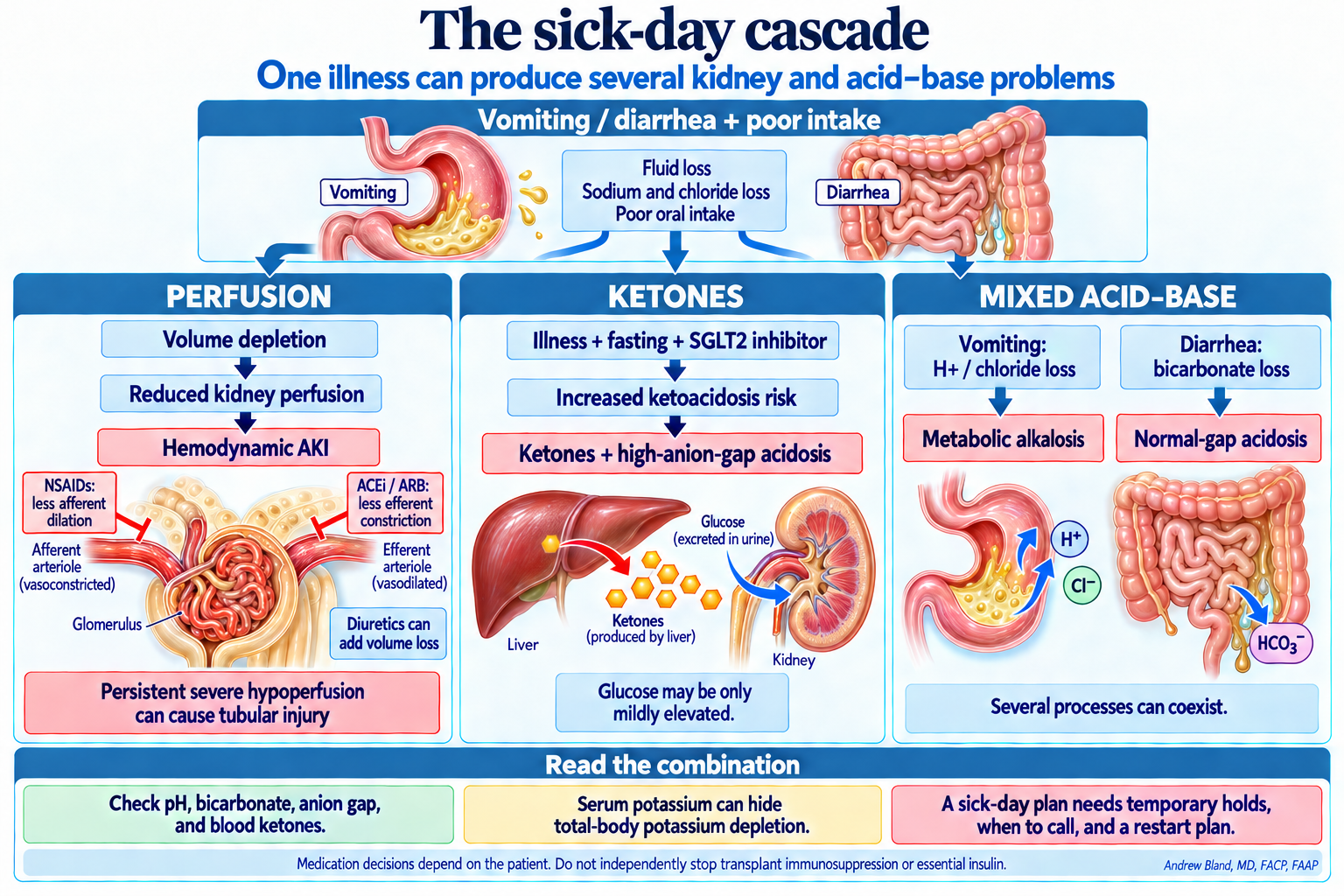
Follow three processes that can occur together: impaired perfusion, ketone production, and gastrointestinal acid–base losses.
Open the complete visual, text explanation, evidence, and lecture links
Can a near-normal pH or a mildly elevated glucose exclude a serious sick-day problem?
No. Mixed acid–base processes can partly offset one another, and SGLT2-associated ketoacidosis may occur without marked hyperglycemia. Review the full pattern, ketones, volume status, medication timing, and kidney-function trend.
A leaky filter creates a syndrome
Connect heavy proteinuria to the findings beyond the urine
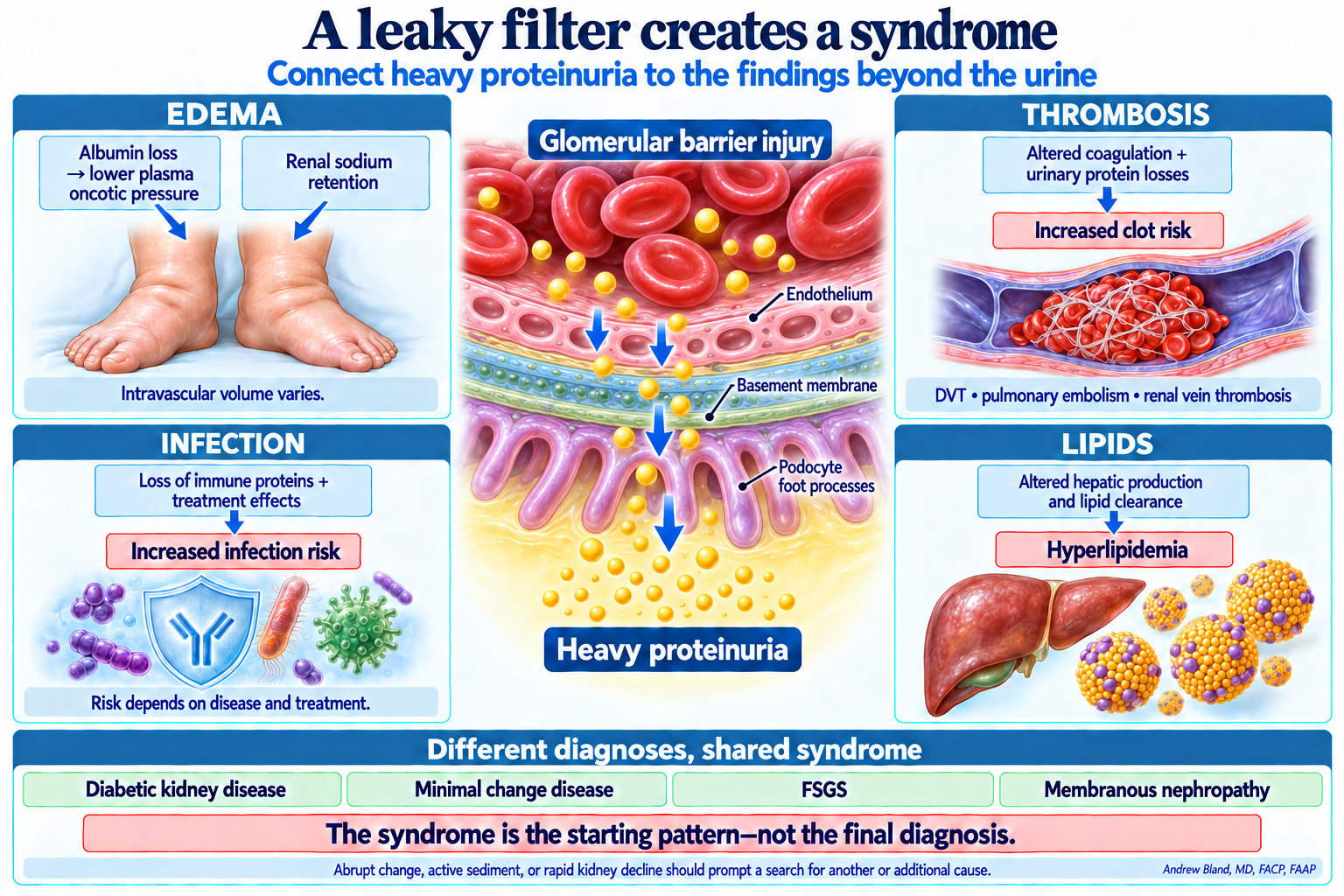
A glomerular problem can explain edema, altered lipid levels, thrombosis, and infection risk in the same patient.
Open the complete visual, text explanation, evidence, and lecture links
When a nephrotic patient develops new flank pain or a sudden creatinine rise, is progression of the original disease the only explanation?
No. Reassess for renal vein thrombosis, volume and hemodynamic changes, medication effects, infection, and other AKI causes. A new finding may be a complication superimposed on the original glomerular disease.
Three routes to a sodium disorder
Water balance, tubular function, and medications interact
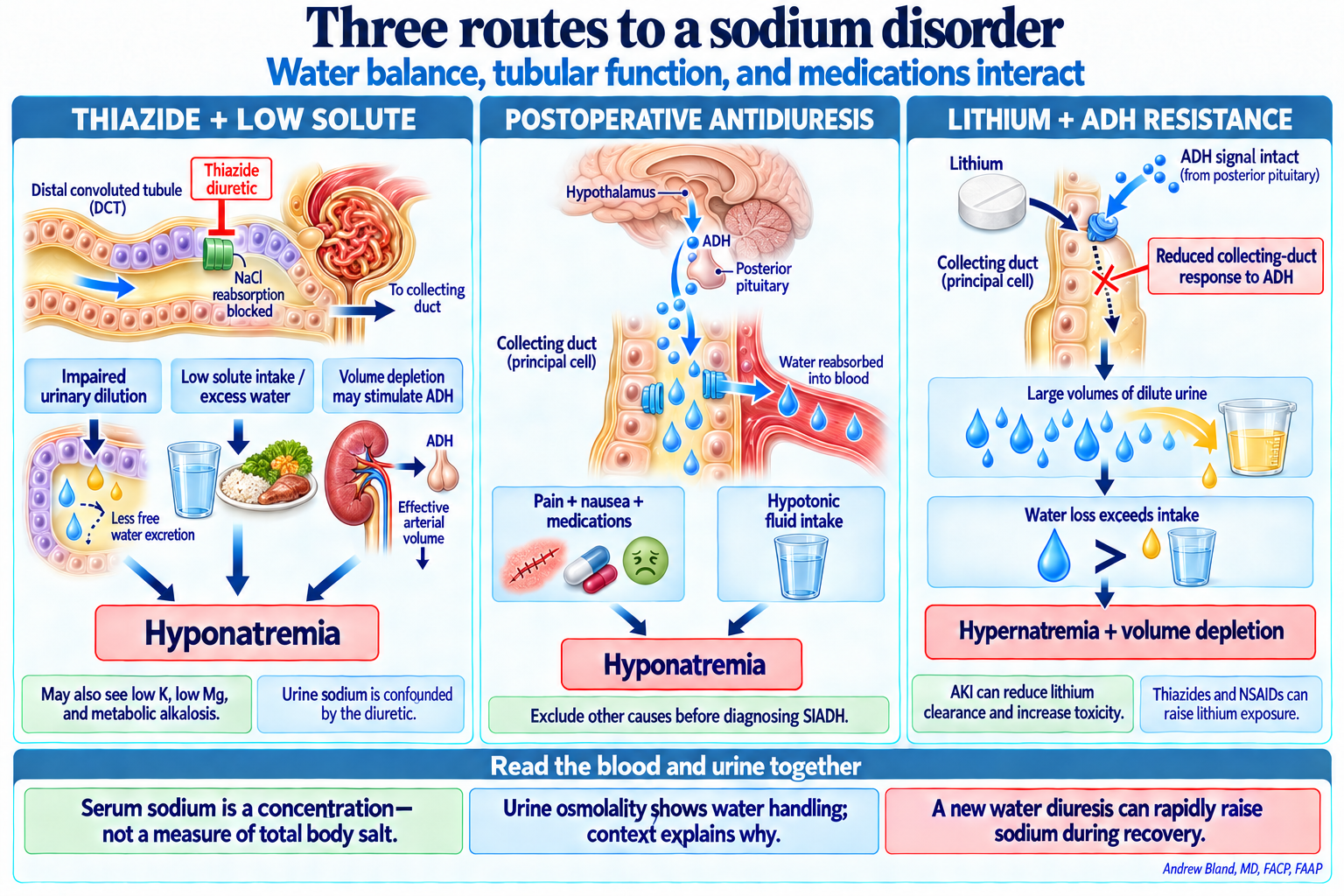
Compare thiazide-associated hyponatremia, postoperative antidiuresis, and lithium-associated ADH resistance.
Open the complete visual, text explanation, evidence, and lecture links
Why does a high urine sodium not settle the diagnosis in the patient taking a thiazide?
The drug itself changes renal sodium handling. Interpret urine osmolality and electrolytes with volume status, dietary intake, medication timing, and the clinical course. Concentrated urine indicates impaired water excretion but does not identify one unique cause.
Obstruction: one problem, two phases
From impaired excretion to post-obstructive losses
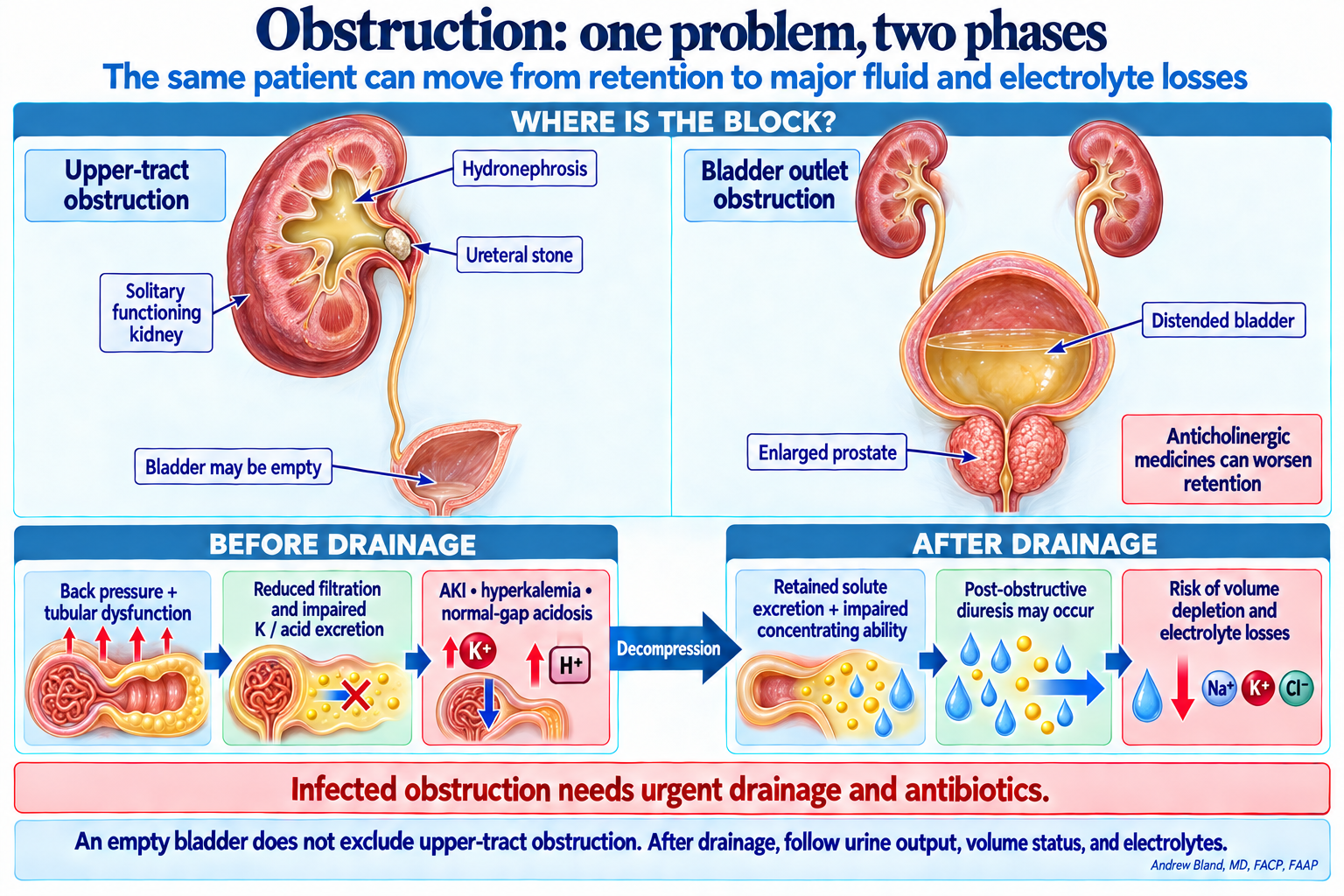
Locate the blockage, explain the initial chemistry, then anticipate how the physiology changes after drainage.
Open the complete visual, text explanation, evidence, and lecture links
Why can the treatment priorities reverse after the obstruction is relieved?
Before drainage, the kidney may retain potassium, acid, salt, and water. After drainage, excretion of retained solute plus incomplete recovery of tubular concentration can produce major water and electrolyte losses. Reassessment follows the phase of the illness.
One new drug, many connected findings
Diltiazem plus tacrolimus: recognize the toxicity cluster
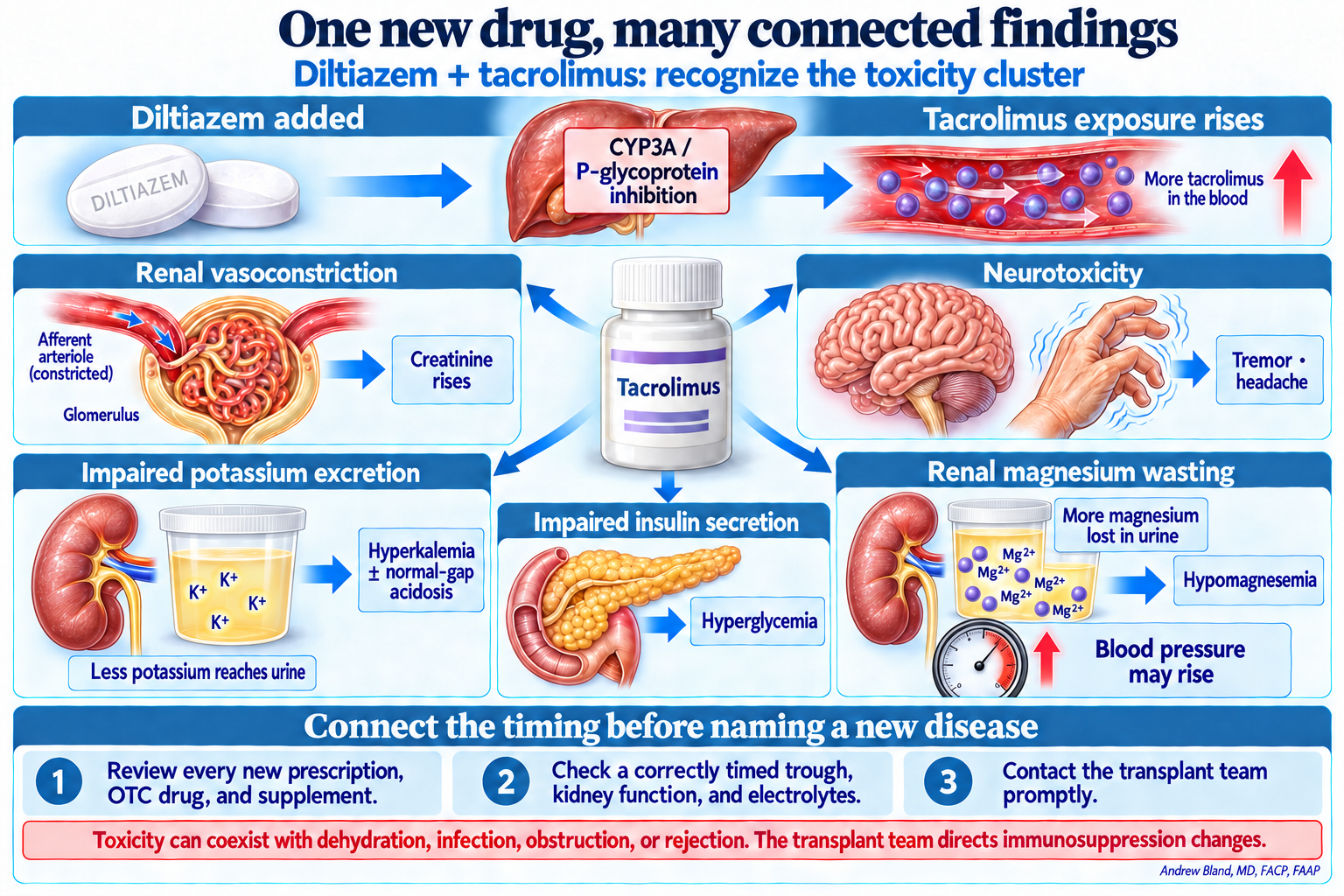
A medication interaction can explain a new neurologic symptom, several electrolyte abnormalities, and a creatinine rise together.
Open the complete visual, text explanation, evidence, and lecture links
Does finding a high tacrolimus level exclude every other cause of a rising creatinine?
No. The interaction explains a plausible cluster, but transplant AKI still needs assessment for concurrent hemodynamic problems, infection, obstruction, and rejection as indicated.
Visual map for all 30 cases
Read the case first, then use its debrief links to revisit the mechanisms. The connections below include case resolutions.
| Case | Connect these findings | Visual review |
|---|---|---|
| Case 01: The Missed Monday | Missed clearance, potassium contributors, volume overload, and the difference between shifting and removing potassium. | Hyperkalemia: Stabilize, Shift, Remove, Recheck Missed Dialysis: Ask What Prevented Attendance |
| Case 02: The Thiazide and the Tumble | Thiazide, low solute intake, water intake, volume depletion, and multiple electrolyte losses. | Three routes to a sodium disorder |
| Case 03: The Sick Day That Wasn't Held | Dehydration, medication effects, ketoacidosis, and competing acid–base processes. | The sick-day cascade |
| Case 04: The Tired Teacher | CKD, iron deficiency, anemia, mineral-bone abnormalities, and apparently resistant hypertension. | CKD Anemia: Iron First, Then an ESA Decision CKD-MBD: When to Measure, When to Treat |
| Case 05: The Salt Substitute | Kidney-protective treatment, potassium contributors, hemodynamic changes, and intercurrent illness. | The sick-day cascade |
| Case 06: The Breathless Farmer | Heart failure, venous congestion, hyponatremia, diuretic response, and creatinine trajectory. | Three routes to edema |
| Case 07: The Grandmother's Urine Cup | Medication-associated delirium, low sodium, reduced clearance, and misleading urine findings. | Three routes to a sodium disorder |
| Case 08: The Sore Throat That Came Back | Nephritic presentation, changing complement/serology, lupus nephritis, and rapid kidney decline. | Glomerular Disease: Nephritic, Nephrotic, or Mixed Lupus Nephritis: Activity, Chronicity, and Long-Term Care |
| Case 09: The Diabetic Journey | Albuminuria, nephrotic syndrome, CKD progression, treatment changes, and kidney failure planning. | A leaky filter creates a syndrome |
| Case 10: Two Dark Urines | Volume depletion plus interacting drugs progressing to tubular injury; compare the rhabdomyolysis pathway. | The sick-day cascade |
| Case 11: The Stone in the Only Kidney | Solitary kidney, infected obstruction, hyperkalemia, and post-obstructive losses. | Obstruction: one problem, two phases |
| Case 12: The Mass in the Picture | Hypercalcemia, impaired urine concentration, volume depletion, AKI, and a PTHrP-producing mass. | Hypercalcemia: Let PTH Organize the Workup ADH: How the Kidney Conserves Water |
| Case 13: The Transplant Tremor | A drug interaction links tremor, kidney dysfunction, potassium, magnesium, glucose, and blood pressure. | One new drug, many connected findings |
| Case 14: The Young Hypertensive | Renovascular disease, renin/aldosterone physiology, hypokalemic alkalosis, and superimposed pregnancy-related hypertension. | Resistant Hypertension: Verify, Investigate, Then Escalate Hypertension in Pregnancy: Maternal and Fetal Context |
| Case 15: The Family Discovery | Inherited cystic disease, hypertension, hematuria, infection, CKD progression, and family planning. | ADPKD: Diagnose, Estimate Progression, Plan Ahead Urine Sediment: Cells, Casts, and the Source of Hematuria |
| Case 16: The Late Referral | Progression risk, CKD complications, preparation, symptom-driven treatment, and patient preferences. | Kidney Failure Care: Choose a Modality Around the Person Supportive Kidney Care: Goals, Symptoms, and Choices |
| Case 17: The Octogenarian's Numbers | Frailty, reduced drug clearance, trimethoprim effects, magnesium exposure, and goals of care. | Renal Medication Safety: Dose, Reconcile, Reassess Geriatric Nephrology: Function, Burden, and Goals |
| Case 18: The Lithium Thirst | Lithium-associated ADH resistance, water loss, AKI, drug interactions, and toxicity. | Three routes to a sodium disorder |
| Case 19: The Post-Op Problem | Postoperative ADH stimuli, hypotonic intake, hyponatremia, and recovery water diuresis. | Three routes to a sodium disorder |
| Case 20: The Stone Former with Low Potassium | Sjögren syndrome, distal acidification failure, hypokalemia, hypocitraturia, and calcium-phosphate stones. | Renal Tubular Acidosis: Locate the Defect Kidney Stones: Analyze the Stone, Test the Urine, Review Evidence |
| Case 21: The Executive Physical | Confirmed hypertension, potassium clues, primary aldosteronism, sleep apnea, and medication contributors. | Resistant Hypertension: Verify, Investigate, Then Escalate Accurate Blood Pressure: Office Technique and ABPM |
| Case 22: The Medication Minefield | Low clearance, interacting medicines, nephrotoxins, and multiple adverse effects. | Renal Medication Safety: Dose, Reconcile, Reassess Magnesium: The Link to Potassium, Calcium, and Rhythm |
| Case 23: The Resistant Heart Failure | Nephrotic edema mistaken for heart failure, membranous nephropathy, and superimposed renal vein thrombosis. | A leaky filter creates a syndrome |
| Case 24: The Two Swollen Cousins | A shared nephrotic phenotype with different causes, treatment choices, and infection risks. | A leaky filter creates a syndrome |
| Case 25: The Puffy Second-Grader | Nephritic presentation initially resembling postinfectious GN; persistent low C3 changes the diagnosis to C3 glomerulopathy. | MPGN and Infection-Related GN: A Pattern Needs a Cause Glomerular Disease: Nephritic, Nephrotic, or Mixed |
| Case 26: The Sports Physical | Orthostatic proteinuria and persistent familial hematuria require separate explanations; the pedigree reveals Alport syndrome. | Urine Sediment: Cells, Casts, and the Source of Hematuria Precision Nephrology: Genetics, Biomarkers, and Diagnostic Labels |
| Case 27: The Day-Six Creatinine | Tubular injury and suspected interstitial nephritis can overlap during one evolving AKI episode. | Drug-Induced AKI: Mechanism Before Label Interstitial Nephritis and PPIs: Recognize the Signal |
| Case 28: The Lymphoma Admission | Tumor lysis, simultaneous potassium/phosphate/urate release, hypocalcemia, and crystal-associated AKI. | Tumor Lysis Syndrome: Anticipate the Metabolic Emergency Hyperkalemia: Stabilize, Shift, Remove, Recheck |
| Case 29: The Cirrhotic's Creatinine | Cirrhosis, low effective arterial filling, infection, medication effects, and HRS-AKI evaluation. | Three routes to edema |
| Case 30: The Prostate Problem | BPH plus anticholinergic exposure, retention, hyperkalemic acidosis, and post-obstructive diuresis. | Obstruction: one problem, two phases |