1 · Approach
Use the opening diagram and short lessons before the patient.
Urine, protein and glomerular syndromes
Andrew Bland, MD, FACP, FAAP · October 21, 2026
4 cases now use the same sequence, with 28 short lessons and opening, interpretation and treatment figures.
Open the collected self-study teaching ↓ · Browse the self-study case guide
Opening frameworks, 35 Learn first sections, stage-specific infographics and direct lecture links for the three classroom cases. Use the short lesson before its question, then return to the case to commit, discuss and reveal.
Session plan and self-study cases · Shared opening lecture · Day 3 figures in the visual library
Look for sepsis, rapidly progressive kidney dysfunction, pulmonary–renal features, dangerous hypertension and nephrotic complications. Distinguish contaminated urine or asymptomatic bacteriuria from a clinical infection.
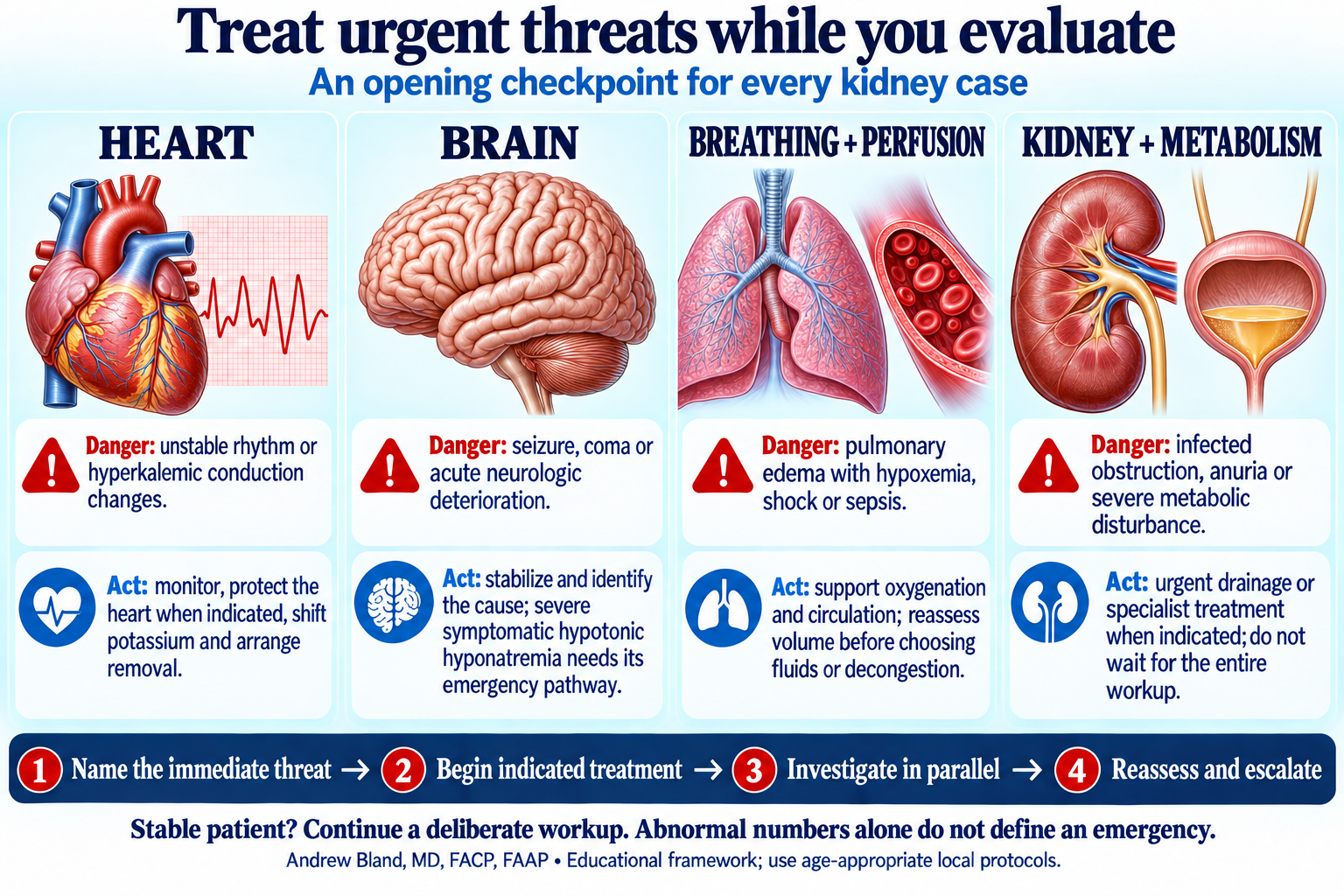
Name the threat, begin indicated treatment, investigate in parallel, then reassess.
First decide whether the specimen and symptoms fit. Then separate urinary infection, contamination, medication effects and water-balance disorders.
Use the opening diagram and short lessons before the patient.
Revisit urgency as history, examination and initial data arrive.
Use the urine, blood or imaging guide at the relevant decision.
Connect the management plan with response, monitoring and follow-up.
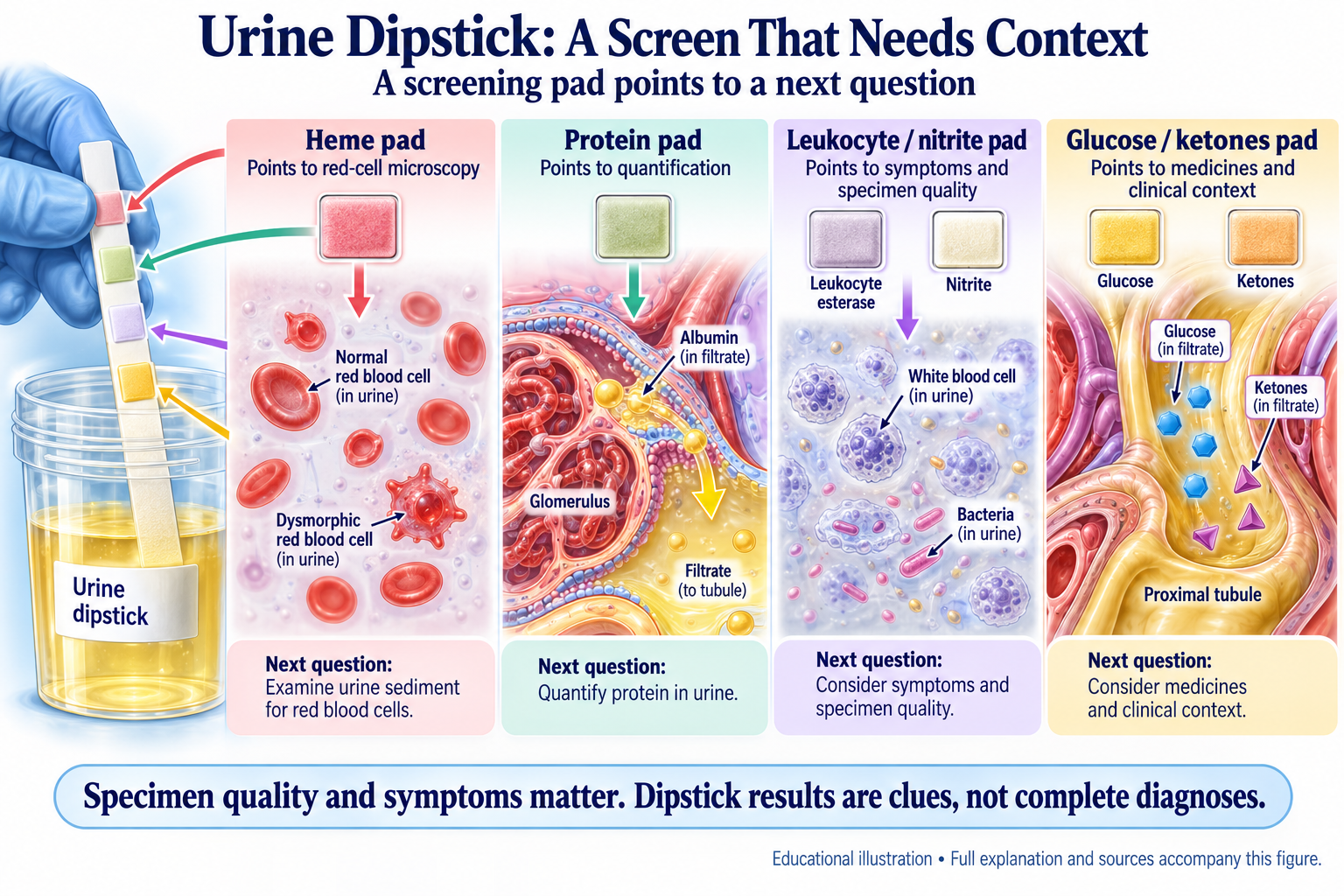
Use the diagram with the teaching text, then apply it to the case findings.
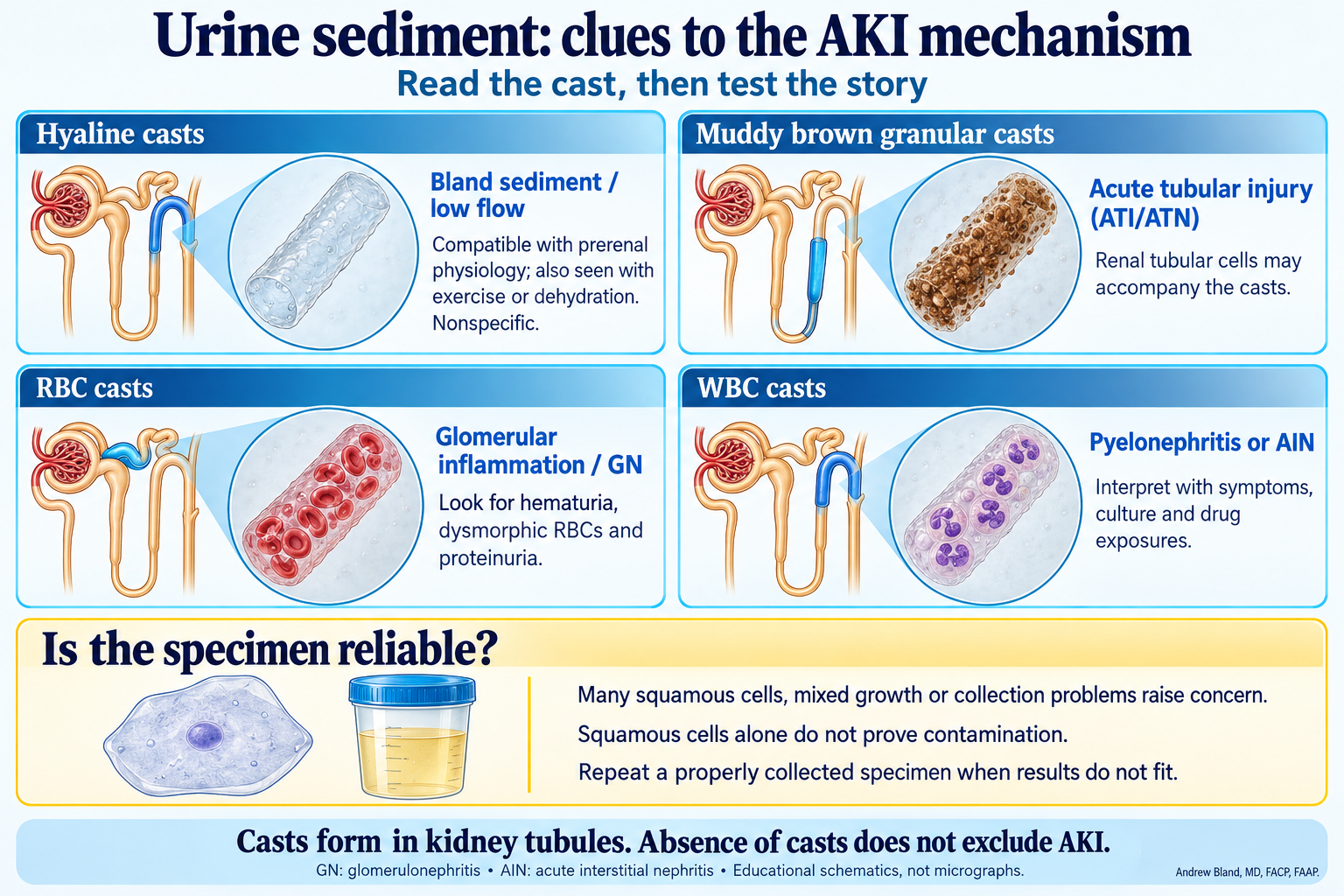
Use the diagram with the teaching text, then apply it to the case findings.
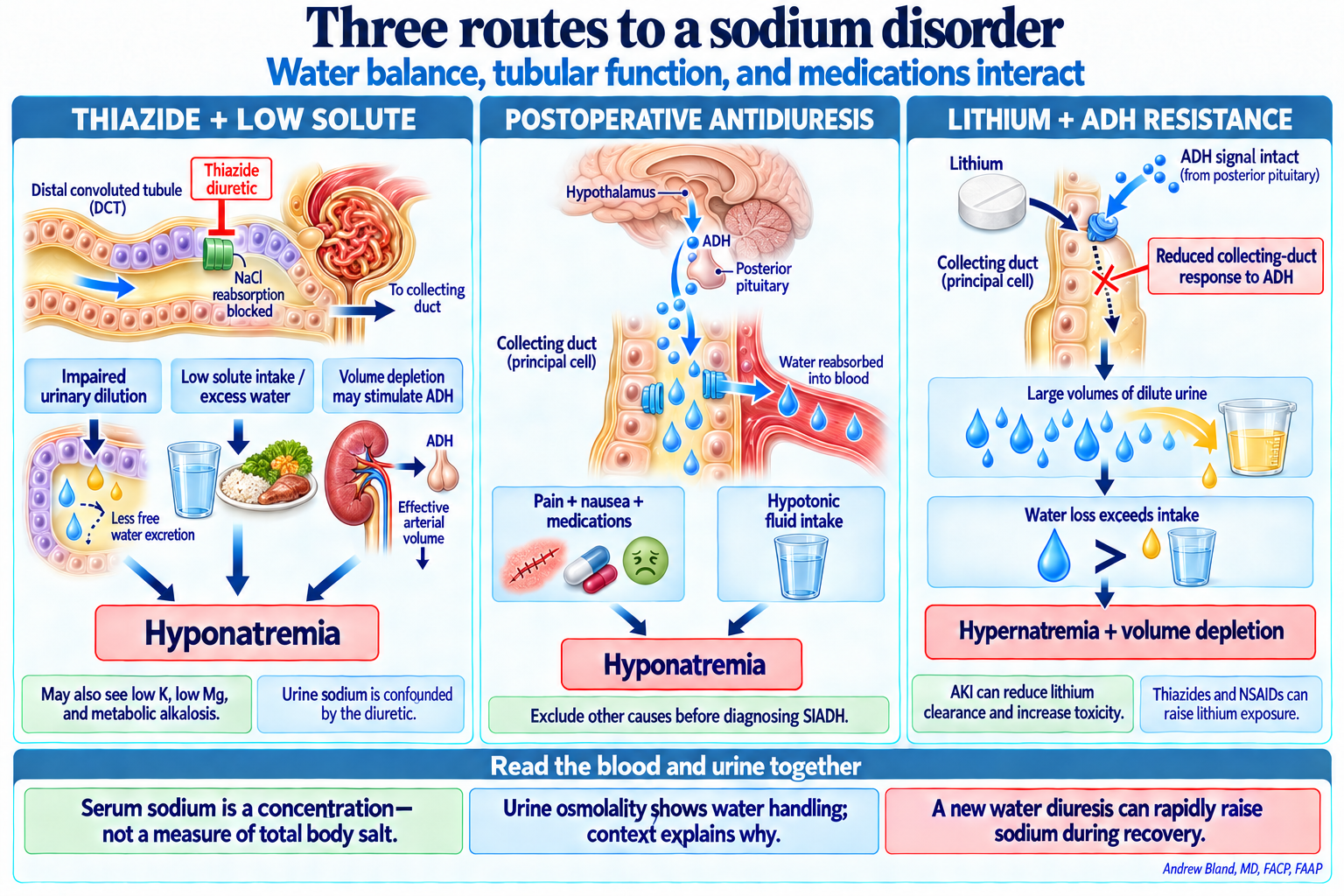
Use the diagram with the teaching text, then apply it to the case findings.
Assigned reading: the explanations in this case and the question-linked course evidence guide. The objective map distinguishes tested decisions from concepts taught in explanations.
Concepts: aki-06, aki-27, ckd-18, glom-01, glom-02, lytes-01, lytes-06, structural-04, structural-05, structural-14, structural-18, structural-25.
Interpretation lecture — Critical Microscopy Findings and Contamination
AKI BMP pattern guide — Part 6: BMP-Guided Clinical Decision-Making
UTI assessment lecture — Asymptomatic Bacteriuria: The Great Overtreatment
UTI assessment lecture — Evidence-Based UTI Treatment Guidelines
Renal labs and imaging handout — Section 3: Renal Imaging Modalities
Renal pharmacology lecture — 1. Drug Dosing in CKD: Principles of Renal Clearance
Geriatric nephrology handout — III. Geriatric Drug Dosing in CKD
Drug dosing in CKD quick reference — Part 1: Principles of Drug Dosing in CKD
Thiazide safety lecture — Risk Factor Analysis and Mitigation Strategies
Confirm and locate hematuria, recognize a nephritic pattern, and use the tempo of kidney and lung findings to set the urgency.
Use the opening diagram and short lessons before the patient.
Revisit urgency as history, examination and initial data arrive.
Use the urine, blood or imaging guide at the relevant decision.
Connect the management plan with response, monitoring and follow-up.
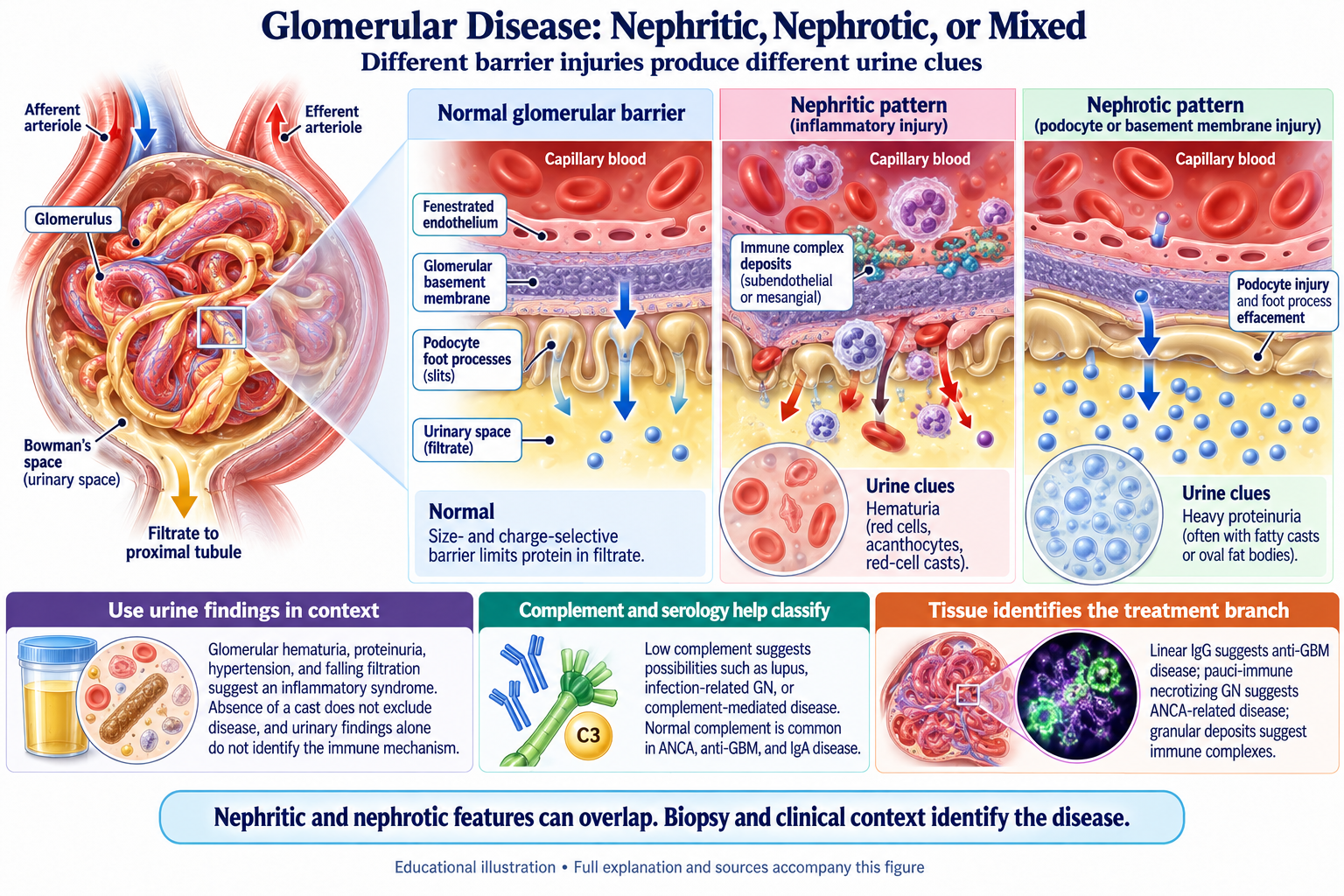
Use the diagram with the teaching text, then apply it to the case findings.
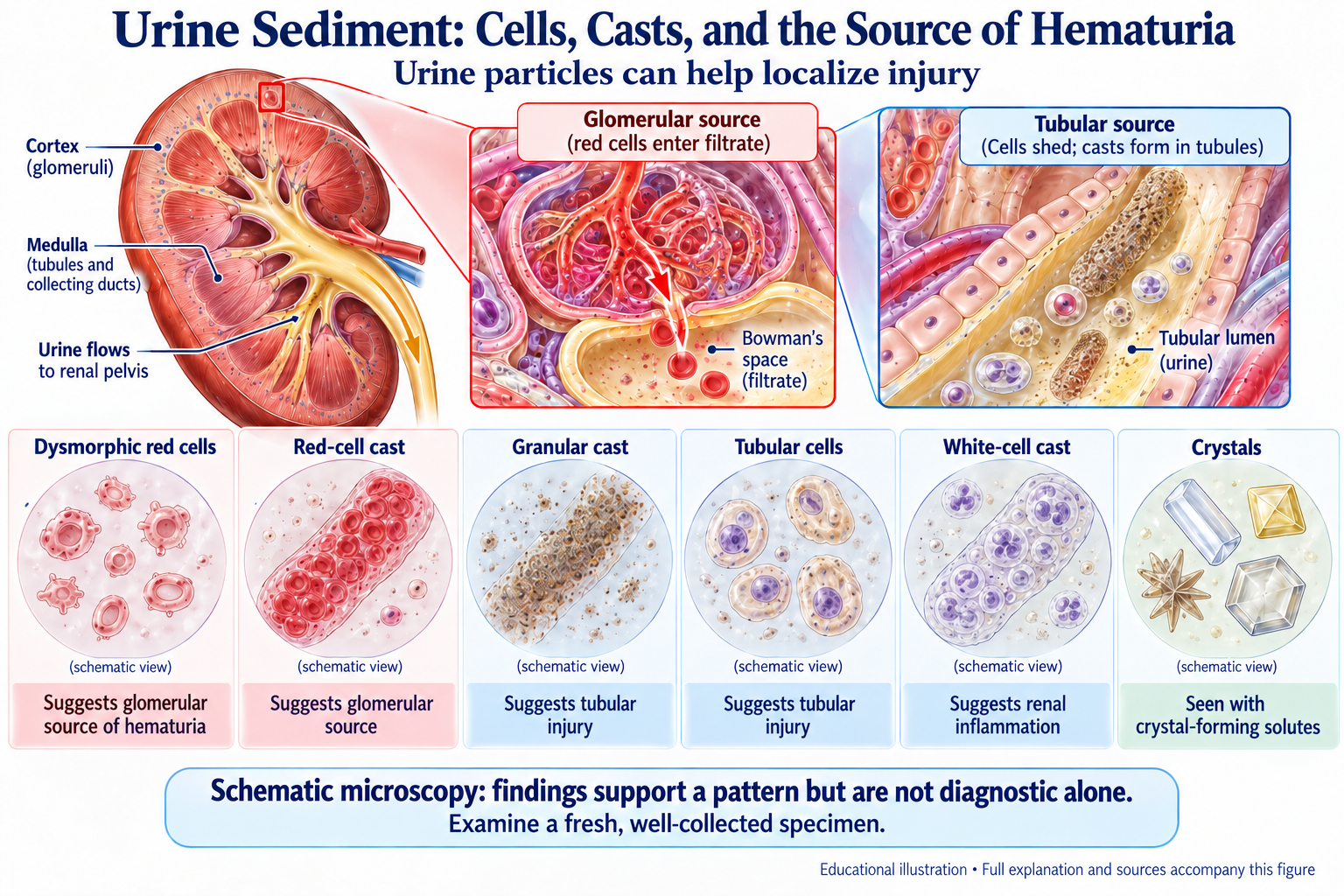
Use the diagram with the teaching text, then apply it to the case findings.
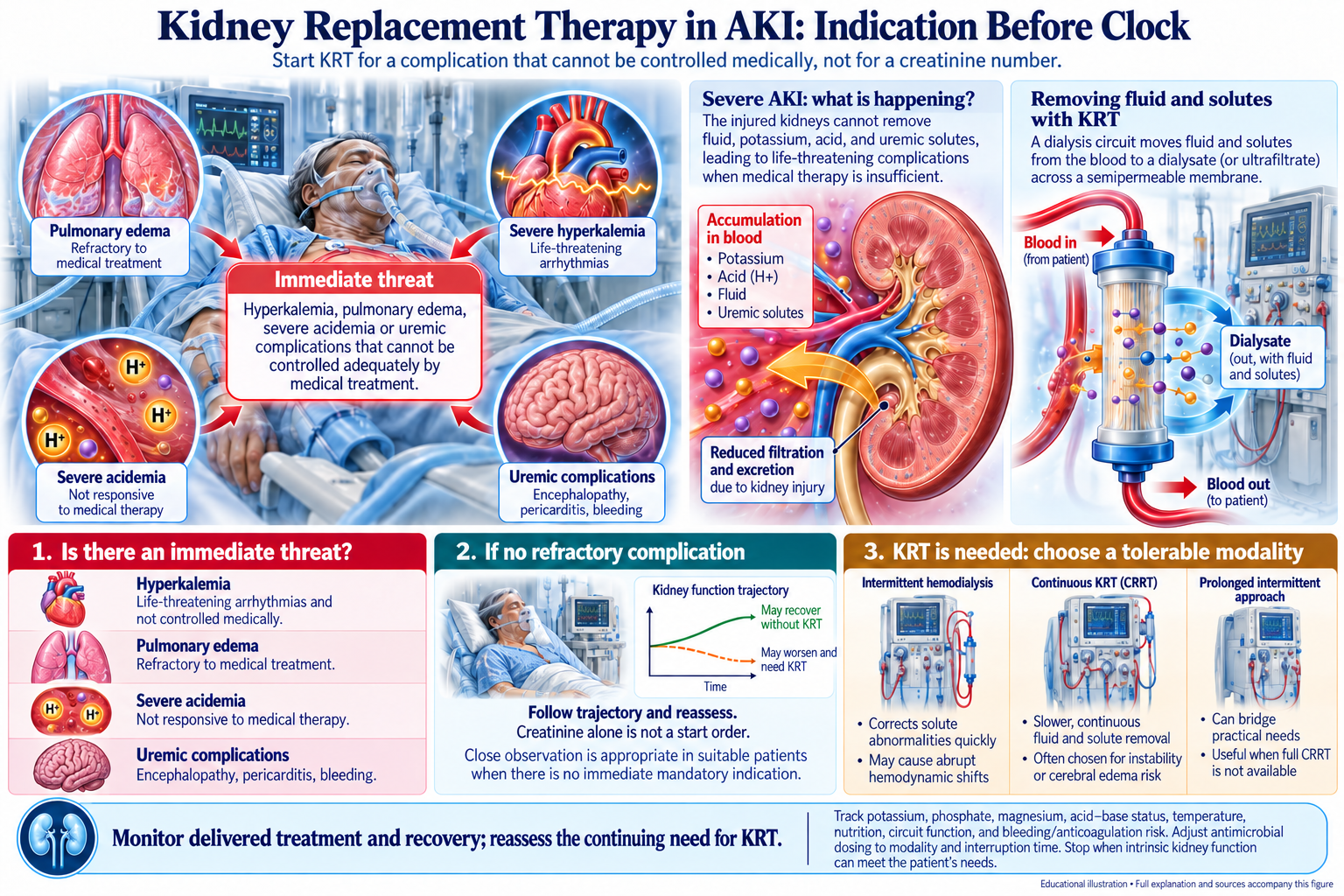
Use the diagram with the teaching text, then apply it to the case findings.
Assigned reading: the explanations in this case and the question-linked course evidence guide. The objective map distinguishes tested decisions from concepts taught in explanations.
Concepts: aki-01, aki-02, aki-22, aki-24, glom-02, glom-03, glom-06, glom-07, glom-12, glom-13, glom-14, glom-15, glom-16, glom-17, glom-23, htn-cardiorenal-08, htn-cardiorenal-17.
RBC Morphology — RBC Casts: A Strong Diagnostic Clue · Dysmorphic RBCs — Definitions and Thresholds
Glomerulonephritis — Nephritic vs Nephrotic Syndrome Differentiation
RPGN and ANCA Vasculitis — Overview; c-ANCA (PR3) vs p-ANCA (MPO)
Vasculitis and Complement handout — Anti-GBM Disease (Goodpasture Syndrome)
Glomerulonephritis — Serological Evaluation of Glomerular Disease
Glomerular Disease Diagnostic Algorithm — Part 6: When to Biopsy
Quantify albumin, describe the glomerular syndrome, and connect edema and complications with the evolving kidney trajectory.
Use the opening diagram and short lessons before the patient.
Revisit urgency as history, examination and initial data arrive.
Use the urine, blood or imaging guide at the relevant decision.
Connect the management plan with response, monitoring and follow-up.
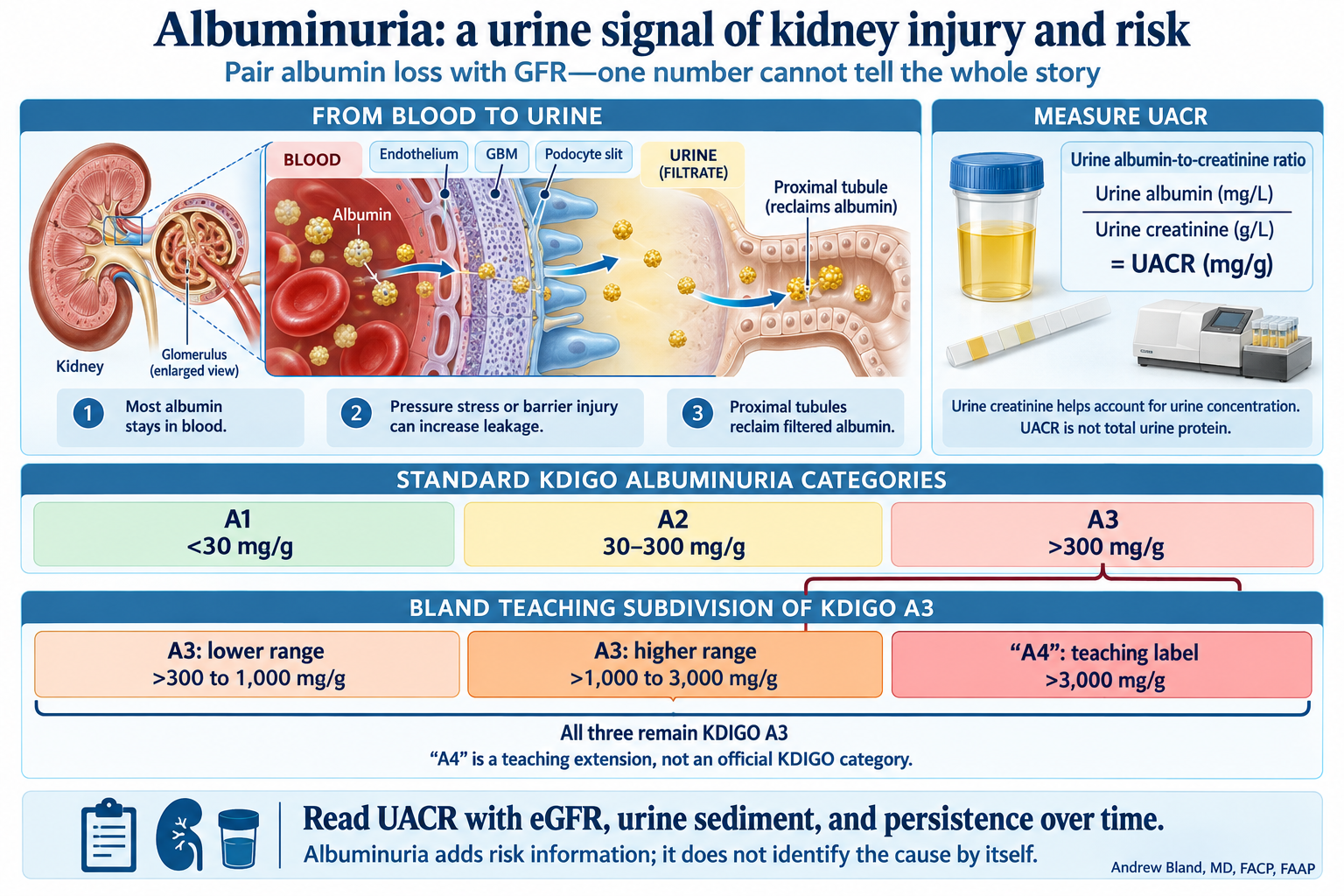
Use the diagram with the teaching text, then apply it to the case findings.
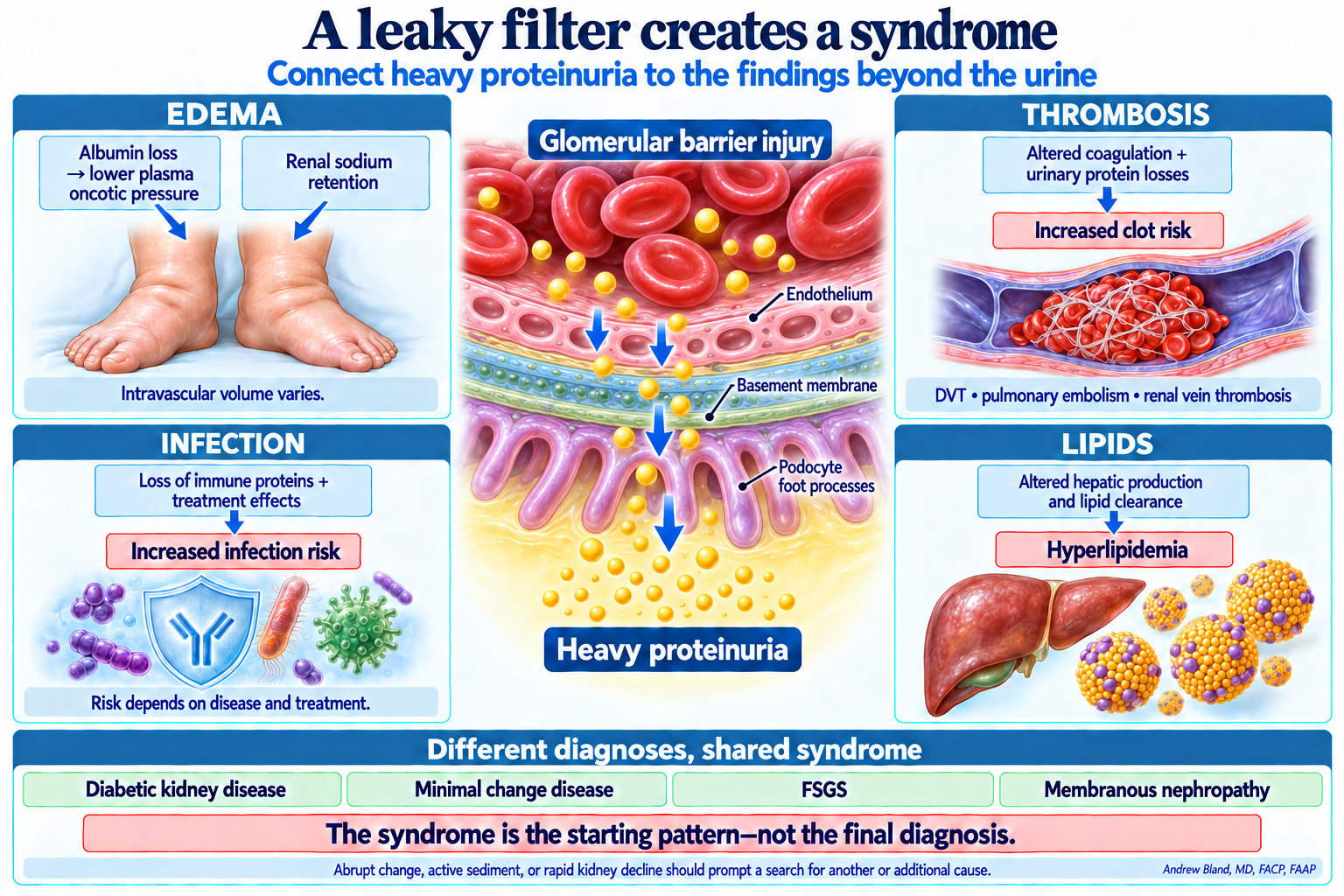
Use the diagram with the teaching text, then apply it to the case findings.
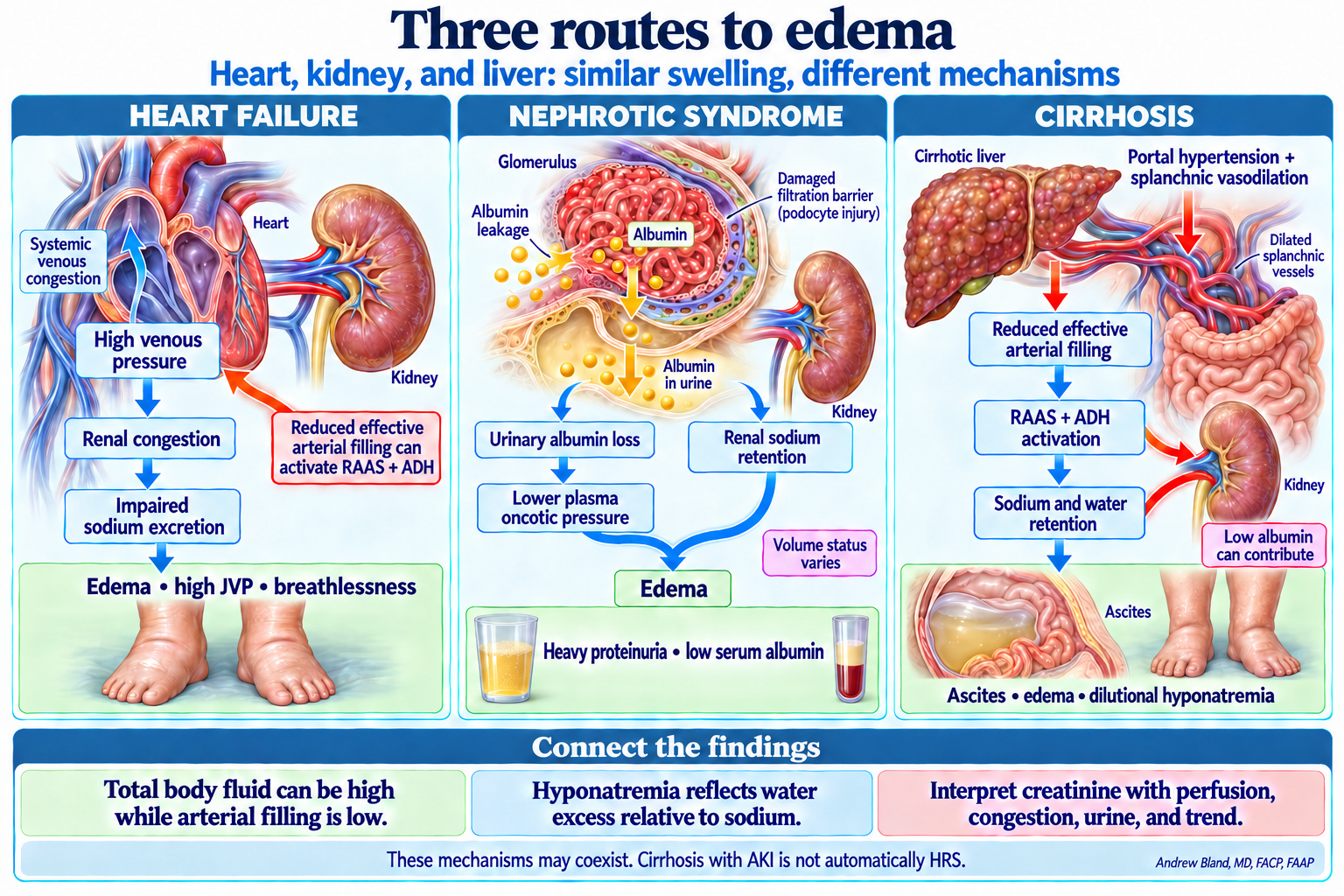
Use the diagram with the teaching text, then apply it to the case findings.
Assigned reading: the explanations in this case and the question-linked course evidence guide. The objective map distinguishes tested decisions from concepts taught in explanations.
Concepts: ckd-06, ckd-09, ckd-12, ckd-13, ckd-17, ckd-21, ckd-22, ckd-23, ckd-24, ckd-25, glom-04, glom-05, glom-07, glom-10, glom-11, glom-18, glom-19, glom-20, glom-21, glom-22, glom-23, glom-24, structural-23, structural-26.
Glomerulonephritis lecture — Nephritic vs Nephrotic Syndrome Differentiation
Textbook chapter 19 — Diabetic nephropathy as a progressive disease
Glomerulonephritis lecture — Secondary Causes of Glomerular Disease
Glomerulonephritis lecture — Nephrotic Syndrome Detailed Review
Diuretics handout — Diuretic Resistance: Mechanisms and Management
Nephritic/nephrotic handout — 8. Secondary Causes of Glomerular Diseases
CKM vs KFRE lecture — Different questions: KDIGO action thresholds
Hyperkalemia lecture — Find the mechanism and reversible contributors
Dialysis initiation handout — Modality Choice: HD vs PD vs Conservative
Access complications handout — Section 3: PICC Lines in Dialysis Patients
Kidney transplant fundamentals — Part 1: Transplant Evaluation Framework
Dialysis prescription lecture — Urgent Dialysis Indications: AEIOU
Drug dosing quick reference — Part 5: Antidiabetic Medications
Palliative nephrology handout — I. Conservative Kidney Management
Bring the lecture to the bedside · Course evidence guide · Integrated case summaries
Open a case below for its teaching, diagrams and lecture links. Use the staged case to answer the questions and reveal explanations.
Follow the edema circulation pathway before accepting a heart-failure label. Quantify protein, assess the glomerular syndrome and watch for complications.
Read the opening framework and urgent-threat checkpoint.
Build the pattern as the history, examination and results arrive.
Use the mechanism to explain the blood, urine or imaging findings.
Connect the treatment with the response, risks and follow-up.
Review the shared urgent-threat framework →
Use the visual framework with the case findings and the linked lecture.
Use the visual framework with the case findings and the linked lecture.
Use the visual framework with the case findings and the linked lecture.
How does the edema pathway lead to urine protein testing, and what new symptom would trigger urgent reassessment?
Assigned reading: the explanations in this case and the question-linked course evidence guide. The objective map distinguishes tested decisions from concepts taught in explanations.
Concepts: aki-03, glom-04, glom-07, glom-10, glom-18, glom-19, glom-20, glom-21, glom-23, glom-24, lytes-07, structural-20.
Glomerulonephritis lecture — Nephritic vs Nephrotic Syndrome Differentiation
Membranous nephropathy handout (site) — Primary vs. Secondary MN
Glomerulonephritis lecture — Nephrotic Syndrome, Detailed Review
Nephrotic–nephritic review (site) — 8. Secondary Causes of Glomerular Diseases
NSAID nephrotoxicity lecture — Risk Factors for NSAID-Induced Kidney Injury
Use pediatric thresholds for the child, then compare the adult’s cause-specific pathway. A shared nephrotic phenotype does not imply the same lesion or treatment.
Read the opening framework and urgent-threat checkpoint.
Build the pattern as the history, examination and results arrive.
Use the mechanism to explain the blood, urine or imaging findings.
Connect the treatment with the response, risks and follow-up.
Review the shared urgent-threat framework →
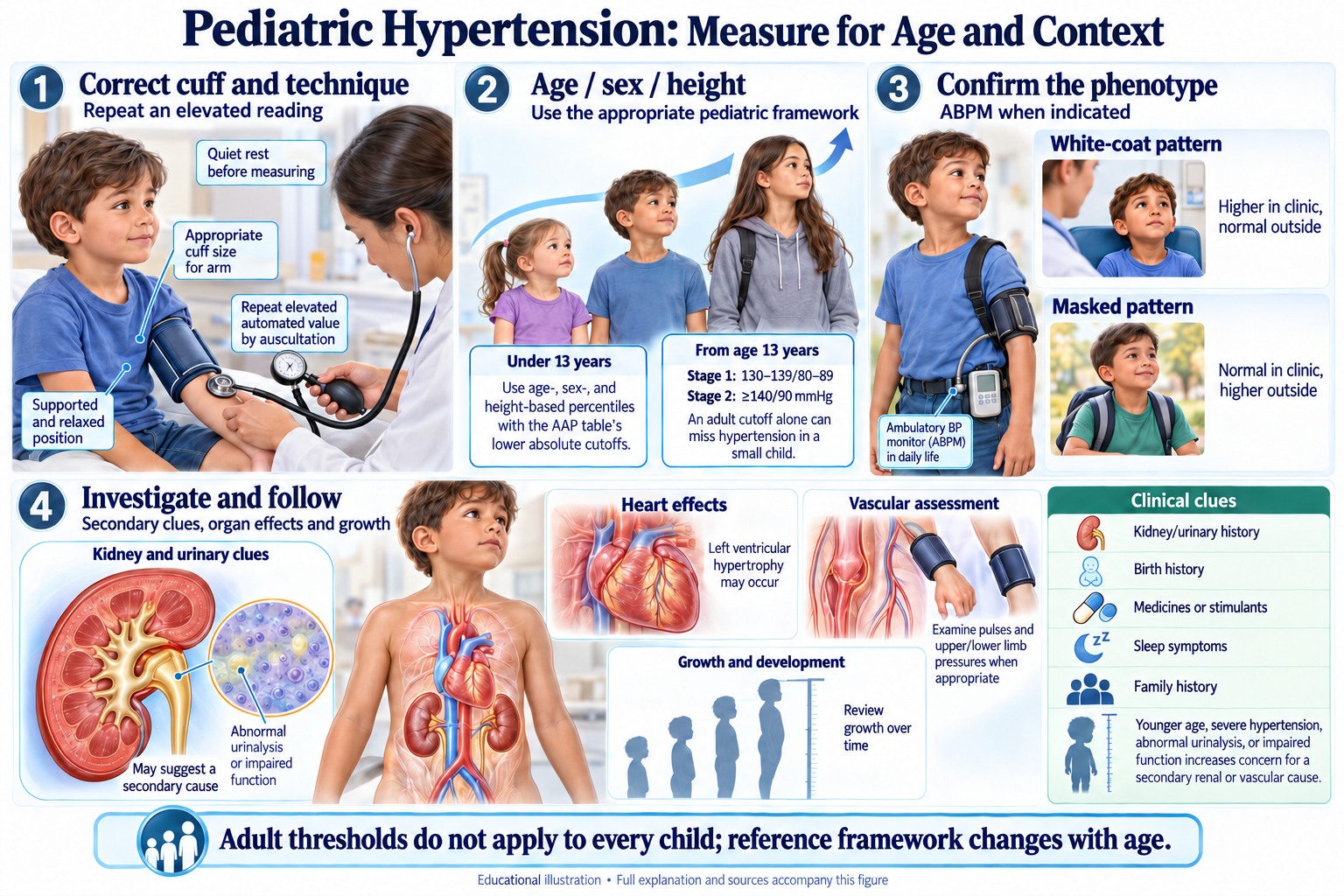
Use the visual framework with the case findings and the linked lecture.
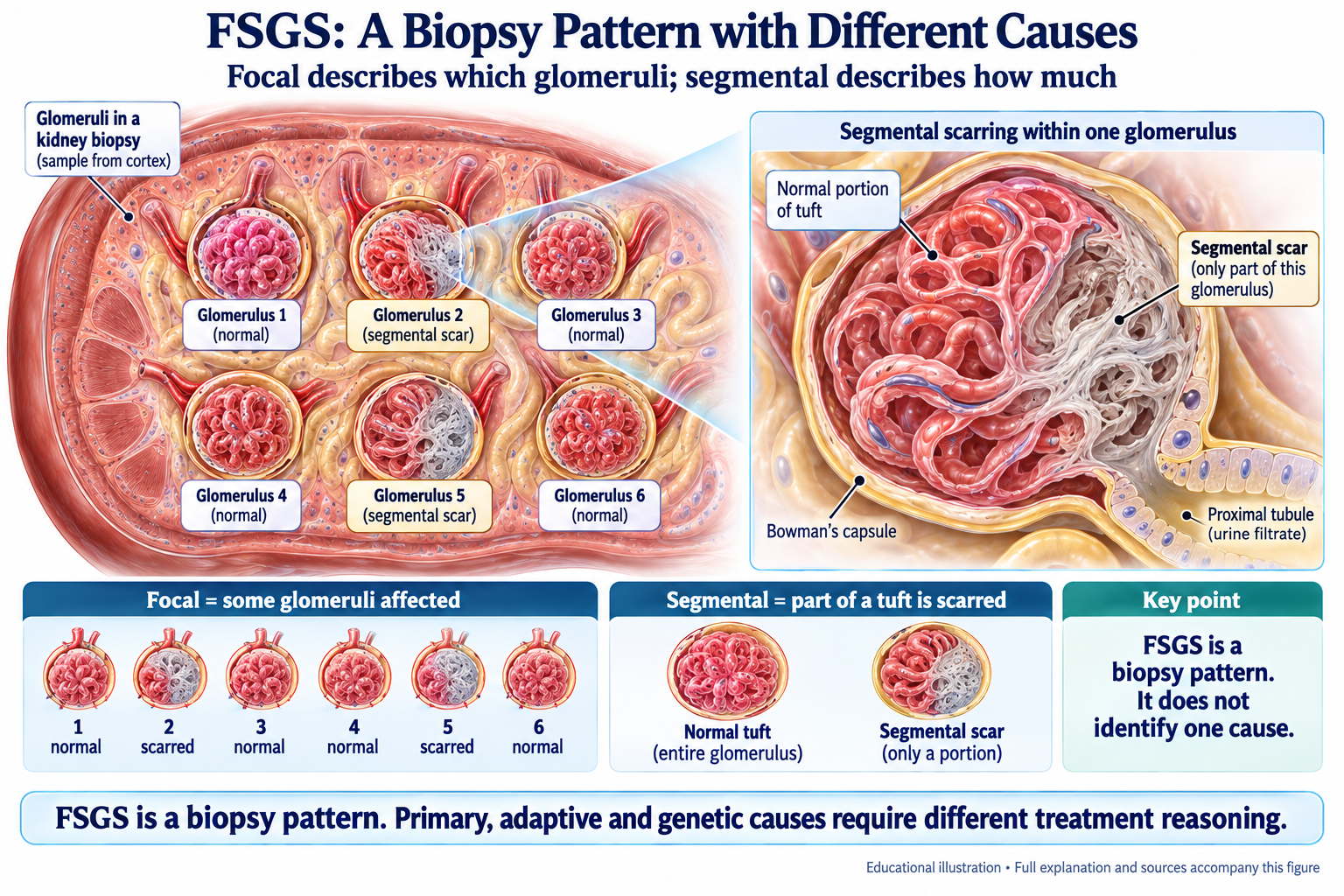
Use the visual framework with the case findings and the linked lecture.
Use the visual framework with the case findings and the linked lecture.
Why can two patients with nephrotic syndrome need different investigations and treatments?
Assigned reading: the explanations in this case and the question-linked course evidence guide. The objective map distinguishes tested decisions from concepts taught in explanations.
Concepts: glom-04, glom-07, glom-08, glom-09, glom-18, glom-19, glom-22, glom-23, glom-24, glom-25, htn-cardiorenal-17.
Glomerular disease diagnostic algorithm — Part 1: Nephrotic vs Nephritic Spectrum
Minimal change disease — Clinical Presentation · Pediatric kidney disease handout — IV. Pediatric Nephrotic Syndrome
FSGS handout — Primary vs. Secondary FSGS: Critical Distinction
Glomerulonephritis lecture — Nephrotic Syndrome Detailed Review (Complications) · Minimal change disease — Complications
Diagnostic algorithm — Part 6: When to Biopsy · Kidney biopsy handout — Why We Biopsy
Nephritic/nephrotic handout — 8. Secondary Causes of Glomerular Diseases · Renal pharmacology lecture — 2. Nephrotoxic Medication Avoidance
Diagnostic algorithm — Part 3: Comprehensive Serologic Panel · Glomerulonephritis lecture — Secondary Causes of Glomerular Disease
Pediatric hypertension lecture · Pediatric BP percentile calculator
Recognize the nephritic pattern using pediatric BP and creatinine context. Interpret infection/complement findings and follow the recovery trajectory.
Read the opening framework and urgent-threat checkpoint.
Build the pattern as the history, examination and results arrive.
Use the mechanism to explain the blood, urine or imaging findings.
Connect the treatment with the response, risks and follow-up.
Review the shared urgent-threat framework →
Use the visual framework with the case findings and the linked lecture.
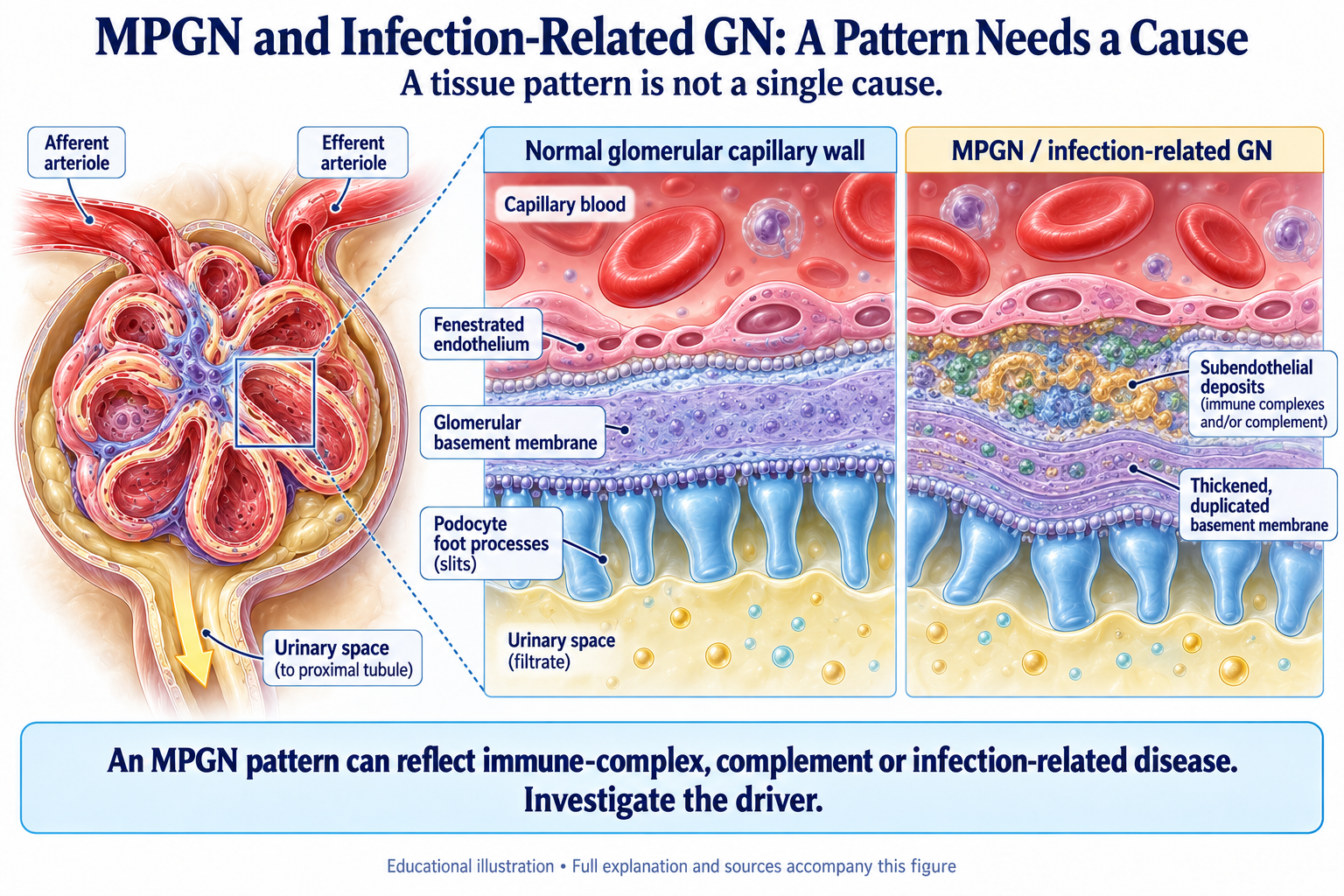
Use the visual framework with the case findings and the linked lecture.
Use the visual framework with the case findings and the linked lecture.
Which pediatric findings change urgency, and which recovery findings would make you reconsider the diagnosis?
Assigned reading: the explanations in this case and the question-linked course evidence guide. The objective map distinguishes tested decisions from concepts taught in explanations.
Concepts: aki-01, aki-02, aki-24, glom-07, glom-12, glom-13, glom-17, glom-23, htn-cardiorenal-17, lytes-13.
Glomerular disease diagnostic algorithm — Part 1: Nephrotic vs Nephritic Spectrum
Pediatric kidney disease handout — IV. Pediatric Nephrotic Syndrome · Minimal change disease — Clinical Presentation
Post-infectious GN handout — Clinical Presentation · Post-infectious GN — PSGN vs. IRGN
Glomerulonephritis lecture — Serological Evaluation of Glomerular Disease
Pediatric hypertension lecture · Pediatric BP percentile calculator
Repeat and quantify the urine findings, keeping protein and blood as separate questions. Family history and urologic risk can point toward different investigations.
Read the opening framework and urgent-threat checkpoint.
Build the pattern as the history, examination and results arrive.
Use the mechanism to explain the blood, urine or imaging findings.
Connect the treatment with the response, risks and follow-up.
Review the shared urgent-threat framework →
Use the visual framework with the case findings and the linked lecture.
Use the visual framework with the case findings and the linked lecture.
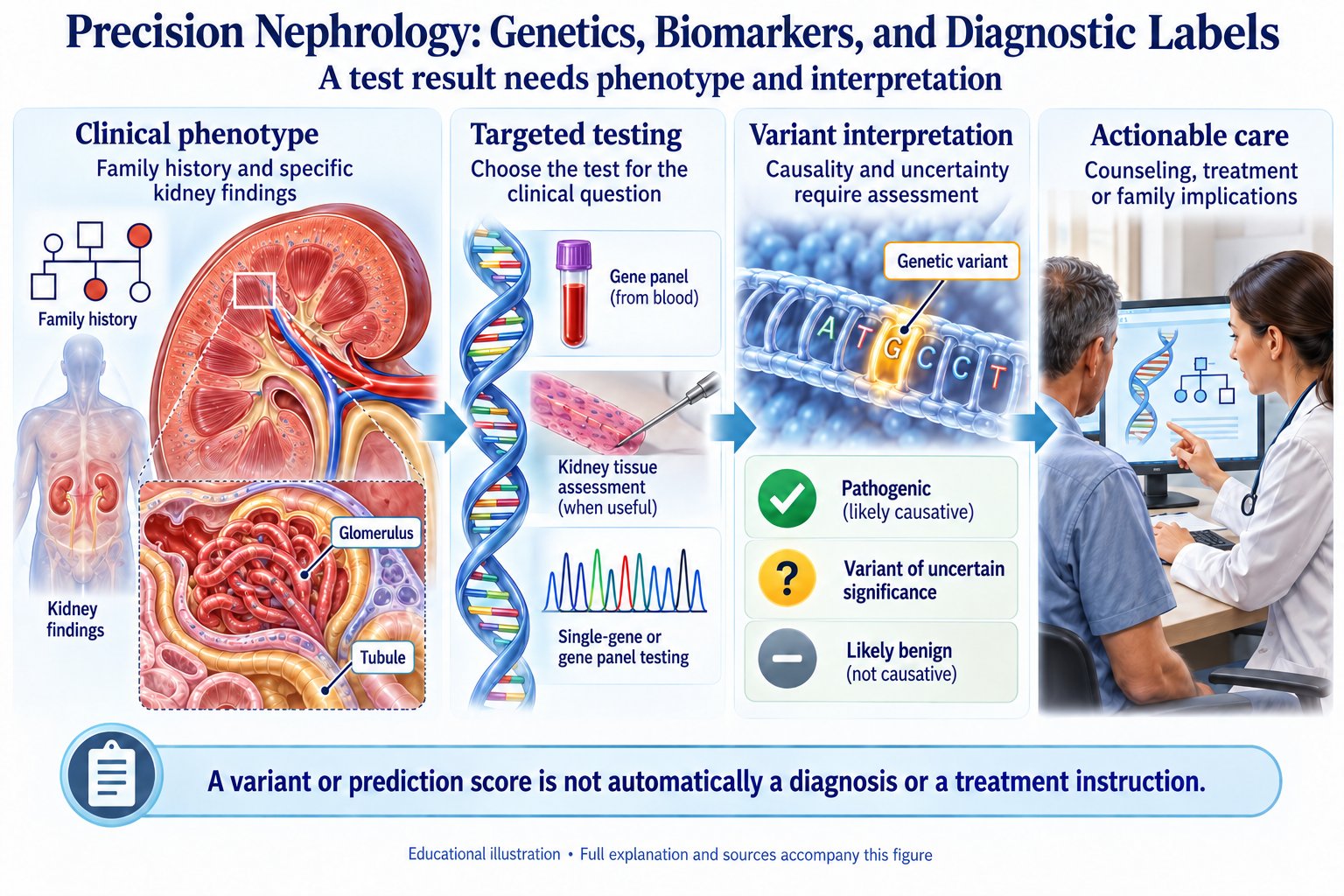
Use the visual framework with the case findings and the linked lecture.
Why can reassuring orthostatic proteinuria coexist with important hematuria or inherited disease?
Assigned reading: the explanations in this case and the question-linked course evidence guide. The objective map distinguishes tested decisions from concepts taught in explanations.
Concepts: glom-01, glom-03, glom-05, glom-06, glom-26, htn-cardiorenal-17, structural-11.
Dipstick lecture — Dipstick Parameter Deep Dive · Urinalysis handout — Section 1: Dipstick Basics
RBC morphology lecture — RBC Casts: A Strong Diagnostic Clue · Dysmorphic RBCs — Definitions and Thresholds
RBC morphology lecture — Referral Guidance · Urinalysis handout — Section 3: Hematuria
Pediatric kidney disease handout — VI. Hereditary Nephropathies
Other cystic diseases lecture — ADTKD block (the site has no Alport page)
Pediatric hypertension lecture · Pediatric BP percentile calculator