1 · Approach
Use the opening diagram and short lessons before the patient.
Transplant, hypertension, inherited disease and synthesis
Andrew Bland, MD, FACP, FAAP · October 21, 2026
1 cases now use the same sequence, with 8 short lessons and opening, interpretation and treatment figures.
Open the collected self-study teaching ↓ · Browse the self-study case guide
Opening frameworks, 36 Learn first sections, stage-specific infographics and direct lecture links for the three classroom cases. Use the short lesson before its question, then return to the case to commit, discuss and reveal.
Session plan and self-study cases · Shared opening lecture · Day 5 figures in the visual library
Look for transplant-related deterioration, hypertensive emergency, symptomatic severe hypercalcemia and other acute threats. Reconnect electrolytes, kidney reserve, urine protein and structural disease before choosing a treatment.
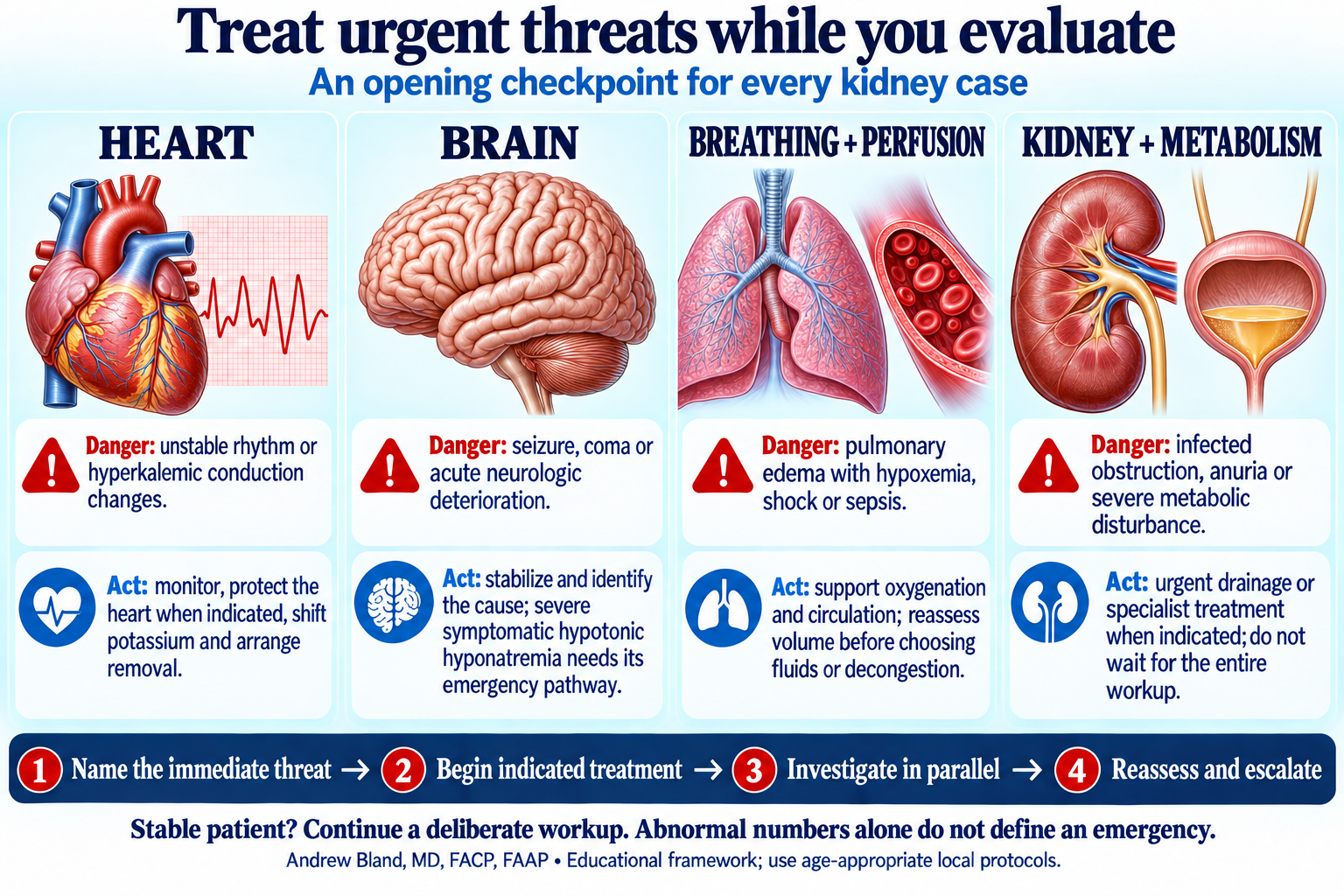
Name the threat, begin indicated treatment, investigate in parallel, then reassess.
Read medicines by start date, connect exposures with the laboratory pattern, and keep infection, obstruction and rejection in the transplant differential.
Use the opening diagram and short lessons before the patient.
Revisit urgency as history, examination and initial data arrive.
Use the urine, blood or imaging guide at the relevant decision.
Connect the management plan with response, monitoring and follow-up.
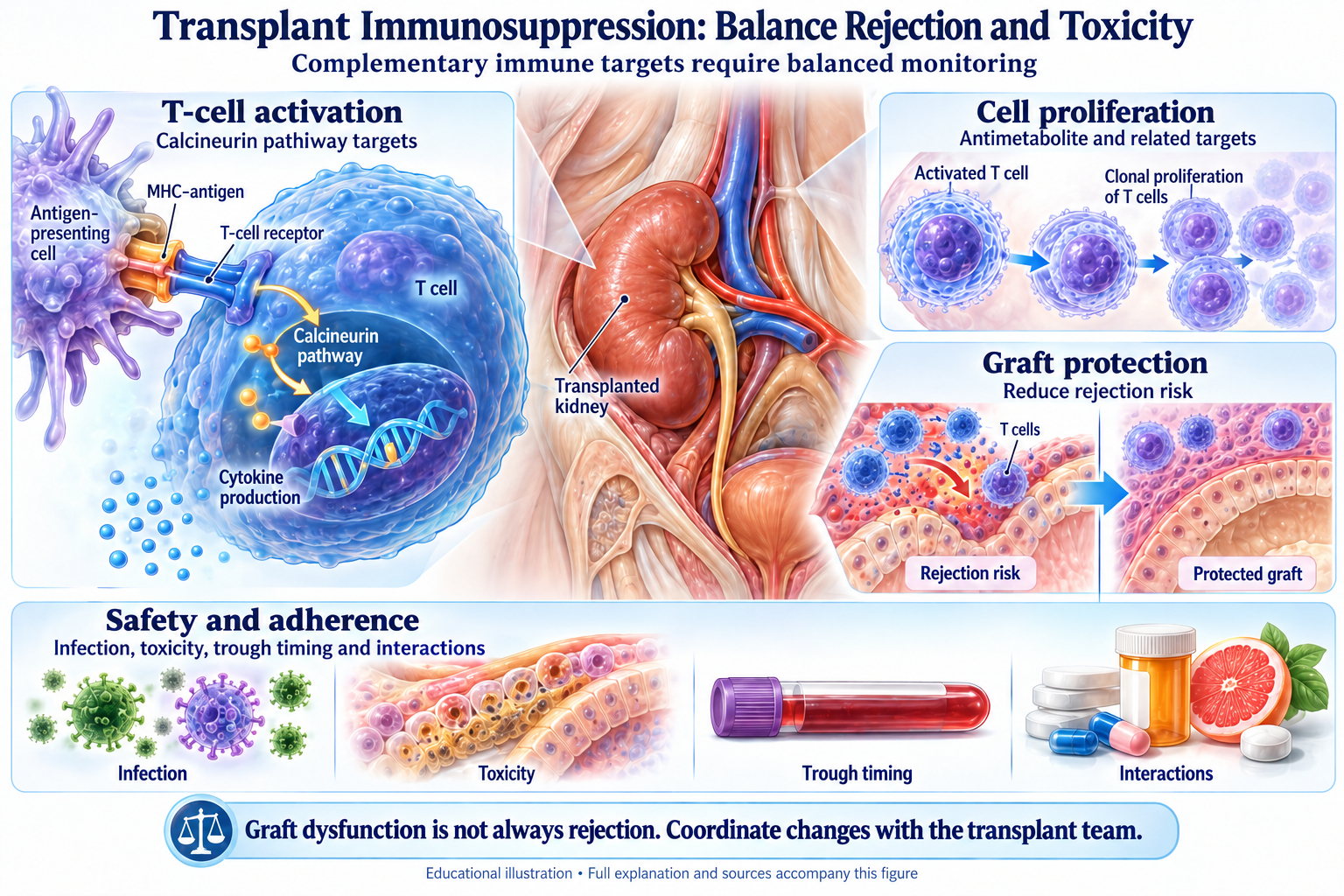
Use the diagram with the teaching text, then apply it to the case findings.
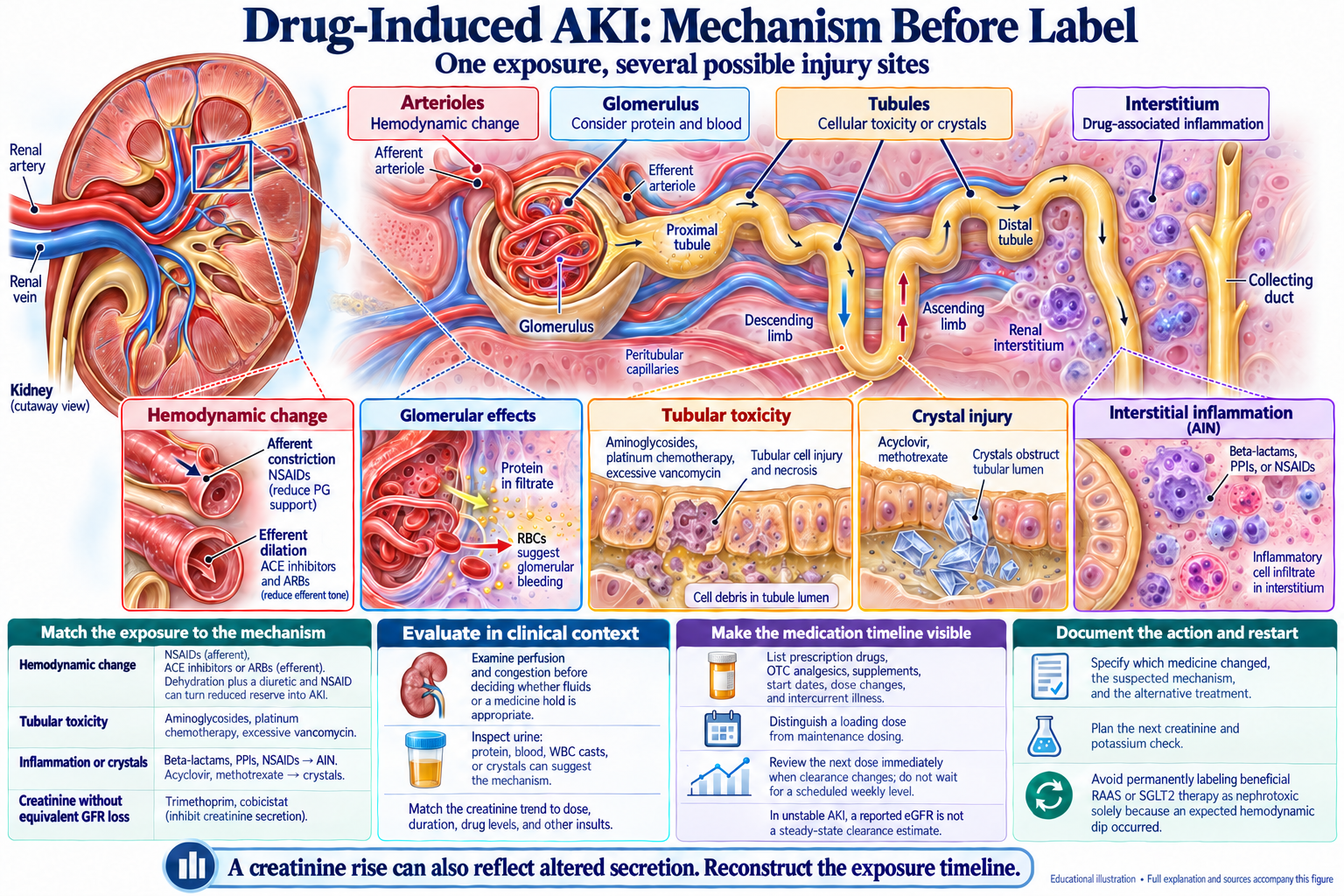
Use the diagram with the teaching text, then apply it to the case findings.
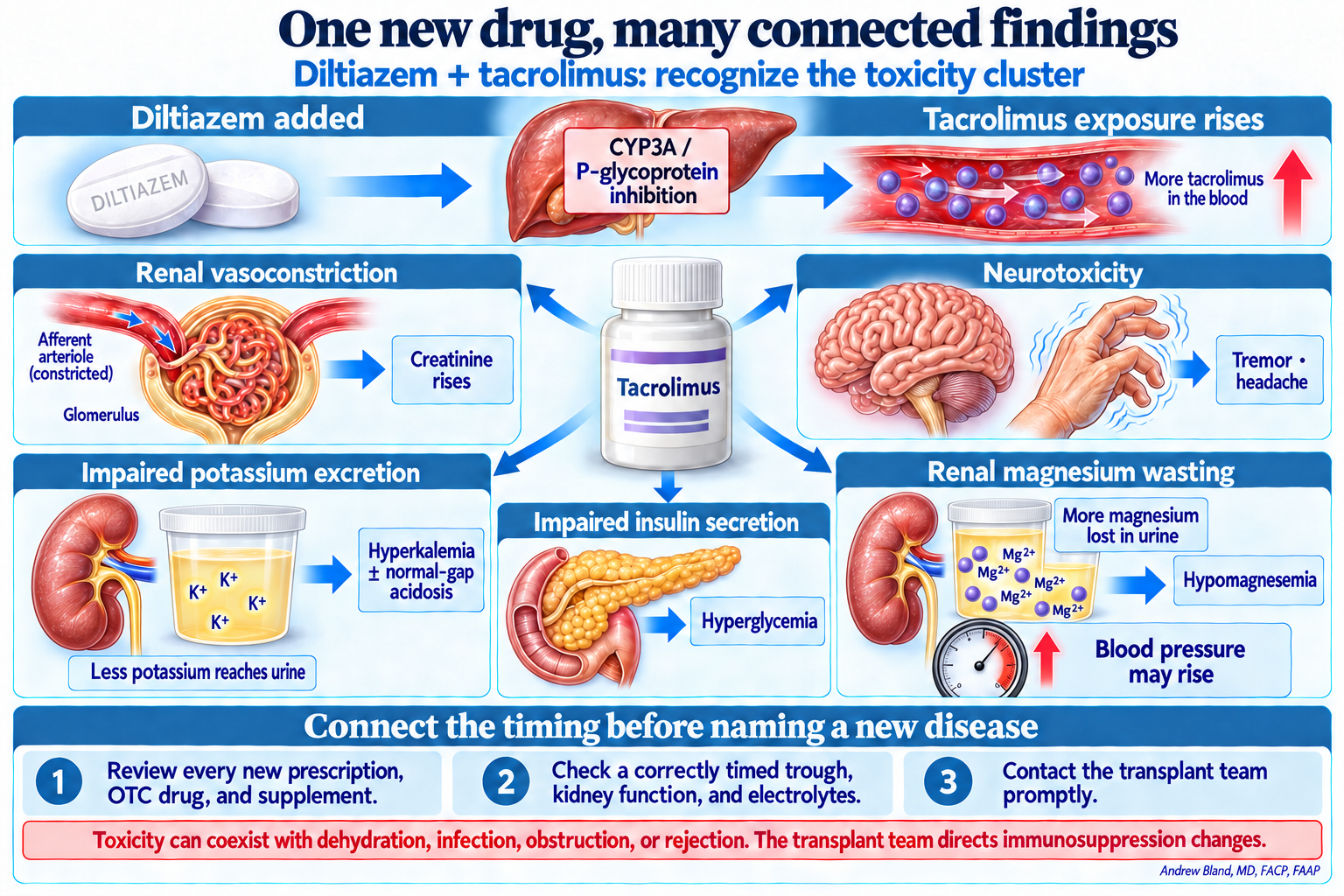
Use the diagram with the teaching text, then apply it to the case findings.
Assigned reading: the explanations in this case and the question-linked course evidence guide. The objective map distinguishes tested decisions from concepts taught in explanations.
Concepts: aki-03, aki-13, aki-14, aki-27, ckd-18, ckd-19, ckd-20, htn-cardiorenal-07, htn-cardiorenal-08, lytes-14, lytes-18, structural-20, structural-27.
Transplant immunosuppression student handout — V. Drug Monitoring and Therapeutic Targets · Transplant complications student handout — VIII. Clinical Pearls
AKI lecture — Systematic Diagnostic Approach · AKI BMP pattern recognition guide — Part 1: Three-Compartment AKI Framework
NSAID-induced kidney injury — Risk Factors for NSAID-Induced Kidney Injury · Drug-induced AKI student handout — The Major Categories
Drug-induced AKI student handout — KDIGO drug classification framework · Contrast-associated AKI — Practice-Changing Medication Recommendations
Hyperkalemia lecture — Find the mechanism and reversible contributors · RTA types — Type 4: Hyperkalemic Renal Tubular Acidosis
Hypomagnesemia lecture — Causes of Hypomagnesemia; Treatment Strategies
Hypertension medical management — First-Line Agent Selection · Hypertension and comorbidities — Chronic Kidney Disease
ACEi vs ARB comparison — Comparative Side Effect Profiles · RAAS inhibitors student handout
Drug dosing in CKD quick reference — Part 1: Principles of Drug Dosing in CKD · Renal pharmacology lecture — 1. Drug Dosing in CKD
Renal pharmacology lecture — 2. Nephrotoxic Medication Avoidance; 6. NSAID Alternatives
Renal pharmacology lecture — 7. Sick Day Rules: Medications to Hold During Acute Illness · Cardiorenal disease lecture — Critical: Sick Day Management
NSAID-induced kidney injury — Risk Factors for NSAID-Induced Kidney Injury · Renal pharmacology lecture — 6. NSAID Alternatives for Pain Management in CKD
Verify BP, distinguish urgent organ injury from chronic risk, and sequence secondary-cause testing around drugs, potassium and pregnancy.
Use the opening diagram and short lessons before the patient.
Revisit urgency as history, examination and initial data arrive.
Use the urine, blood or imaging guide at the relevant decision.
Connect the management plan with response, monitoring and follow-up.
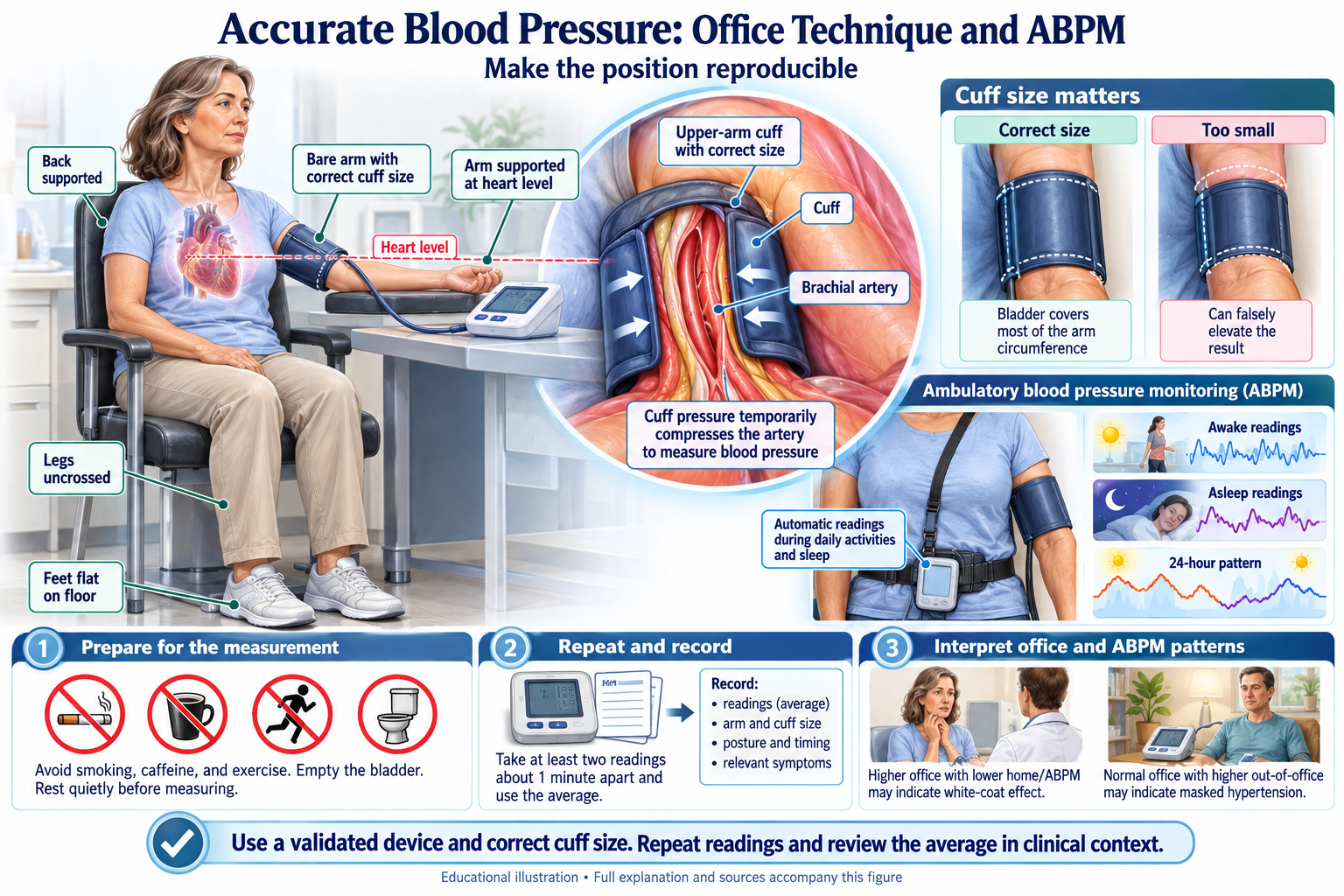
Use the diagram with the teaching text, then apply it to the case findings.
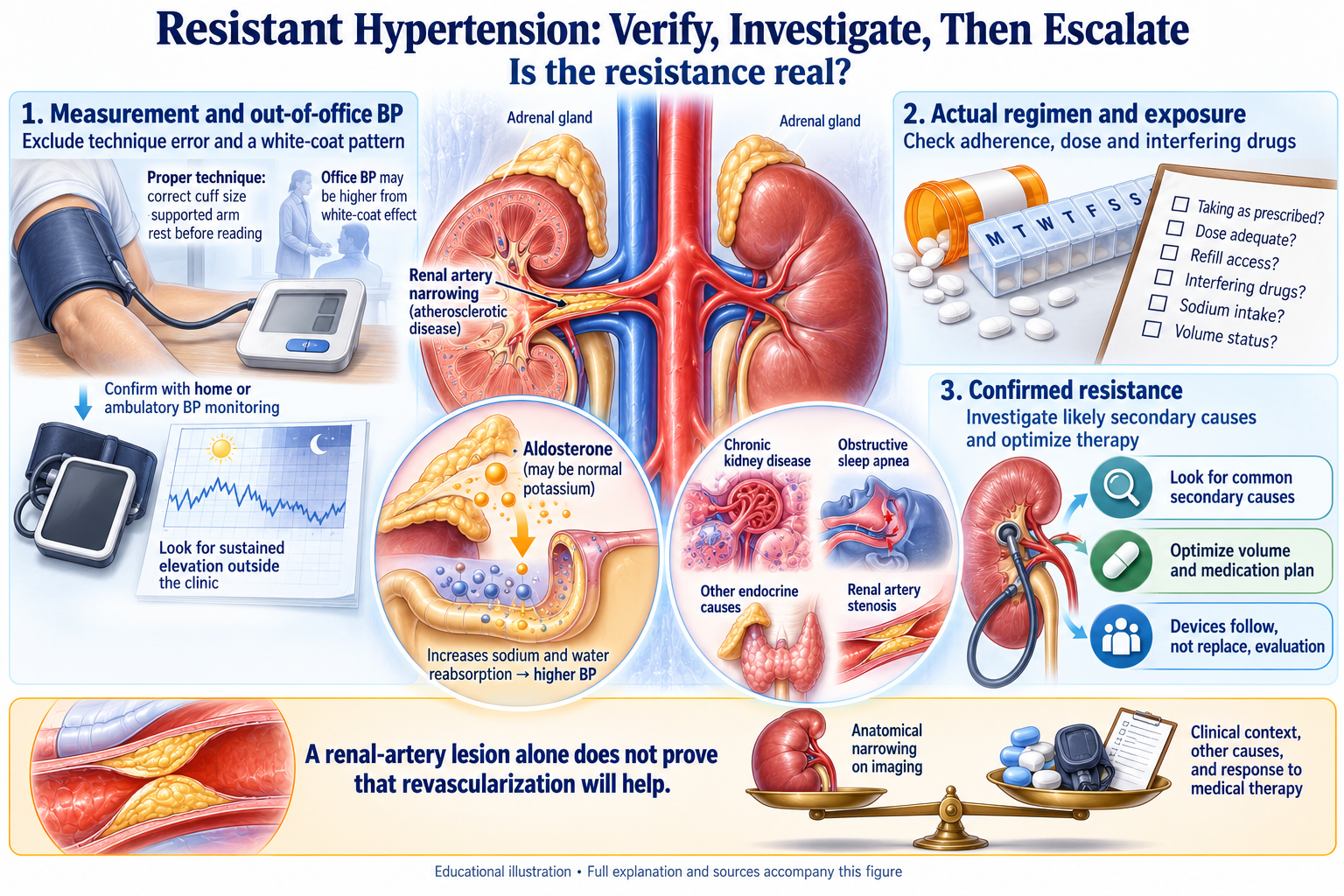
Use the diagram with the teaching text, then apply it to the case findings.
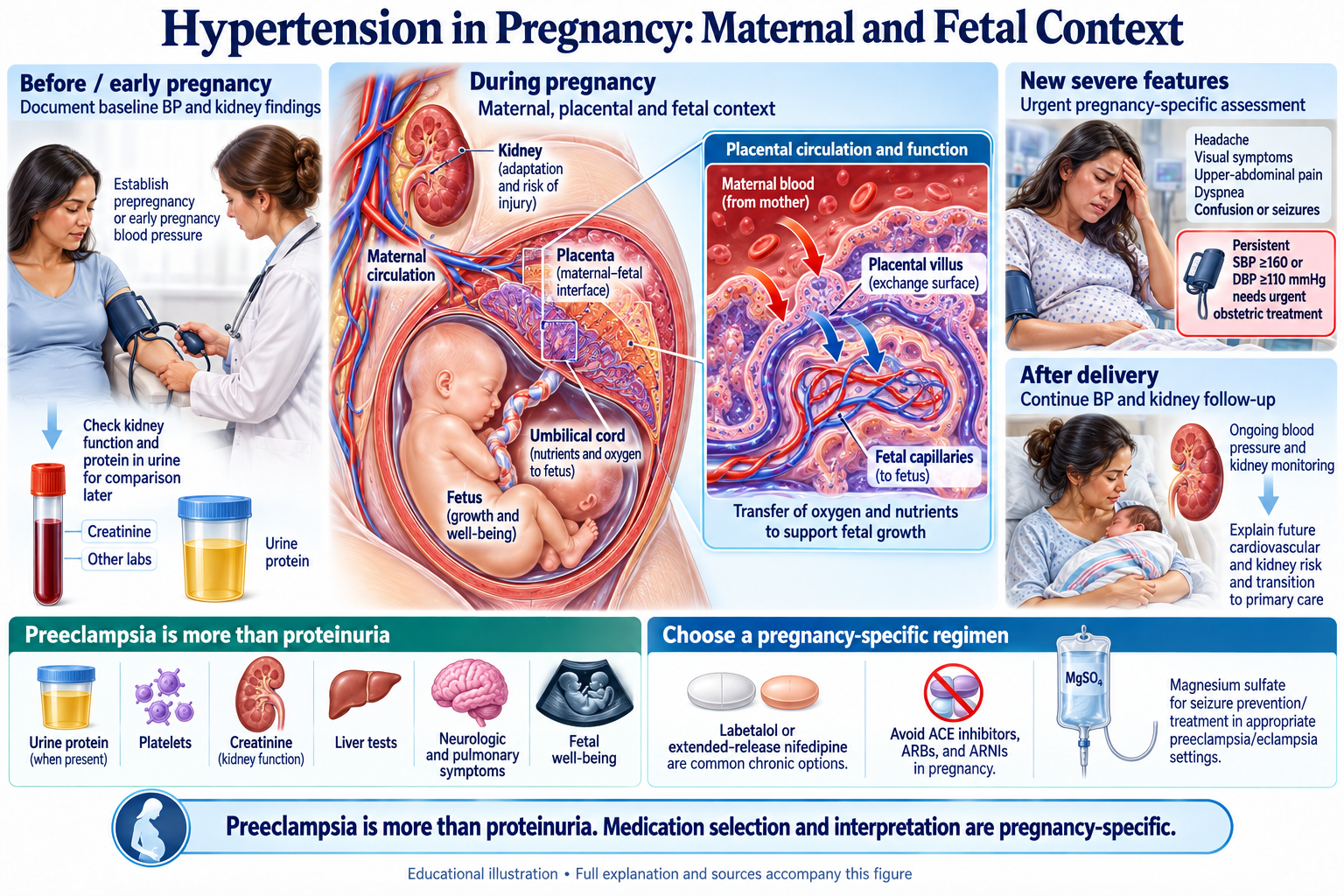
Use the diagram with the teaching text, then apply it to the case findings.
Assigned reading: the explanations in this case and the question-linked course evidence guide. The objective map distinguishes tested decisions from concepts taught in explanations.
Concepts: glom-04, htn-cardiorenal-01, htn-cardiorenal-02, htn-cardiorenal-03, htn-cardiorenal-04, htn-cardiorenal-06, htn-cardiorenal-08, htn-cardiorenal-11, htn-cardiorenal-12, htn-cardiorenal-13, htn-cardiorenal-14, htn-cardiorenal-15, htn-cardiorenal-18, lytes-11, lytes-25, structural-16, structural-17.
Home Monitoring Protocols — Critical HBPM Implementation Points
Blood Pressure Targets — Population-Specific Target Recommendations
Secondary HTN Screening — Renal Artery Stenosis: Medical vs Interventional
Inpatient Emergencies — Hypertensive Emergency vs Severe HTN Algorithm
Pregnancy & Special Populations — Critical Safety Alert · Pregnancy Nephrology — Preeclampsia & Eclampsia
Secondary Hypertension handout (web) — III. Renovascular Hypertension
Special Populations handout (web) — Pregnancy and the Kidney · Pregnancy Nephrology — Physiologic Renal Changes
Metabolic Alkalosis — Urine Chloride: A Contextual Diagnostic Guide
CKD lecture — Risk Stratification Matrix, albuminuria categories
Interpret cysts with age and family history, recognize acute complications, and connect individual care with relatives and future kidney planning.
Use the opening diagram and short lessons before the patient.
Revisit urgency as history, examination and initial data arrive.
Use the urine, blood or imaging guide at the relevant decision.
Connect the management plan with response, monitoring and follow-up.
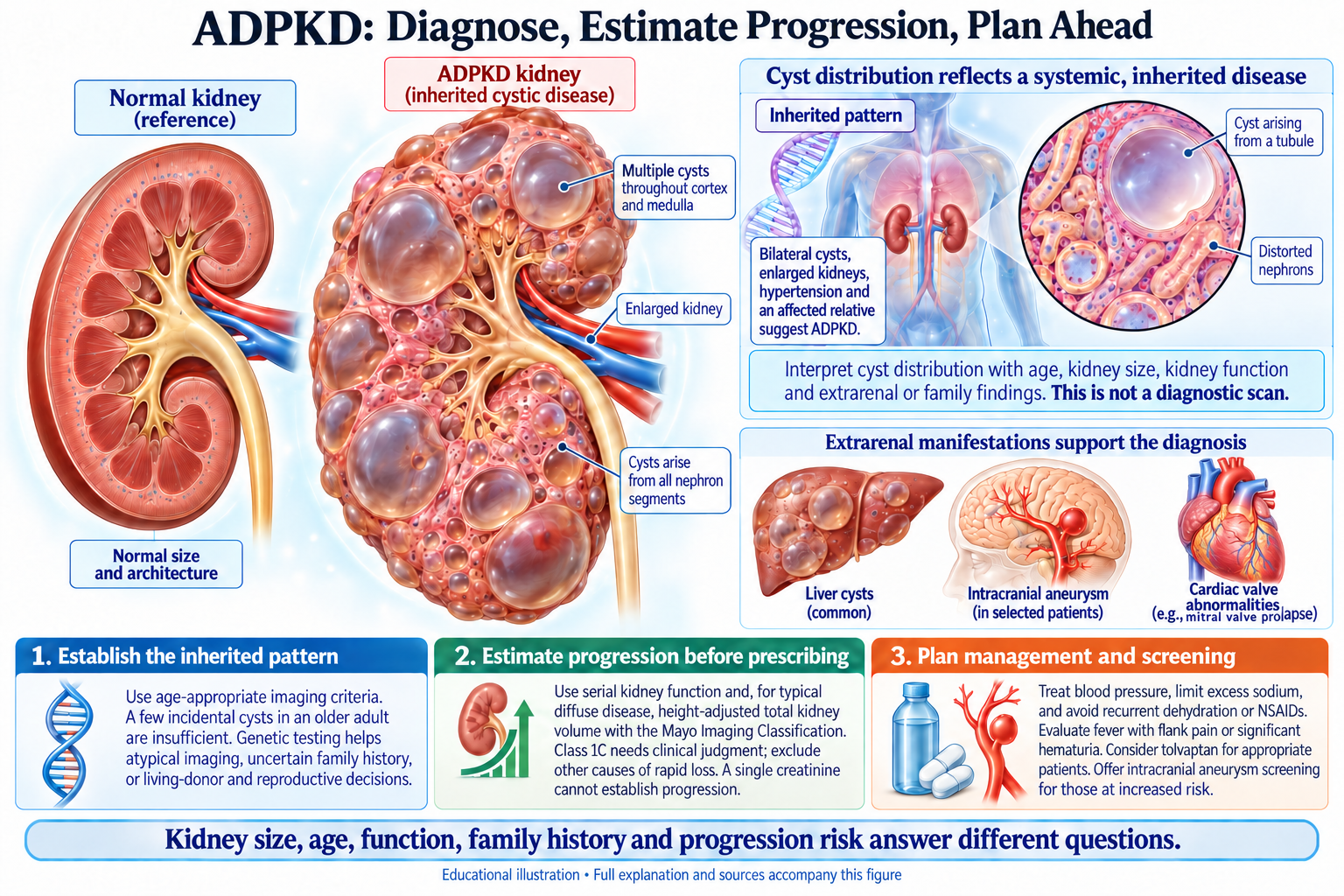
Use the diagram with the teaching text, then apply it to the case findings.
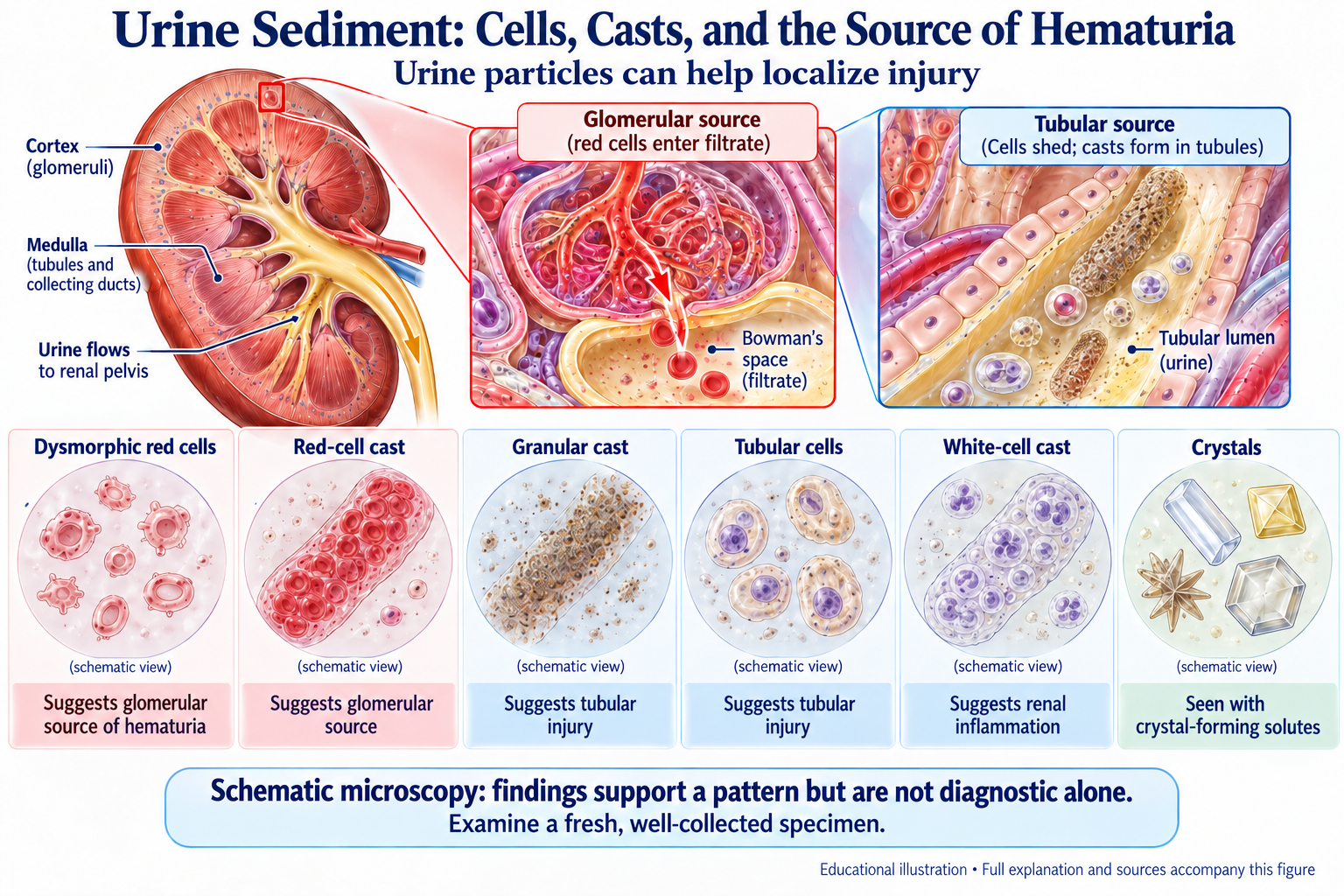
Use the diagram with the teaching text, then apply it to the case findings.
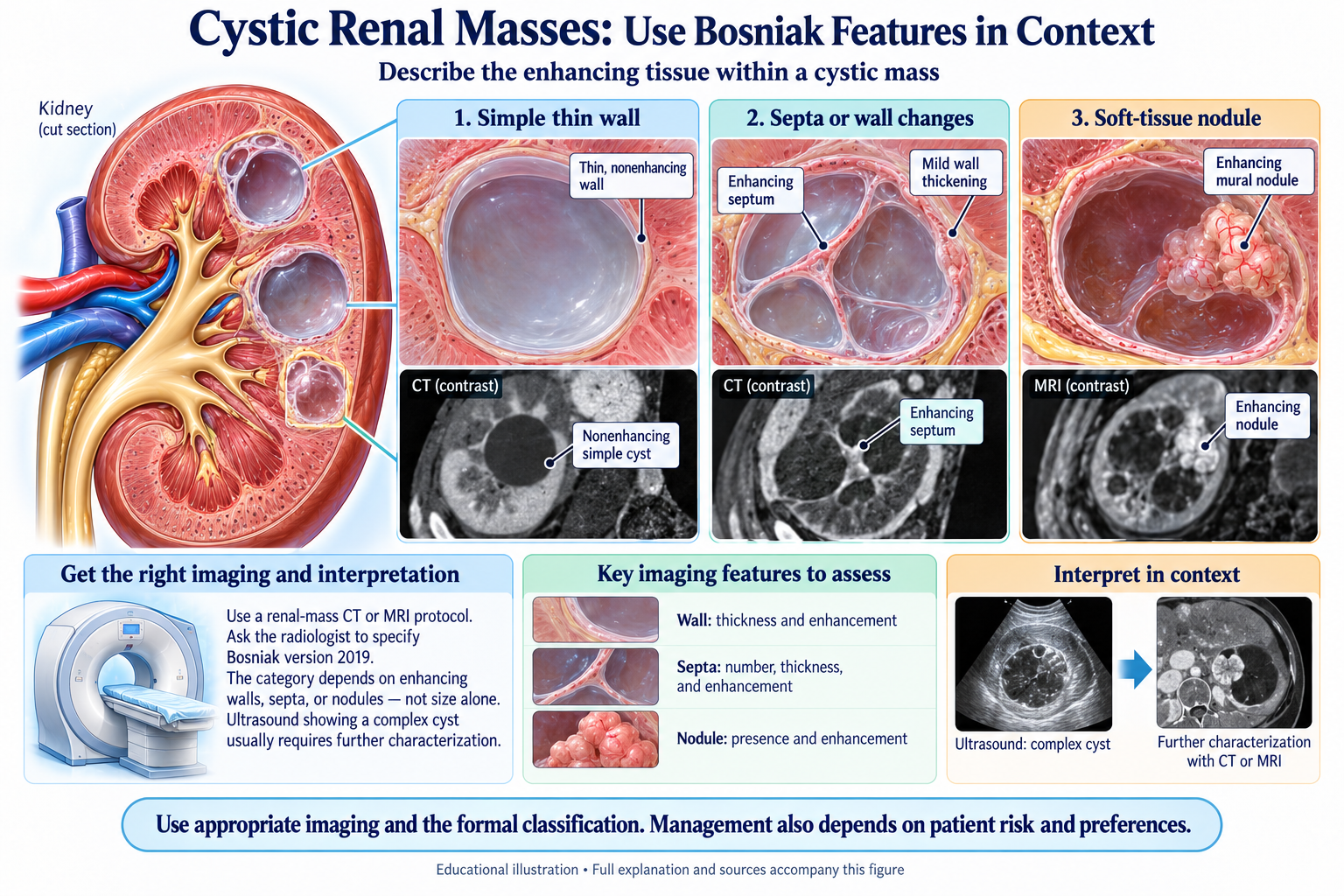
Use the diagram with the teaching text, then apply it to the case findings.
Assigned reading: the explanations in this case and the question-linked course evidence guide. The objective map distinguishes tested decisions from concepts taught in explanations.
Concepts: ckd-08, ckd-10, ckd-21, ckd-22, ckd-24, glom-06, htn-cardiorenal-07, structural-01, structural-05, structural-09, structural-10, structural-12, structural-14, structural-15.
ADPKD lecture — Diagnostic Criteria; Family Screening Protocols
CKD comprehensive management pathways — Part 3: Blood Pressure Management in CKD · Blood pressure targets lecture — Population-Specific Target Recommendations
CKD staging student handout — Referral Criteria Summary (Handy Chart) · CKM vs KFRE — Different questions (KDIGO action thresholds)
Dialysis initiation student handout — Modality Choice: HD vs PD vs Conservative · Shared Decision-Making Framework
Kidney transplant fundamentals student handout — Part 1: Transplant Evaluation Framework · Choosing dialysis — patient handout
Nephrolithiasis student handout — Classic Presentation: Renal Colic · Diagnostic Imaging
ADPKD lecture — Diagnostic Criteria; Family Screening Protocols
ADPKD lecture — Cyst Complications; Tolvaptan; Intracranial Aneurysm Screening
Other cystic diseases lecture — ADTKD (formerly Medullary Cystic Disease)
Bosniak classification lecture — Bosniak I–IV cards; Management Algorithm
Renal labs and imaging student handout — Section 3: Renal Imaging Modalities · Renal imaging lecture — Computed Tomography Renal Imaging
Contrast-associated AKI lecture — Risk Assessment Framework; What Does NOT Work · Renal labs and imaging student handout — Gadolinium-Based Contrast (Used in MRI)
RBC morphology lecture — Referral Guidance · Urinalysis student handout — Section 3: Hematuria
Pediatric kidney disease student handout — VI. Hereditary Nephropathies
Hypertension and comorbidities — Chronic Kidney Disease · Hypertension medical management — First-Line Agent Selection
Integrate electrolytes, CKD, AKI, stones, myeloma and nephrotic syndrome from AL amyloid. The case reveals the seven-lab calcium pattern in stages, then compares nonalbumin light-chain protein with albumin-heavy glomerular disease.
Teach the full 22-minute capstone → · Open the AL amyloid comparison
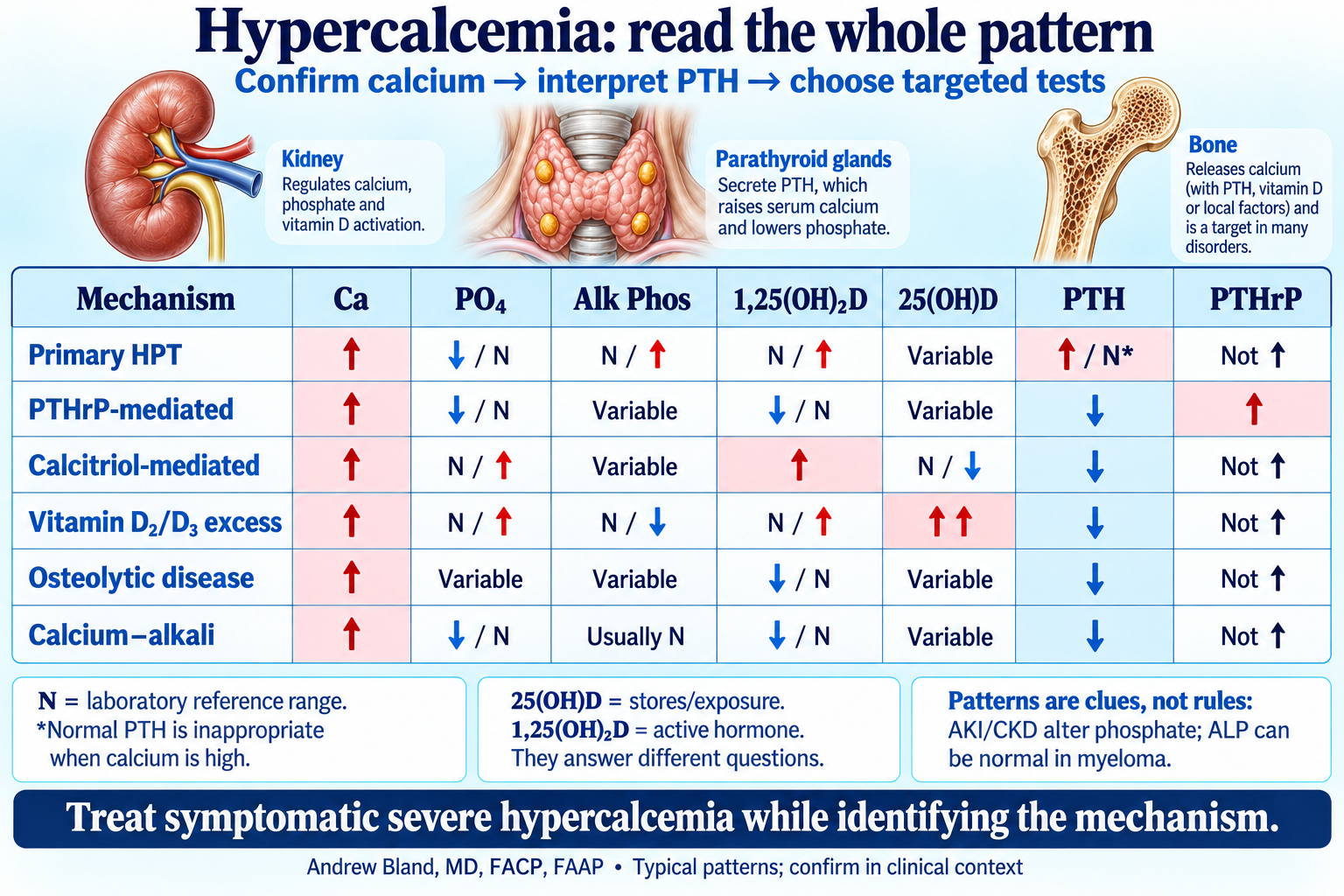
Ca, phosphate, alkaline phosphatase, both vitamin D metabolites, PTH and PTHrP.
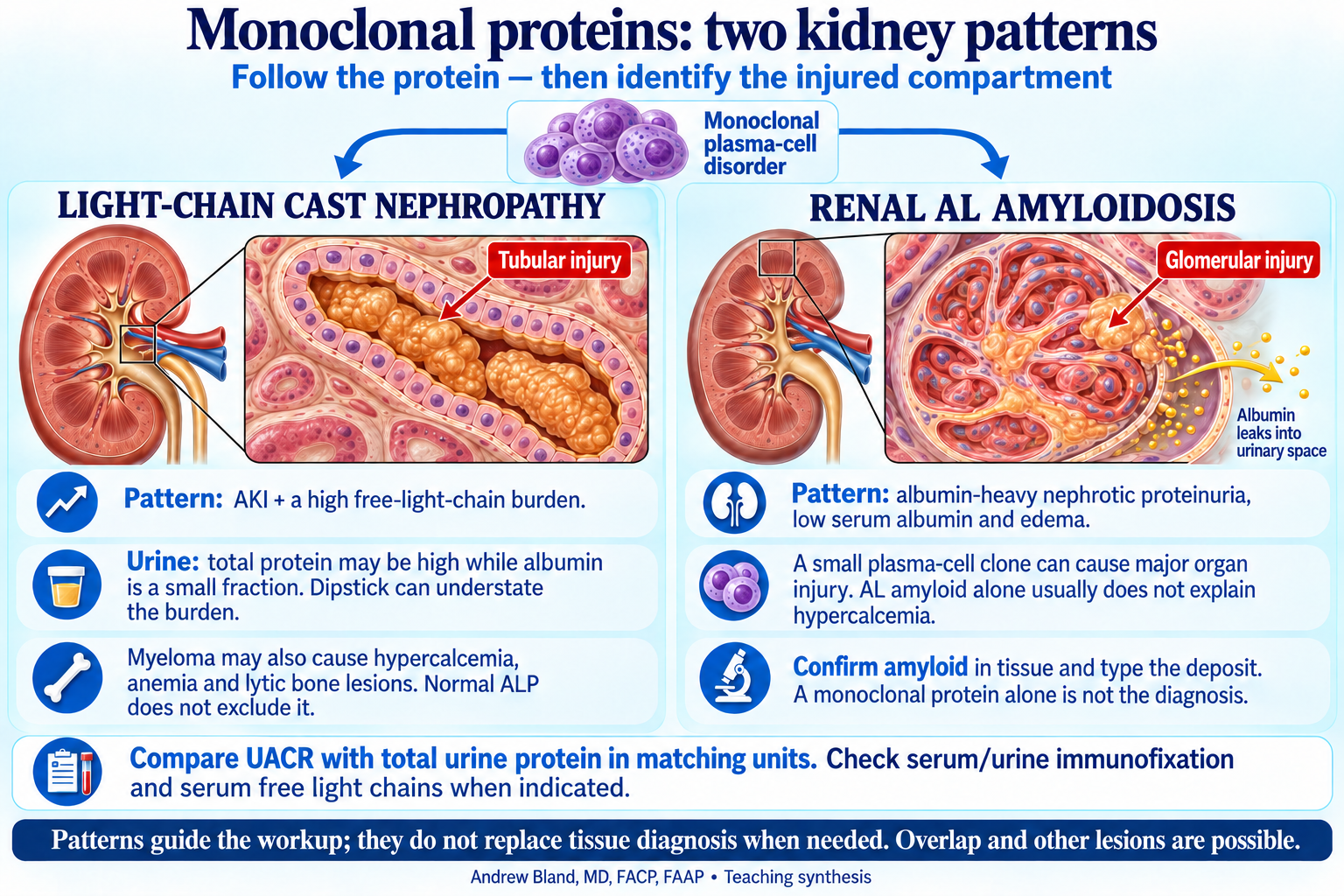
Tubular light-chain cast injury versus glomerular AL amyloid deposition.
Bring the lecture to the bedside · Course evidence guide · Integrated case summaries
Open a case below for its teaching, diagrams and lecture links. Use the staged case to answer the questions and reveal explanations.
Read the laboratory numbers through frailty, muscle mass, medicines and patient preferences. Treat acute toxicity before deciding what chronic kidney care should look like.
Read the opening framework and urgent-threat checkpoint.
Build the pattern as the history, examination and results arrive.
Use the mechanism to explain the blood, urine or imaging findings.
Connect the treatment with the response, risks and follow-up.
Review the shared urgent-threat framework →
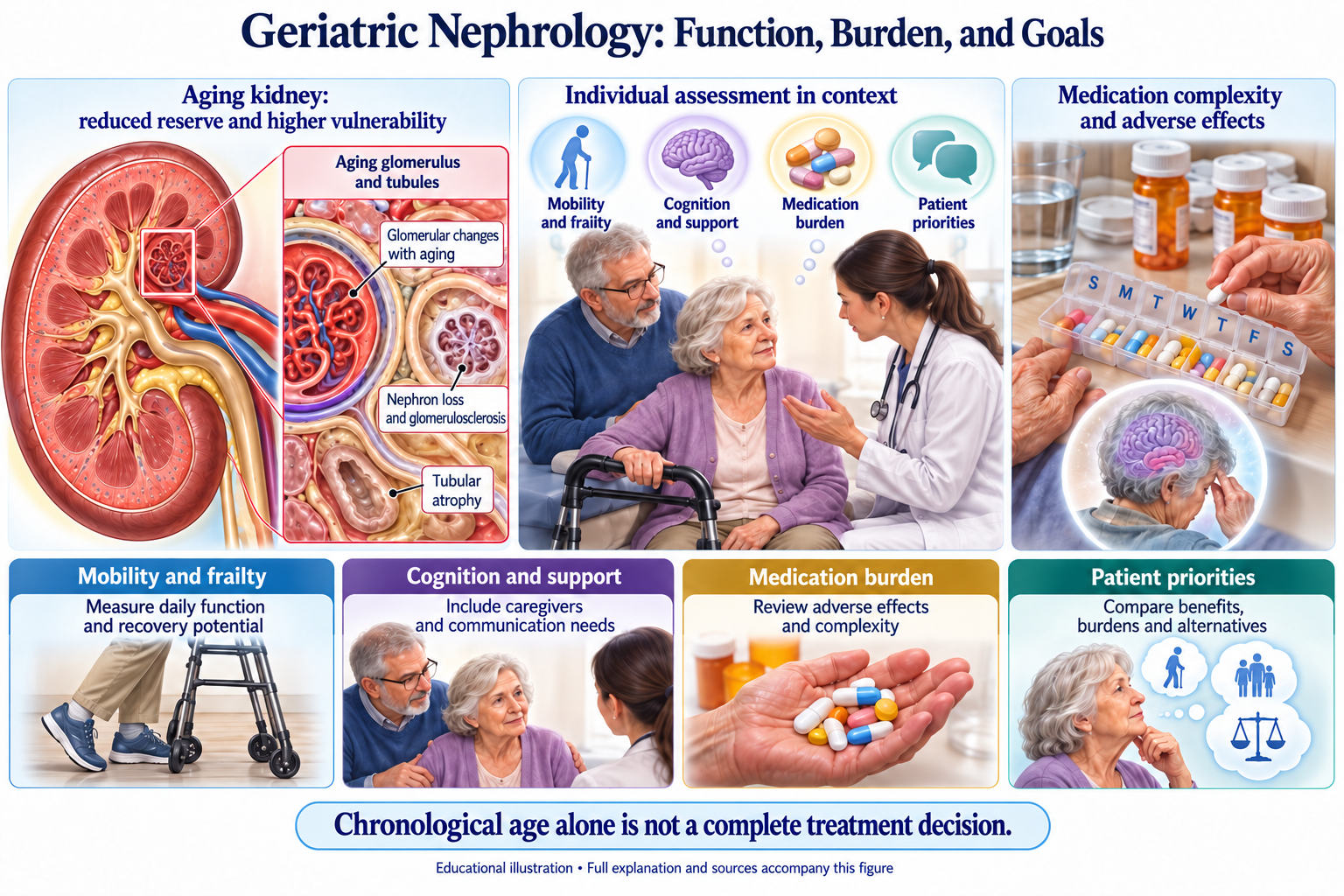
Use the visual framework with the case findings and the linked lecture.
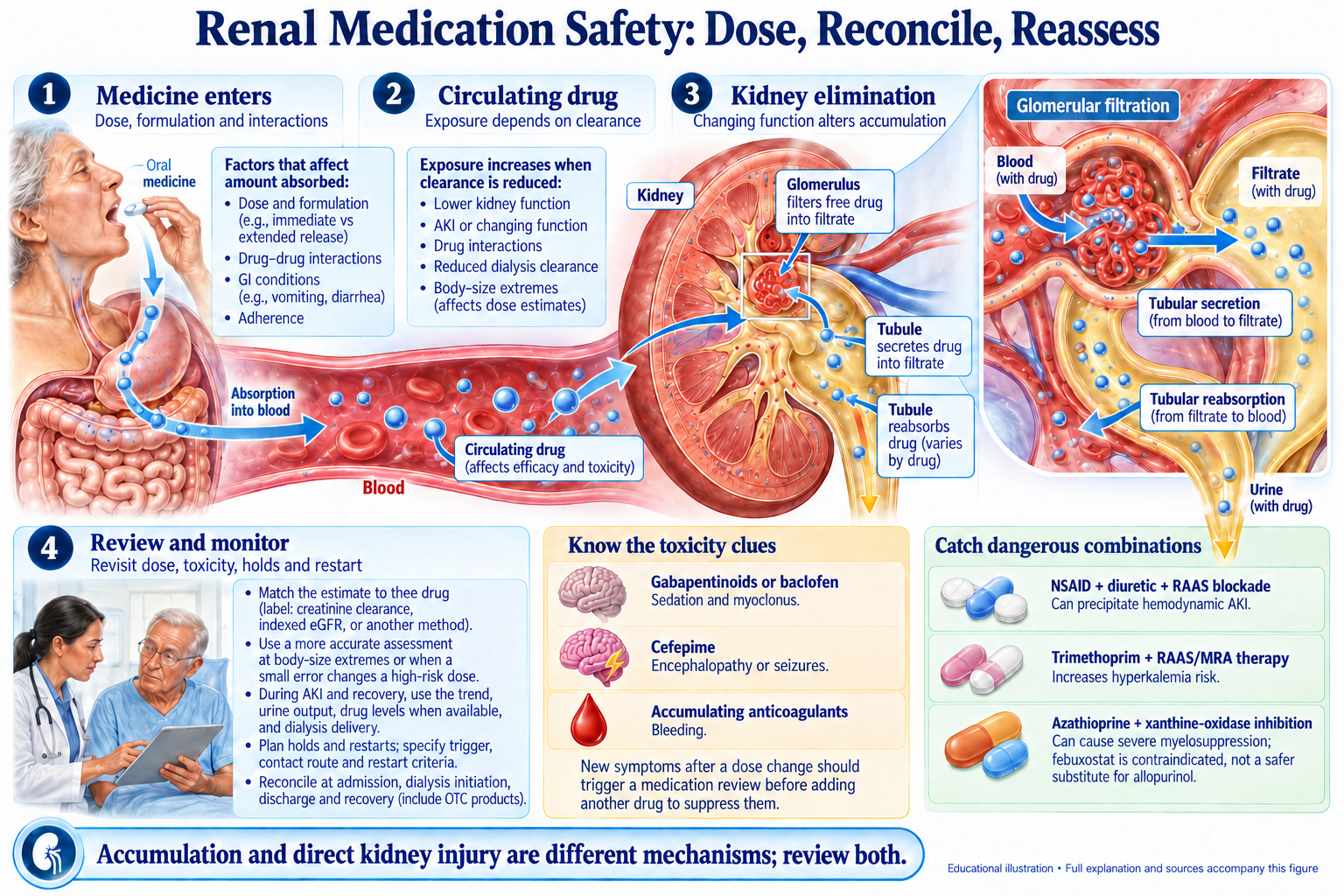
Use the visual framework with the case findings and the linked lecture.
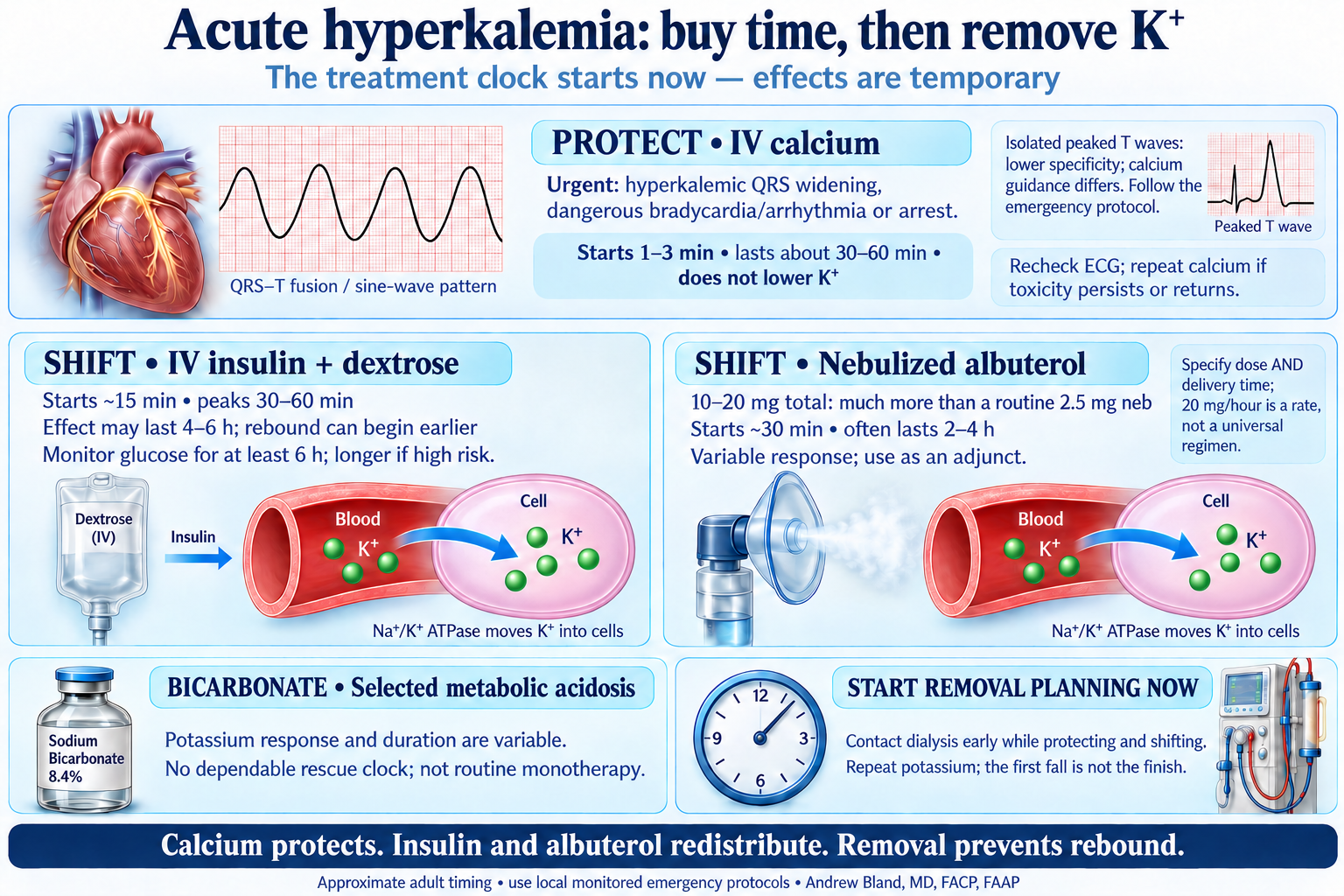
Use the visual framework with the case findings and the linked lecture.
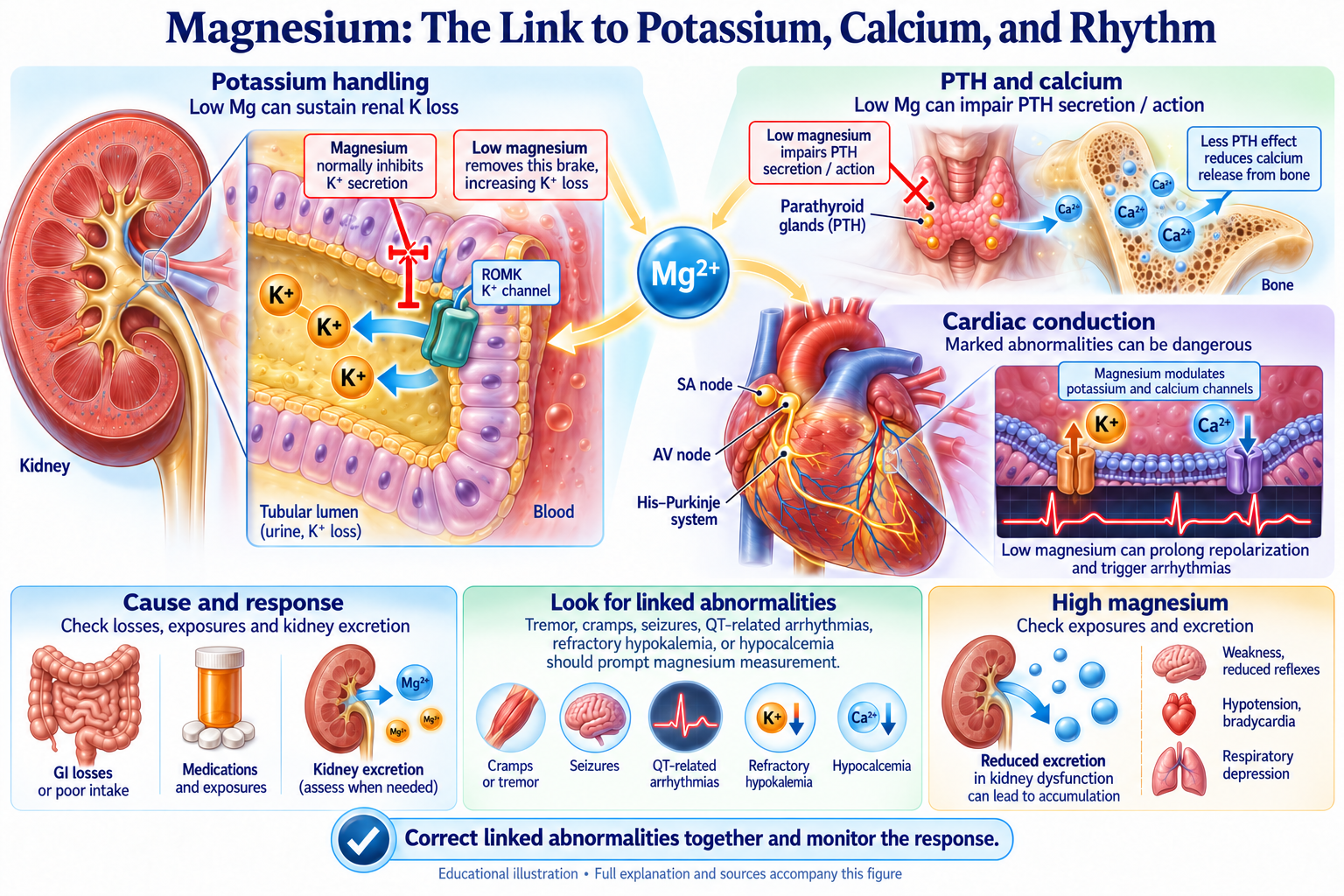
Use the visual framework with the case findings and the linked lecture.
Which current findings are reversible toxicity, and how do the patient’s own goals change the long-term plan?
Assigned reading: the explanations in this case and the question-linked course evidence guide. The objective map distinguishes tested decisions from concepts taught in explanations.
Concepts: aki-27, ckd-04, ckd-18, ckd-21, ckd-22, ckd-24, ckd-25, htn-cardiorenal-04, lytes-13, lytes-14, lytes-18, structural-18, structural-25, structural-26.
Geriatric nephrology handout — V. Polypharmacy and Deprescribing in Elderly CKD
Palliative nephrology handout — II. Goals-of-Care Conversations and Shared Decision-Making
Drug dosing quick reference — Part 1: Principles of Drug Dosing in CKD
Renal pharmacology lecture — 1. Drug Dosing in CKD: Principles of Renal Clearance
Dialysis initiation handout — Shared Decision-Making Framework
Understanding dialysis (patient handout) — Choosing not to do dialysis: conservative care
Orthostatic hypotension lecture — The Orthostatic Paradox and management matrix
Hyperkalemia lecture — Find the mechanism and reversible contributors · RTA types — Type 4
AKI BMP pattern guide — Part 6: BMP-Guided Clinical Decision-Making